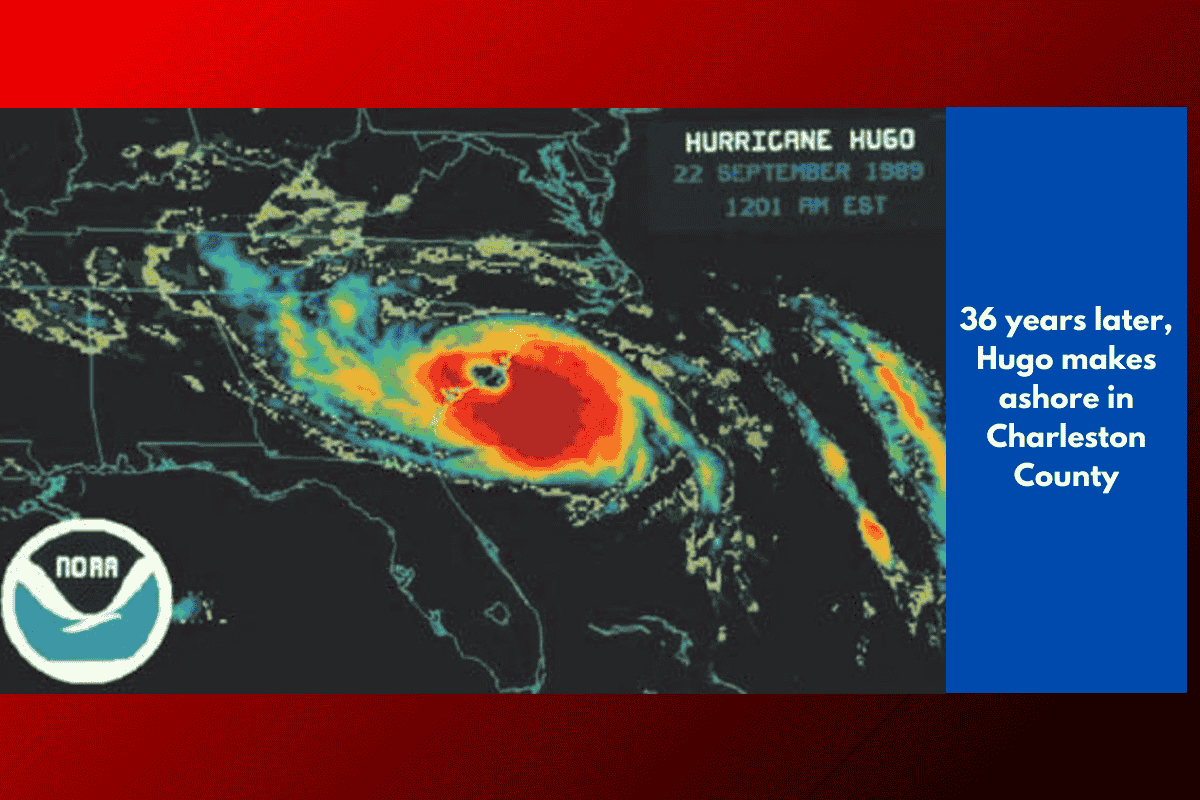
Charleston, South Carolina — One of the most devastating natural catastrophes to ever impact South Carolina struck the Lowcountry 36 years ago, with Charleston County suffering the brunt of the carnage.
Around midnight on September 22, storm Hugo made landfall on Sullivan’s Island as a Category 4 storm with winds gusting up to 140 mph. Sustained winds of 87 mph with gusts up to 107 mph were recorded on the Charleston peninsula, where sea levels surged by more than 12 feet.
The storm surge wreaked havoc on McClellanville, inundating Seewee Bay with over 20 feet of water, the greatest storm tides ever recorded along the east coast.
The state suffered nearly $6 billion in property damage, and the National Oceanic and Atmospheric Administration reported 35 fatalities from the storm, 13 directly from hurricane forces and 22 indirectly, including two people killed in house fires caused by candles while the power was out.
According to the American Red Cross, over 400 people were injured and 3,300 homes were demolished, with another 18,000 sustaining serious damage. Over 700 boats were abandoned, and several bridges linking the Lowcountry’s barrier islands to the mainland were damaged, notably the Ben Sawyer Bridge, which connects Sullivan’s Island to Mount Pleasant.
The storm caused damage to all buildings on Sullivan’s and the Isle of Palms.
More trees were destroyed in South Carolina than in the 1980 Mount St. Helens eruption, the 1988 Yellowstone fires, and the 1969 Hurricane Camille combined, with nearly 4 million acres of timber impacted over 23 counties and valued at more than $1 billion. 75% of marketable trees in the Francis Marion National Forest were fallen, while more than 70% of Berkeley County’s trees were blown down. It had the highest death toll, with eight persons killed.
Beyond the Lowcountry, the Pee Dee region suffered significant damage as well. 150 homes on Georgetown’s waterfront were destroyed, only a few oceanfront properties on Pawleys Island remained intact, and inadequate building standards left Myrtle Beach damaged despite only receiving low-end hurricane-force winds.