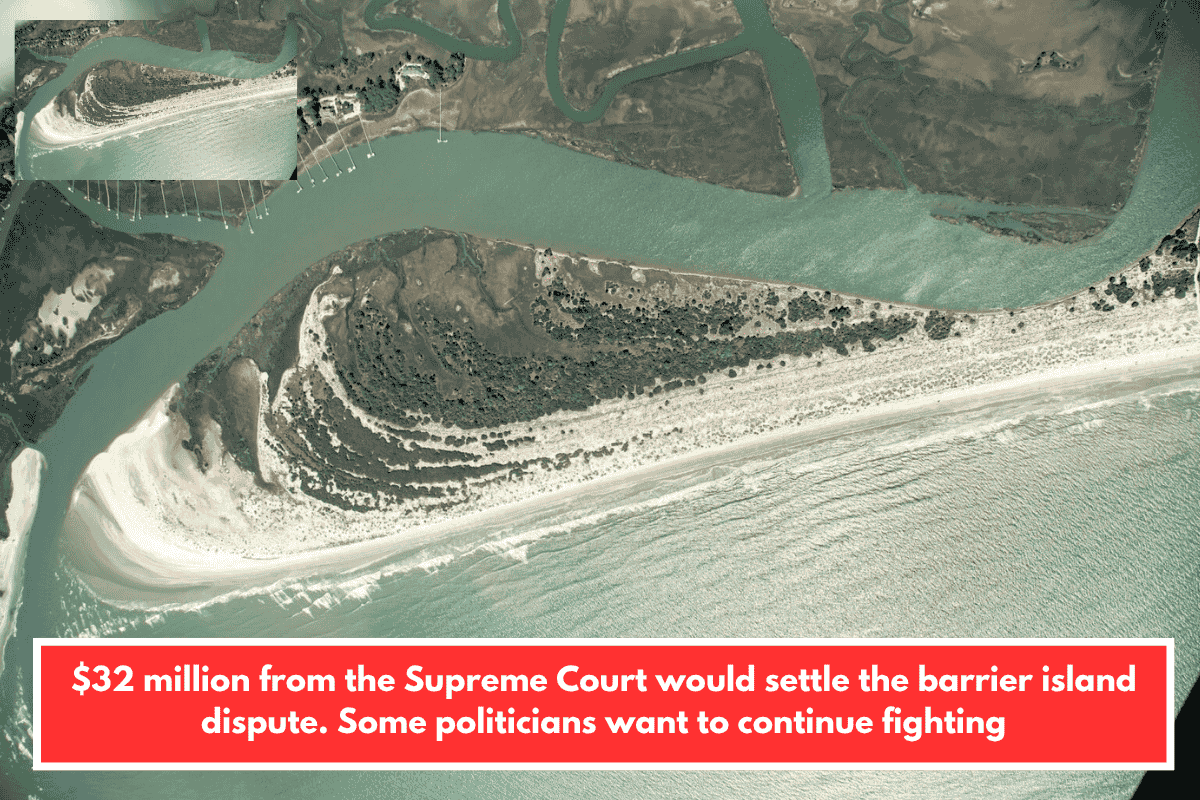
A long-running legal battle over a stretch of undeveloped barrier island near Charleston may finally be nearing an end, but only if South Carolina lawmakers agree to fund a costly settlement.
At the center of the debate is whether to approve $32 million as part of a proposed agreement that would resolve the 17-year dispute and permanently protect the land from development.
Lawmakers Weigh Cost vs. Risk
The decision now rests with state legislators as they finalize the budget. The House included the full $32 million settlement in its initial proposal, while a Senate committee advanced a version with just $1, a procedural move that signals ongoing negotiations.
Attorneys for the state say rejecting the settlement would allow the case to continue in federal court. That path carries financial uncertainty.
If the state prevails, taxpayers could end up paying less than the settlement amount. But if the state loses, the cost could exceed $200 million in damages, plus legal fees.
“This is effectively a gamble,” Sen. Wes Climer said during budget discussions.
State attorney Emory Smith told a fiscal oversight board that settling would eliminate years of uncertainty tied to complex litigation.
Land Protection at Stake
Beyond the financial question, the outcome will determine the future of 170 acres of environmentally sensitive land known as Captain Sams Spit.
Under the proposed agreement, Kiawah Development Partners would transfer 130 acres of the property to the state and the Town of Kiawah Island. Most of the land would become a protected nature preserve managed under the Department of Natural Resources’ Heritage Trust program.
The remaining parcels, including a small county park, would also be protected from development through agreements with local officials.
The total settlement would reach about $37 million, with the Town of Kiawah Island contributing $3.5 million and the Conservancy of the Sea Islands adding $1.3 million.
Divided Opinions Among Leaders
The proposal has split state leaders.
Members of the state’s fiscal oversight board largely supported the settlement, including Gov. Henry McMaster and other top budget officials. However, Senate Finance Chairman Harvey Peeler opposed it, arguing the state should continue fighting the case.
“I don’t want to throw in the towel,” Peeler said.
Similar divisions surfaced in the House, where some lawmakers argued the settlement represents unnecessary spending. Others warned that continuing the legal fight could result in far higher costs.
House Ways and Means Chairman Bruce Bannister urged caution, noting that prolonged litigation could increase expenses significantly.
A Dispute Years in the Making
The legal conflict dates back to 2009, when Kiawah Development Partners sued the state, claiming that permit denials and delays effectively prevented development of the land.
The company had purchased the property in 1988 with plans to build dozens of luxury homes. However, disputes over environmental protections and erosion control measures led to years of litigation, including multiple appeals to the state Supreme Court.
At the same time, a separate legal dispute emerged over conservation agreements tied to the property. Both cases would be resolved under the proposed settlement.
Environmental Significance
Captain Sams Spit is considered one of the region’s most unique natural areas. The undeveloped barrier island supports a range of wildlife, including bottlenose dolphins that use a rare hunting technique known as strand feeding.
Migratory birds such as red knots rely on the area as a stopover, while species like diamondback terrapins nest along its dunes.
Conservationists argue that even limited development could disrupt these fragile ecosystems.
“The ultimate goal has always been to eliminate the threat of development,” said Amy Armstrong of the South Carolina Environmental Law Project.
Under the settlement, conservation easements would permanently prevent construction, ensuring the land remains accessible for public use and research.
Final Decision Ahead
Legislative approval is the final hurdle for the agreement.
Lawmakers must now decide whether to accept the certainty of a multimillion-dollar settlement or continue a legal fight that could stretch on for years with far greater financial risk.
For many, the choice comes down to balancing taxpayer costs against preserving what some call one of South Carolina’s last untouched coastal landscapes.