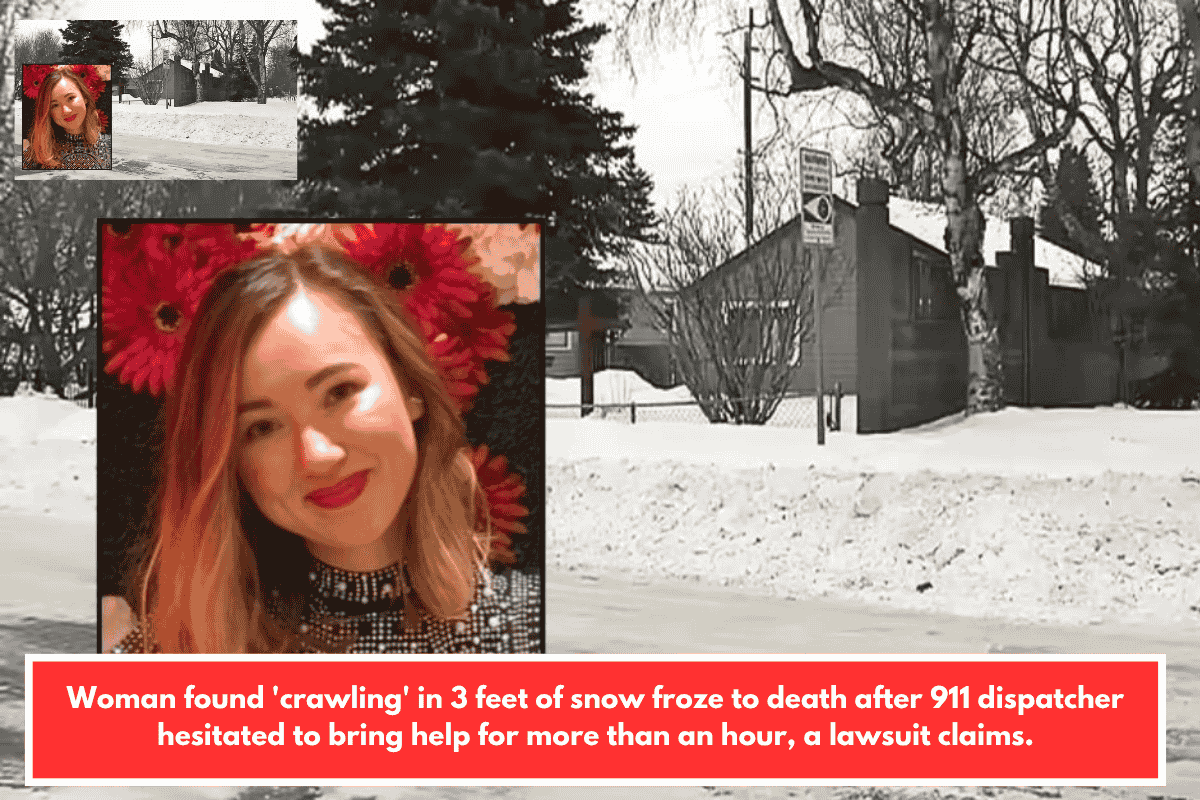
An Alaska woman tragically died of hypothermia after a 911 dispatcher’s mishandling of an urgent call left her stranded in freezing conditions for over 80 minutes. Alecia Lindsay, 31, was spotted “crawling around” and knocking on a resident’s door on Feb. 8, 2024, in Anchorage amid 17-28°F temps, nearly 3 feet of snow, and no coat—shaking violently from the cold. Her family sued the city, police, and dispatch center last month for negligence, claiming a properly trained responder would have flagged hypothermia immediately.
Call Mishandling Details
- Initial 911 (6:34 a.m.): Resident reported Lindsay overwhelmed/shaking; dispatcher classified as low-priority “disturbance” (Priority 3), not medical emergency. Assured help “as soon as we can” but prioritized callers’ safety (weapons? Lock door?), sent police only—not EMS.
- Follow-ups: 20+ min gaps with no activity; spouse reiterated cold-induced shaking 30+ min later. Notes added on her thin clothing, but no escalation.
- Delayed Response: Police dispatched 7:36 a.m., arrived 7:46 a.m., called EMS at 7:54 a.m. Paramedics reached her 8:05 a.m.; she stopped breathing 8:12 a.m., pronounced dead 9:38 a.m. at hospital.
Prior Context
Police had encountered Lindsay Feb. 7 at the airport (erratic, crying, possible mental health crisis), drove her home, but she soon wandered coatless downtown. A driver who dropped her off called 911 too, but cops found nothing.
The city denies liability, arguing no enforceable duty and immunity. Heart-wrenching failure in a place where cold kills fast—hypothermia sets in minutes at those temps for the exposed. Families often win such suits if training lapses proven (e.g., similar dispatcher cases in OR/TX). What reform would prevent this?