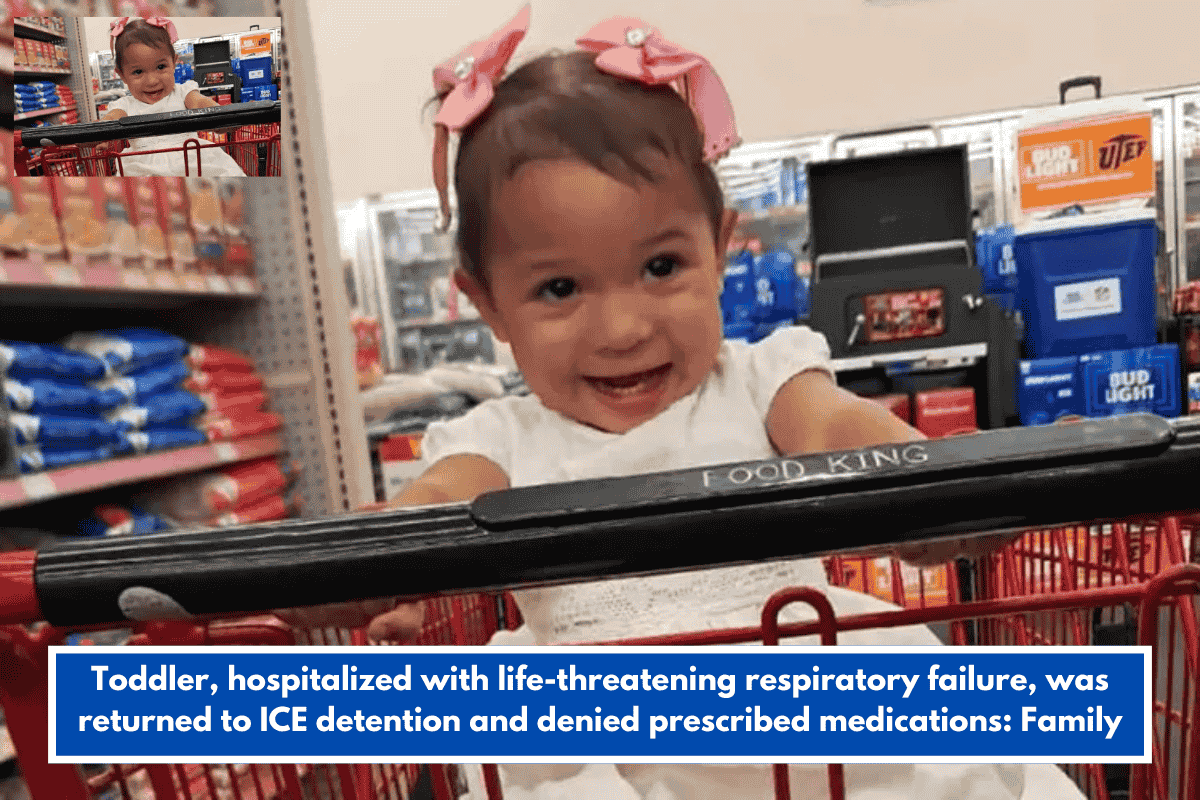
This heartbreaking case highlights severe medical neglect allegations at the Dilley Immigration Processing Center in Texas, run by CoreCivic under ICE contract. Here’s a breakdown of the key facts from the federal lawsuit filed Feb. 6, 2026, by attorney Elora Mukherjee, as reported by PEOPLE and NBC News.
Timeline of Events
- December 2025: Healthy 18-month-old Amalia and her parents are detained in El Paso after lawful entry and compliance with immigration check-ins. They’re transferred to Dilley.
- Jan. 1, 2026: Amalia develops a 104°F fever, breathing issues, vomiting, and diarrhea. Parents seek care multiple times but receive only basic fever meds.
- Jan. 18: Rushed to San Antonio children’s hospital with critically low oxygen. Diagnosed with pneumonia, COVID-19, viral bronchitis, RSV, and severe respiratory distress. Treated on supplemental oxygen; loses 10% body weight.
- Hospital stay (10 days): ICE agents supervise constantly. Mom prays by bedside amid fears of death.
- Discharge: Despite doctors’ warnings of reinfection risk, ICE returns Amalia and mom to Dilley (not El Paso). Prescribed nebulizer, respiratory meds, and nutritional supplements are confiscated.
- Post-return: Parents denied prescribed meds; given PediaSure instead or turned away. Facility reports two measles cases.
- Feb. 6 evening: Family released after lawsuit filing. Birth certificate and vaccination card still withheld.
Broader Context
Dilley holds hundreds of families, drawing criticism from the American Academy of Pediatrics for risks to children’s health—physical (infections in crowded conditions) and psychological (trauma from detention). This echoes past cases, like 5-year-old Liam Conejo Ramos at the same facility. No comment yet from DHS or CoreCivic.
The lawsuit seeks the family’s full release and documents, calling detention “unconscionable.” Mukherjee notes the family contributed to their community via church before abrupt arrest.
If you’re tracking immigration detention conditions or related U.S. legal reforms, what aspect interests you most—medical standards, family separation policies, or similar South Carolina cases?