A deeply heartbreaking story has brought attention to a dangerous side of the internet that many parents may not even know exists. It shows how a young teenager, who seemed normal and happy on the outside, quietly got pulled into a troubling online space that influenced her thoughts in harmful ways.
What Happened in This Case
Jaimee Seitz lost her 13-year-old daughter, Audree Heine, to suicide.
Before her death, Audree had asked her mother to make customised T-shirts with phrases like “Natural Selection” and “Wrath.” At the time, Seitz thought they were just random or trendy words.
Later, she realised these phrases were linked to the attackers of the Columbine High School massacre — one of the most infamous school shootings in history.
The shirts matched what the shooters, Eric Harris and Dylan Klebold, wore during the attack. This discovery left her mother shocked and deeply disturbed.
The Hidden Online World: TCC
Seitz believes her daughter had become involved in something called the “True Crime Community” (TCC).
This is not a formal group, but a loose online network where people:
- Obsess over real-life crimes
- Study and discuss mass shootings
- Share photos, videos, and drawings related to attackers
- In some cases, glorify or idolise them
Experts say most people in these communities do not become violent. However, the environment can still be harmful, especially for young and vulnerable users.
Why Teenagers Get Drawn In
Many young people who enter such spaces are dealing with emotional struggles.
Common reasons include:
- Feeling lonely or isolated
- Being bullied at school
- Wanting to belong somewhere
- Curiosity about crime and psychology
In Audree’s case, her mother believes bullying played a big role. She felt like an outsider and may have found acceptance online.
Warning Signs That Were Missed
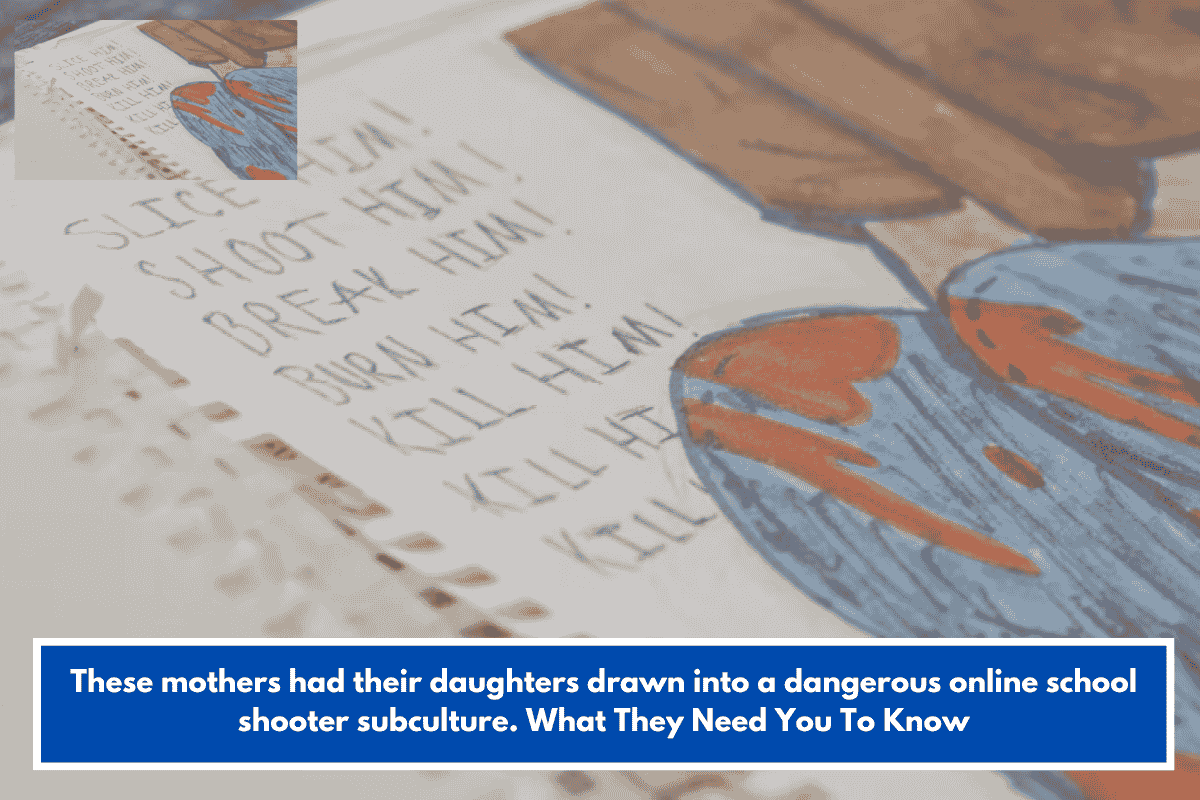
After Audree’s death, her mother found a notebook that revealed how deeply she had been affected.
It contained:
- Drawings of the Columbine shooters with hearts
- Phrases showing admiration for them
- Violent sketches
- Notes about making weapons
These signs were not noticed earlier, which is something her mother now regrets deeply.
Another Similar Case
A second mother, Heather Dioneff, shared a similar experience with her daughter, Lilyanna.
Lilyanna also became involved in the same online space and:
- Idolised mass shooters
- Wrote a manifesto
- Made a list of people she wanted to harm
Luckily, she told her therapist about her thoughts, and intervention happened in time. She received help and is now working towards recovery.
What Experts Say
Experts describe this process as gradual and subtle.
A young person may:
- Start with curiosity about crime
- Spend more time consuming related content
- Begin to admire or relate to attackers
- Slowly adopt similar thoughts or behaviour
This is often linked to a strong need for connection and identity.
The Role of Social Media
Even though platforms try to remove harmful content, such communities continue to exist by:
- Using coded language
- Changing hashtags frequently
- Moving between different platforms
This makes it harder for parents and authorities to track what children are seeing online.
Lessons for Parents and Society
This story highlights the need for better awareness and communication.
Some important takeaways:
- Talk openly with children about what they see online
- Pay attention to sudden changes in behaviour or interests
- Take extreme fascination with violence seriously
- Encourage real-life connections and support systems
Parents are also urging schools and tech companies to take more responsibility in identifying warning signs early.
This tragic case is a powerful reminder that not all dangers are visible. A child may appear happy and normal, yet struggle silently with harmful influences online. The story of Audree Heine shows how important it is for parents, teachers, and society to stay aware of what young people are experiencing in the digital world. By building trust, encouraging open conversations, and recognising early warning signs, many such tragedies can possibly be prevented in the future.