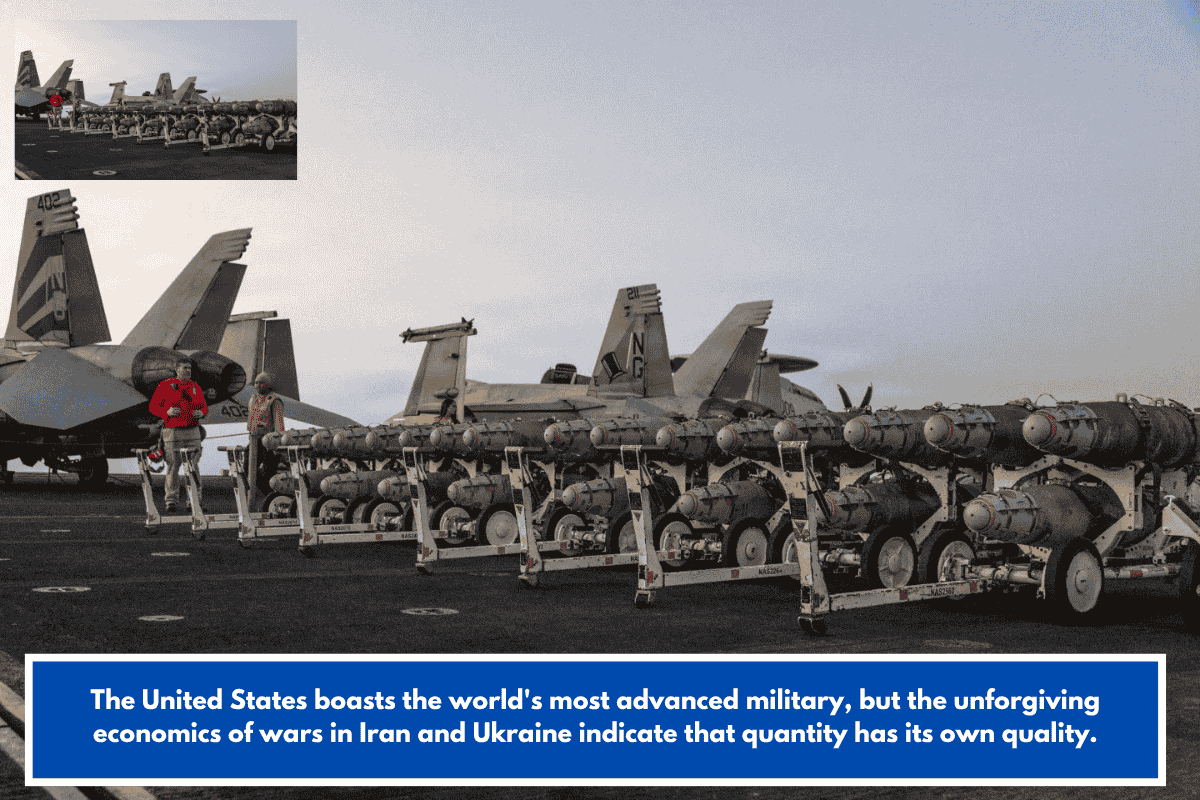
The U.S.-Iran war (ongoing since late Feb. 2026) showcases asymmetric warfare: U.S./Israeli AI-driven strikes decimated Iran’s military (7,000+ U.S., comparable Israeli sorties), but cheap Iranian drones/missiles strain expensive U.S. defenses.
Offensive Edge
AI like Anthropic’s Claude (via Palantir’s Maven) enabled 1,000+ targets hit in first 24 hours—faster than “speed of thought,” killing leaders like Khamenei. U.S. copied Iran’s Shahed-136 as low-cost LUCAS drone for strikes.
Defensive Costs
Iran’s retaliation bottles 20% global oil in Strait of Hormuz, forces U.S. intercepts (millions each vs. $10K–$100K drones)—”Formula 1 vs. used car.” First 6 days: $11.3B (now slower with cheaper bombs); Pentagon seeks $200B more amid stockpiles concerns.
| Metric | U.S./Allies | Iran |
|---|---|---|
| Strikes | 7,000+ (AI-speed) | Swarms cheap/effective |
| Interceptors (e.g., PAC-3) | 650/year (Lockheed ramp to 2,000 by 2030) | Mass drones |
| Daily Cost (early) | $1.8B+ | Minimal |
Lessons from Ukraine
Ukraine’s 3.5M drones last year (7M planned 2026) kill via swarms; U.S. lags on counters like high-power microwaves (HPM) for “one-to-many” takedowns. Gen. Patraeus: Future is autonomous swarms; Gulf states seek Ukraine aid. Trump met contractors to surge production.