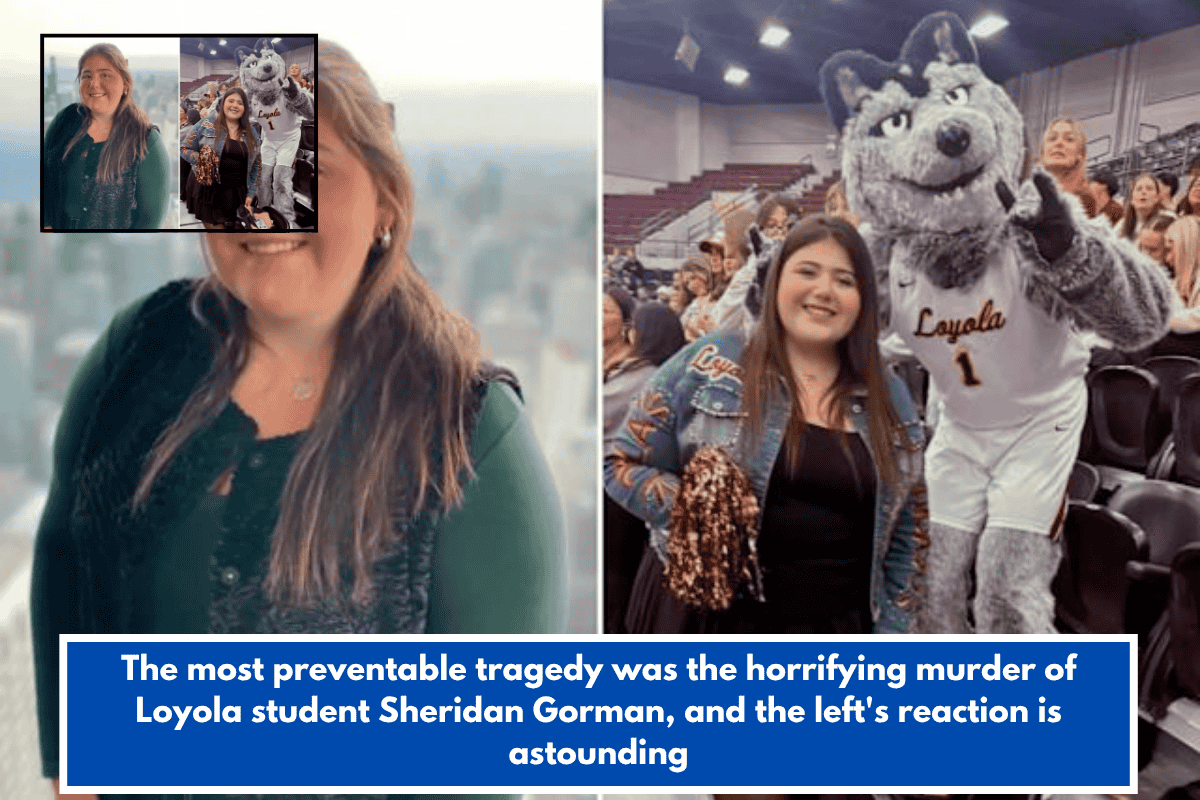
The murder of Sheridan Gorman, a Loyola University freshman, has sparked not only deep grief for her family and friends but also intense political backlash, as figures like Chicago Alderwoman Maria Hadden and Illinois leadership come under scrutiny for their response to the tragic event.
The Murder
Sheridan Gorman, 18, was tragically gunned down on a Chicago beach during a late-night walk with her friends on March 28, 2024, as she sought the Northern Lights.
The masked suspect, later identified as Jose Medina-Medina, allegedly shot her in the back, killing her. The chilling details of the case prompted widespread outcry, especially regarding the suspect’s background.
The Response from Chicago Leadership
In the wake of Gorman’s death, Alderwoman Maria Hadden sparked outrage when she suggested that Gorman’s murder might have been a “wrong place, wrong time” situation.
She speculated that the suspect might have been startled by the victims, an interpretation that many found to be callous and insensitive to the tragedy.
In response, Gorman’s family strongly rejected this characterization. They emphasized that Sheridan was simply living her life, “close to campus, surrounded by friends” and that her death was not an accident but a loss that will change their family forever.
Further criticism was aimed at Chicago Mayor Brandon Johnson, who waited nearly a week before addressing the situation. While he expressed condolences, he avoided commenting on the broader issue of sanctuary cities and immigration policy.
The Controversy Surrounding the Suspect
Jose Medina-Medina, 43, is described as an illegal immigrant from Venezuela, who allegedly entered the country in May 2023 under current immigration policies. He had also been previously arrested for shoplifting, but he failed to appear for his court date, raising questions about the enforcement of immigration laws.
After fleeing the crime scene, Medina reportedly rammed a police vehicle and engaged in a manhunt before eventually being caught. He is now facing multiple charges, including first-degree murder. However, it was later reported that he is hospitalized with tuberculosis.
Political and Public Backlash
Illinois Governor JB Pritzker has faced criticism for his delayed response to Gorman’s murder, initially shifting the blame to the Trump administration and emphasizing the need for federal funding for public safety efforts.
Many critics argue that the failure of local and state leadership to address issues such as sanctuary cities and immigration enforcement contributed to this tragedy.
In a late statement, Pritzker acknowledged failures in the national immigration system but pointed to the previous administration for creating the conditions that allowed Medina to remain in the country.
A Call for Common-Sense Solutions
The tragedy of Sheridan Gorman underscores a broader national debate over immigration policy and the priorities of political leaders.
Critics argue that progressive policies have created an environment in which individuals like Medina, who have shown disregard for the law, are allowed to thrive without facing the consequences of their actions.
Her murder, according to critics, should have galvanized leaders on both sides of the political spectrum to unite for law and order solutions. Instead, many see it as just another example of political failures that leave law-abiding citizens vulnerable.
Gorman’s Legacy
Sheridan Gorman’s family, in their grief, have expressed a desire for her to be remembered as “deeply loving” and a person who brought light to everyone around her.
As her family prepares for her funeral, there is no doubt that this tragedy has left a mark on her community, who mourns the loss of a bright young life cut short.