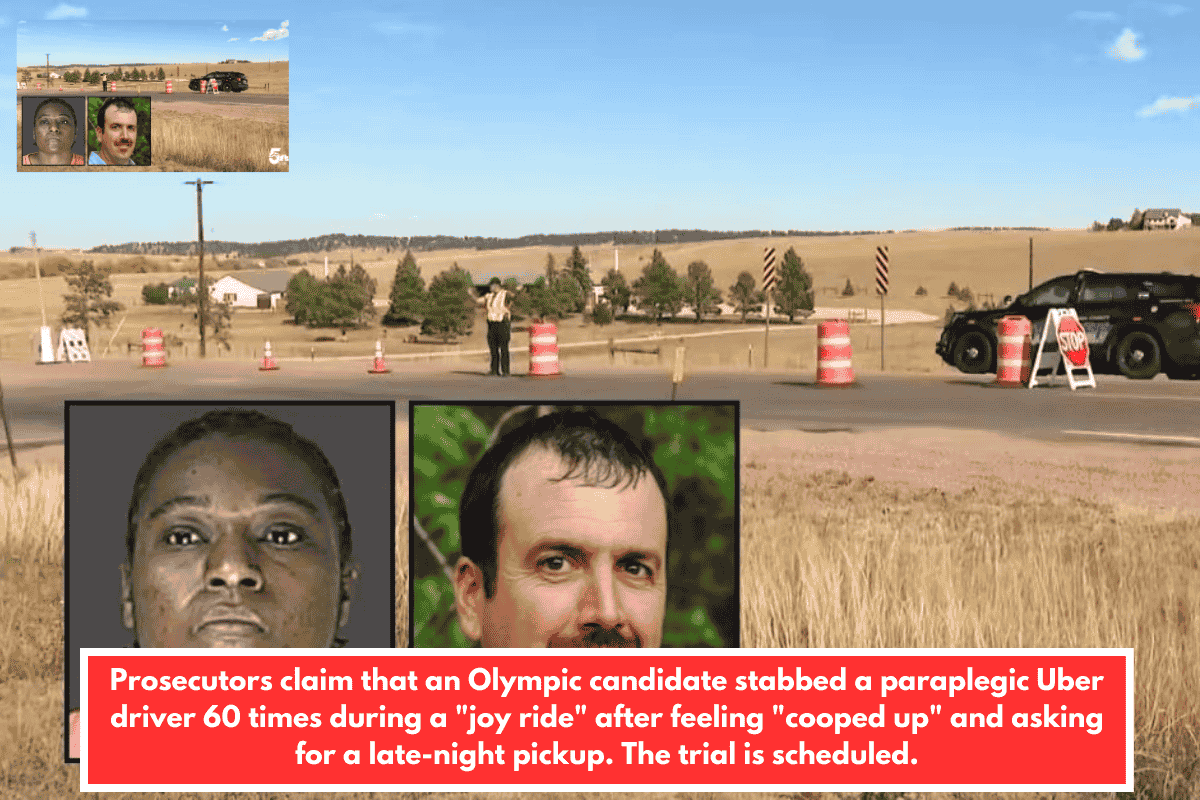
Khayla Dawson, a 27-year-old shot put athlete from Colorado Springs who competed at the 2024 USA Olympic Trials (placing 22nd with a 16.86-meter throw), faces charges of first-degree murder, aggravated robbery, and motor vehicle theft. She’s accused of stabbing Uber driver Jeremy Campbell, 38, about 60 times on October 26, 2025, inside his 2016 Hyundai Santa Fe, then dumping his body in a field and driving off with the vehicle. Dawson is held without bond, with a trial set for April 13, 2026, expected to last eight days; her next court date is March 6.
Key Events from Arrest Affidavit and Hearing
- Pickup and Incident: Dawson ordered an Uber around midnight, claiming she felt “cooped up” and wanted a “joy ride” since she lacks a car. She says she fell asleep in the back seat, woke to Campbell reaching back to sexually assault her, and stabbed him in self-defense during a struggle. The car crashed through a barbed wire fence into a field.
- Aftermath: Dawson allegedly pulled Campbell from the driver’s seat, drove his Hyundai to her apartment complex, and hid his key fob, wallet, and license in a box of dryer sheets. A matching chrome-handled butcher knife from her kitchen was found near his body, along with her credit cards. She had no stab wounds but a broken knee bone.
- Discovery: Campbell’s father reported him missing; his girlfriend tracked his phone via Snapchat to Dawson’s complex. Deputies found blood spatter throughout the car and his phone at her building. Uber records confirmed her as his last rider.
Prosecution’s Evidence
Prosecutors argue premeditation, noting Dawson brought a kitchen knife and gloves into the car. Stab wounds covered Campbell’s head, shoulder, face, chin, neck, and hands—many “defensive” on his hands. A detective testified Campbell was partially paralyzed on his right side, undermining Dawson’s claim of him reaching back to assault her.
Defense Arguments
Dawson’s attorney highlights her mental health issues, citing an incident where she acted erratically during a home tour (crawling on all fours in a closet and commenting on fitting two people inside, unsettling the agent). They portray her as fearing a “strange man in the middle of the night” and acting in self-defense, claiming Campbell also had a knife.
This case draws attention due to Dawson’s athletic background and the stark contrast between her Olympic aspirations and the brutal allegations. It echoes self-defense claims in rideshare violence but faces challenges from forensic and physical evidence. Have you followed similar cases in Colorado or elsewhere?