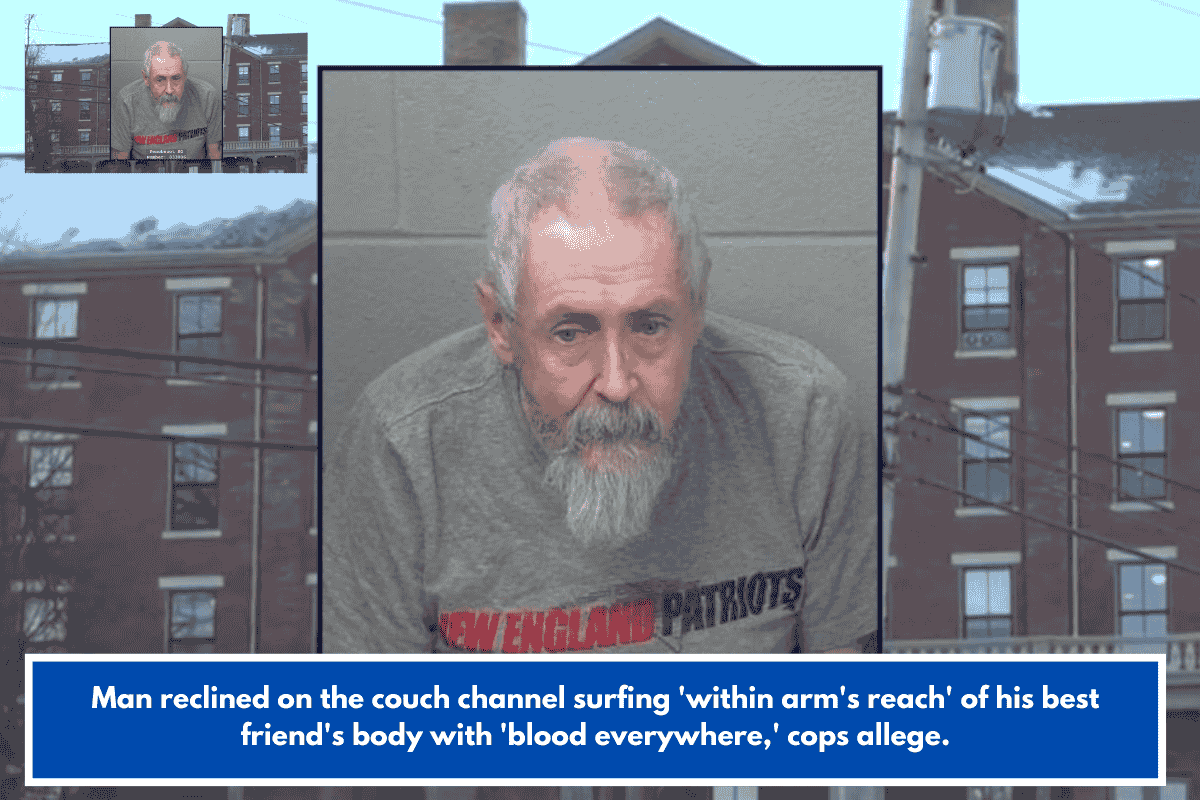
A 71-year-old man from Maine, Gary Brinson, is facing one count of intentional or knowing murder following the death of his best friend, 64-year-old Lee Ruona, in December 2024. The two men, both combat veterans, had been living in the same apartment building and regularly met up to drink alcohol and cope with their PTSD. On the evening of December 4, the pair consumed more than a gallon of bourbon and over 20 beers before Brinson allegedly killed Ruona.
Chilling Discovery at the Crime Scene
On the morning of December 4, Brinson called 911 to report that his friend was dead in his apartment, saying, “I got a dead guy laying on my bed.” When asked if he killed Ruona, Brinson reportedly denied it, saying, “Why would I kill my best friend?” However, when officers arrived at the scene, they found Brinson sitting in a chair, holding a bottle of bourbon and watching TV, just a few feet from Ruona’s lifeless body. The apartment was covered in blood, with the victim’s body showing signs of brutal violence.
An autopsy revealed that Ruona had nearly 150 shallow puncture wounds and five deeper stab wounds, along with a fractured spine and ribs. The medical examiner ruled his death a homicide, caused by multiple sharp and blunt force injuries.
Brinson’s Confessions and Defense Arguments
At the police station, Brinson allegedly made statements suggesting guilt, such as, “They’ve got me, I’ve done it, I’m going to jail.” He also sent a text to his stepdaughter, apologizing and saying, “I beat the s— out of my Lee,” hinting at a darker side of his character resurfacing.
Brinson’s defense team argued that his level of intoxication at the time of the crime made it impossible for him to act intentionally, a key element of the murder charge. They suggested that his alcohol consumption could create reasonable doubt about his ability to act in an intentional or knowing manner.
However, prosecutors contended that alcohol merely exacerbated Brinson’s anger, leading to a fatal rage. Assistant Attorney General Leanne Robbin emphasized that the evidence pointed to Brinson committing murder in an “alcohol-fueled rage.”
The trial, which began this week, continues with more witness testimonies as the case unfolds.