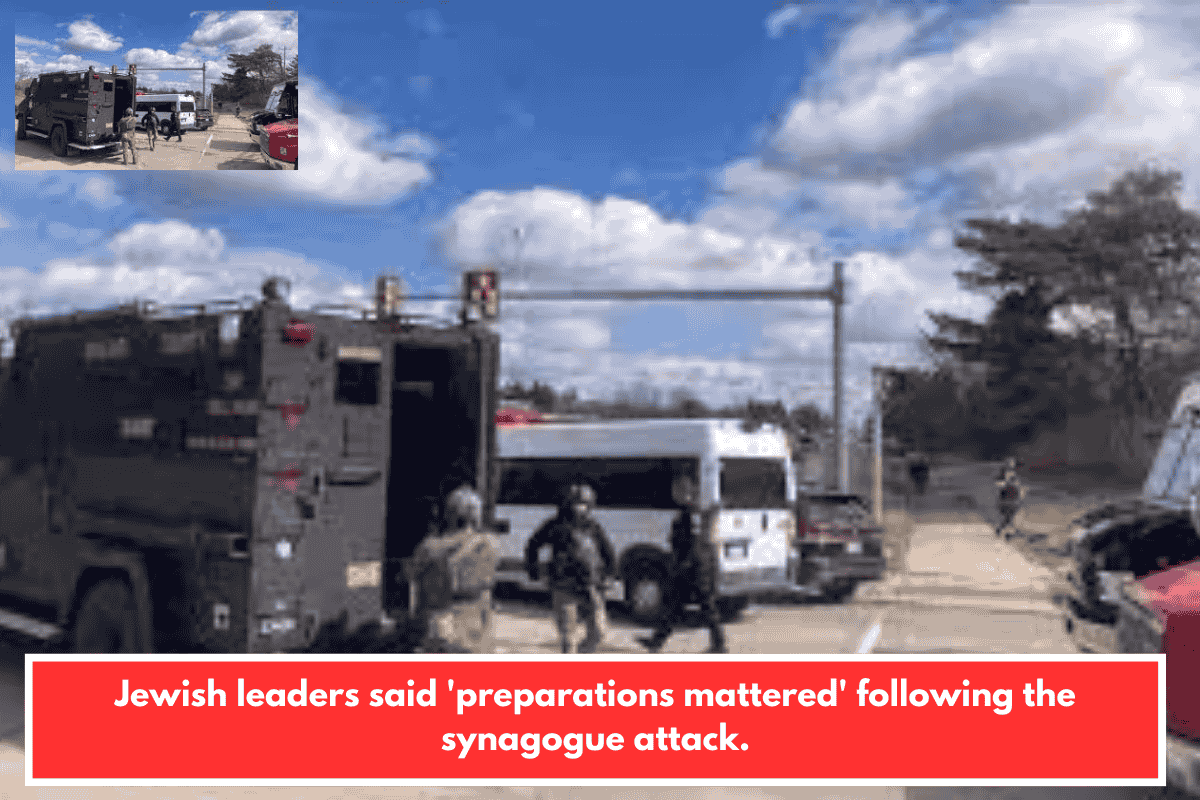
A 41-year-old Lebanese-born U.S. citizen rammed his truck into Temple Israel synagogue in West Bloomfield Township, Michigan, on March 12, 2026, amid heightened antisemitic threats tied to the ongoing U.S.-Israel war on Iran, but security training and rapid response limited casualties.
Attack Details
The attacker died from a self-inflicted gunshot as his burning truck exchanged fire with two guards; one guard was injured by the truck, but over 140 preschool students and staff evacuated safely to a nearby country club. This came days after Operation Epic Fury (U.S./Israel strikes on Iran starting Feb. 28), spiking online threats—Secure Community Network logged 8,200 violent calls against Jewish sites in five days, a record.
Community Preparedness
Temple Israel, a major Reform synagogue with 12,000+ members, had FBI active-shooter training in January; staff followed protocols seamlessly. Jewish Federations’ Gary Torgrow praised years of security investments, law enforcement ties, and drills: “These preparations mattered.” North American Jewish communities spend $765M yearly on safety, with groups like Secure Community Network training 40,000+ members.
Broader Antisemitism Rise
ADL tracked 9,354 U.S. incidents in 2024 (all-time high), including 20 plots/attacks since 2020—13 post-July 2024. Echoes Pittsburgh’s 2018 Tree of Life (11 killed) and San Diego 2019 (1 killed). Experts like Michael Masters note persistent risks from war rhetoric; Jewish Council for Public Affairs’ Amy Spitalnick calls for education/media literacy beyond barricades. Even critics like Jewish Voice for Peace link regional escalations to backlash, though all condemn targeting Jews as antisemitism pure.
Leaders emphasize resilience: Detroit’s federation had robust pre-attack programs. No justification for synagogue violence, per J Street’s Jeremy Ben-Ami.