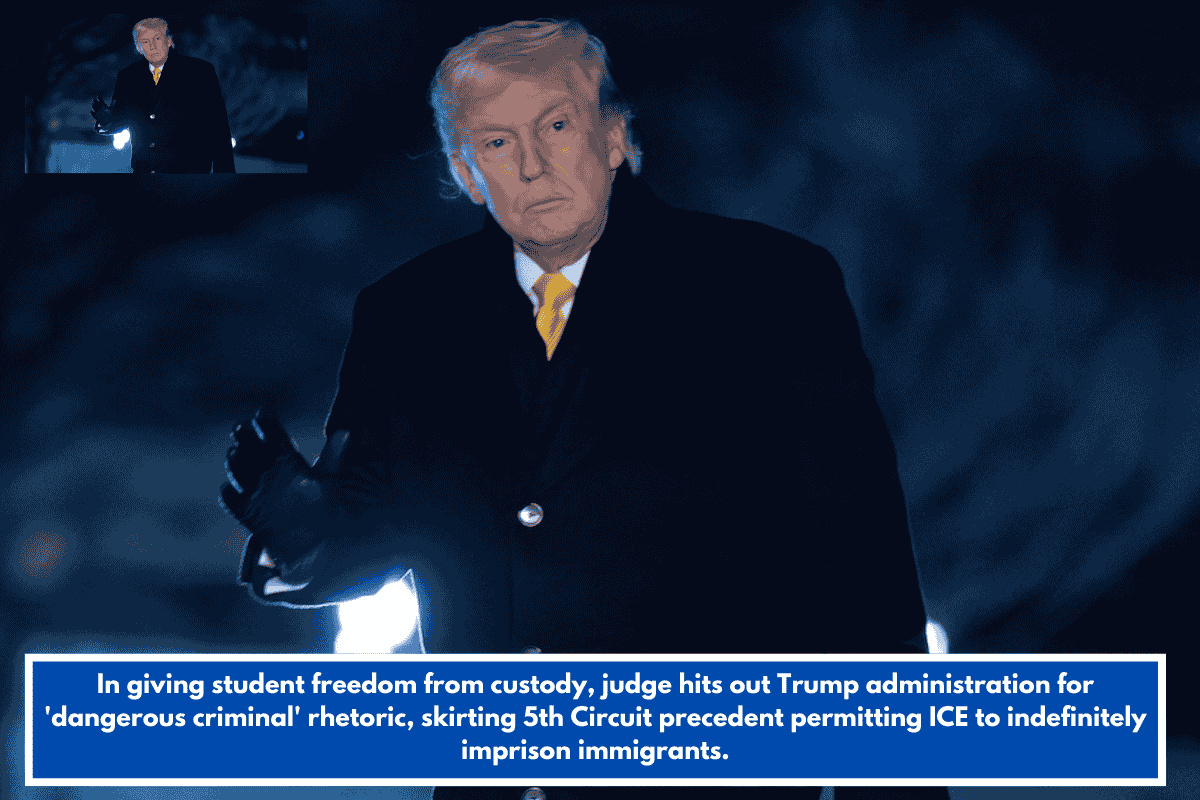
A federal judge in Texas ordered the Trump administration to release college student Jose Alberto Gomez-Gonzalez, a 24-year-old Mexican-born U.S. resident, in a public place by April 1, 2026. The ruling blocks his re-detention unless ICE proves he’s dangerous or a flight risk at a hearing. Gomez-Gonzalez, detained since August 14, 2025, after a minor traffic stop, had been living legally in the U.S. since age 12 via humanitarian parole. He was weeks from graduating Texas State University with a government job lined up when ICE grabbed him without warning or a bond hearing.
Key Background
- Entry and Status: Family entered legally with border crossing cards, sought asylum, got parole, and had removal proceedings administratively closed in 2015. Parole expired without action, but he built a life: high school grad, college student, no criminal record.
- Detention Trigger: Pulled over for speeding in Concho County with valid Texas license. Officer checked immigration status, called ICE, who took him despite his lawful presence claim.
- Impacts: Missed graduation, lost job/apartment, held 6+ months without bond opportunity, costing liberty and money.
Legal Ruling
Senior Judge David Alan Ezra (Reagan appointee) granted habeas corpus relief solely on Fifth Amendment due process grounds. Key points:
- Government invoked 8 U.S.C. §1225(b) for mandatory detention of “aliens seeking entry,” but judge called it “inapposite” for someone long present.
- Sidestepped 5th Circuit ruling favoring government’s statutory view; focused on constitutionality “as applied” here.
- No bond hearing after 6 months creates “high risk of erroneous deprivation” of liberty—violates due process.
- Judge stressed courts must check if statutory protections meet Constitution, even if statute allows detention.
This diverges from recent cases blocking Trump’s ICE policy via statutory misreads of §1225(b) vs. §1226(a) (for those “already present”).
Broader Context
Amid Trump’s 2025 push to expand indefinite detention, judges have issued hundreds of rulings against it. Ezra critiques administration rhetoric targeting “worst of the worst” criminals—Gomez-Gonzalez, a kid entrant chasing a degree, doesn’t fit. He also nods to possible pretextual traffic stop, uncontested by government.
This habeas win highlights due process as a backstop when statutory fights falter, potentially aiding similar non-criminal detainees.