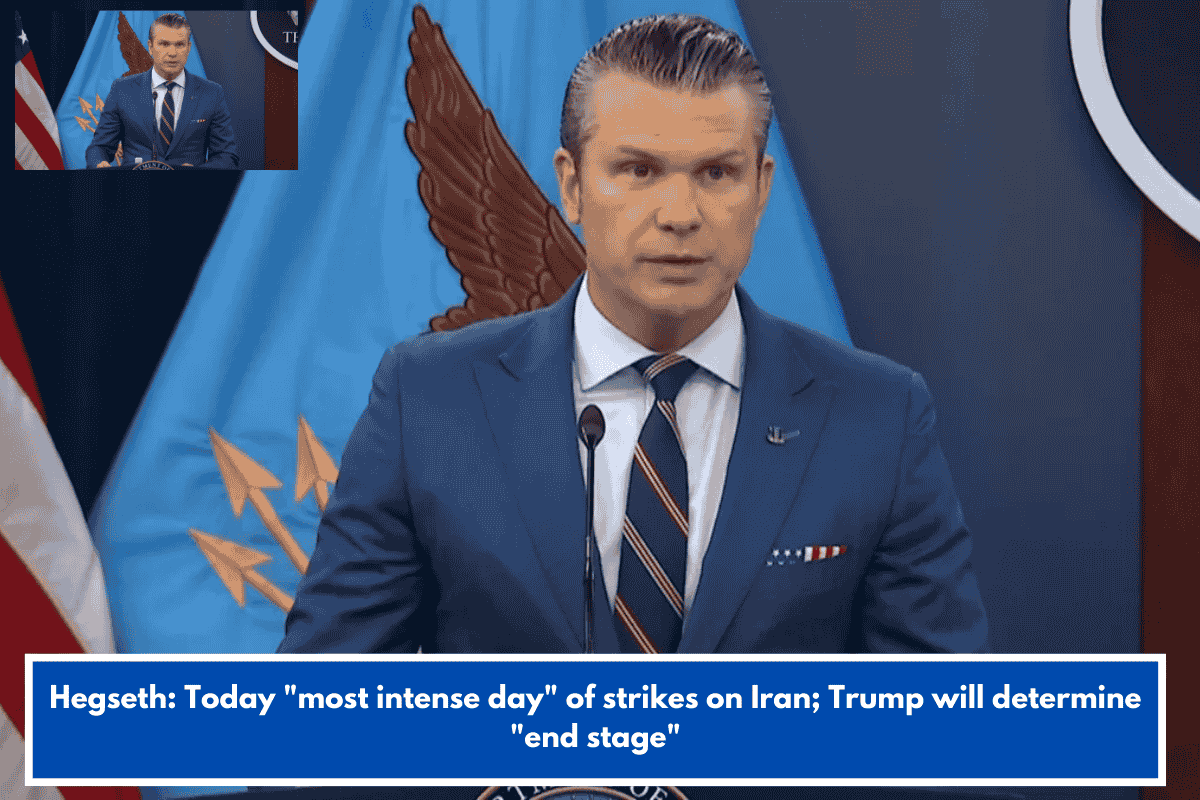
Pete Hegseth, U.S. Defense Secretary, announced Tuesday, March 10, 2026, as the “most intense day” of airstrikes against Iran yet, involving maximum fighters, bombers, and targets. Joint Chiefs Chairman Dan Caine reported over 5,000 strikes since the war began, slashing Iran’s missile launches against Israel and Gulf allies by 90%.
Key Military Objectives
- Destroy Iran’s missiles and drones.
- Target its navy.
- Hit military and industrial infrastructure.
Leadership and Rhetoric
- Mojtaba Khamenei, son of slain former Supreme Leader Ayatollah Ali Khamenei, took over after his father’s death on day one of U.S.-Israeli strikes. President Trump criticized the pick, doubting peace prospects; Hegseth declined comment on injury reports.
- Hegseth framed it as payback for 47 years of Iranian proxy attacks on U.S. forces, rejecting “endless nation-building” comparisons to Iraq/Afghanistan. He called regime leaders “desperate” with allies “winning,” aiming for unconditional surrender per Trump’s terms.
Casualties and Outlook
Seven U.S. service members have died. Trump called the war “very complete” militarily, but a DoD video signaled “We have Only Just Begun to Fight.”
Iran launched fresh Gulf attacks, hit Lebanon per Israel, and vows sustained missile barrages. Trump eyes seizing the Strait of Hormuz if blocked, spiking oil to $119/barrel. Escalation risks persist amid conflicting timelines.