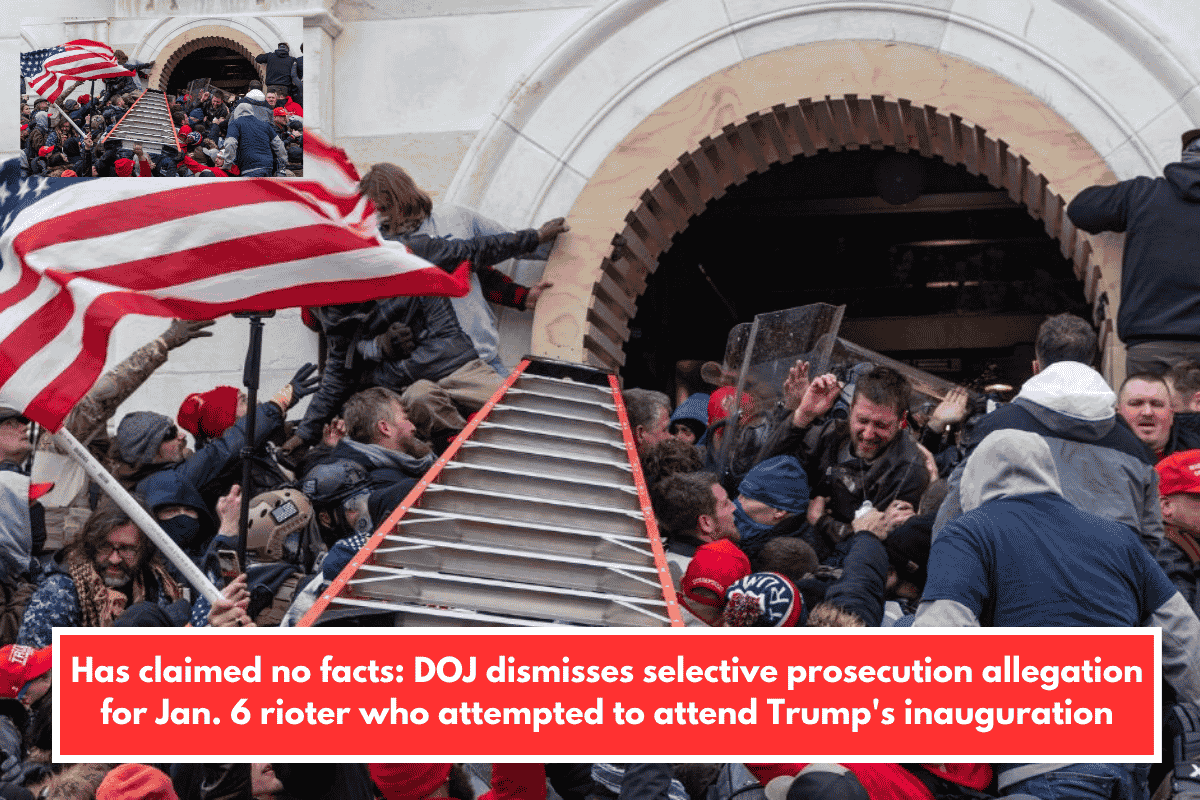
Federal prosecutors have requested that a court dismiss a complaint from Cindy Young, a convicted Jan. 6 rioter, who claims she was unfairly prosecuted compared to those involved in 2020 Black Lives Matter (BLM) protests. Young, who was convicted of four federal misdemeanors for her involvement in the Capitol riot, argues that her prosecution was more aggressive than others who participated in protests that summer.
Young’s Claims and Conviction
Young was pardoned by President Donald Trump on the first day of his second term after serving four months in jail, followed by two months of home detention and two years of probation.
She has gained some notoriety for her actions, including a December 2024 motion requesting permission to attend Trump’s swearing-in ceremony and a later demand to honor the Capitol rioters with a memorial plaque alongside law enforcement officers.
In November 2025, Young filed a complaint arguing that when she turned herself in to face the misdemeanor charges, FBI agents swabbed her DNA without a warrant or consent. She contended that this was an example of how Jan. 6 defendants were treated more aggressively than BLM protesters, alleging violations of her rights.
Prosecutors’ Response
In their motion to dismiss the complaint, the U.S. Attorney’s Office for New Hampshire argued that Young’s comparisons between Jan. 6 defendants and BLM protesters were unfounded. They stated that FBI agents are authorized to collect DNA samples and that Young had no right to refuse, making her claims about consent and warrant requirements invalid.
Prosecutors also dismantled Young’s claim of unequal prosecution under the Fourteenth Amendment’s Equal Protection Clause. They explained that the Jan. 6 insurrection occurred on federal property in Washington, D.C., giving federal authorities exclusive jurisdiction.
In contrast, the BLM protests were not confined to federal property, and even if Young could show differences in how the arrests were handled, she provided no evidence of discriminatory intent.
Legal Arguments and Next Steps
Federal prosecutors concluded that Young’s complaint did not meet the high standard required to prove selective prosecution. As a result, they urged the court to dismiss her amended complaint, arguing that her claims lacked factual support and a legal basis for relief. The legal battle continues as the court considers whether to accept the prosecution’s request.