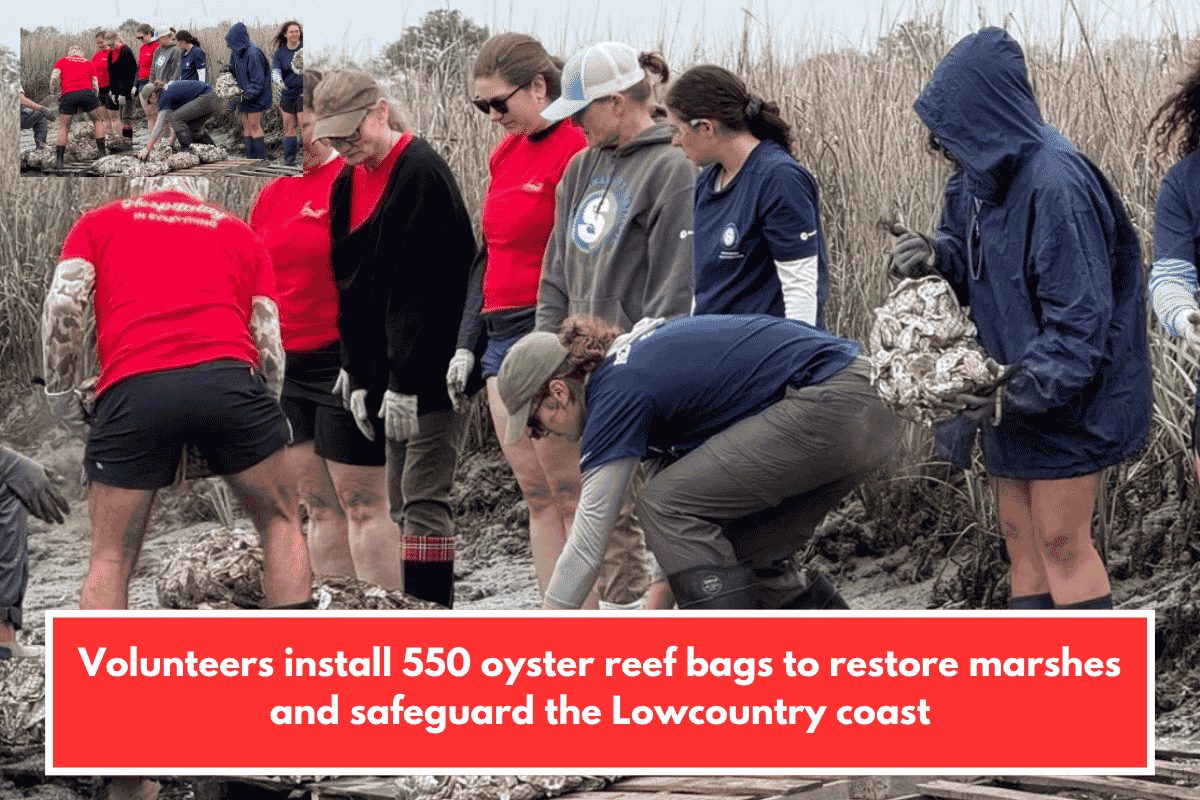
Along the coast of Charleston County, a powerful environmental effort is turning something as simple as discarded oyster shells into a natural shield against erosion and flooding. What once looked like waste is now playing a key role in protecting the Lowcountry’s fragile coastline.
How Oyster Shells Are Becoming Coastal Protection
At Oldtown Creek, volunteers and environmental groups recently placed around 550 oyster reef bags along the shoreline. These reefs are made using recycled oyster shells collected from restaurants and the public.
Once placed in the water, the reefs start working immediately. Oysters naturally form structures that help break wave energy, slow down erosion, and stabilise the shoreline. Over time, these reefs can support a large number of oysters, creating a strong, living barrier.
Why Oyster Reefs Matter
Oyster reefs do more than just protect land. They also improve the overall health of the ecosystem.
A single oyster can filter a large amount of water every hour, helping to clean and improve water quality. As the reefs grow, they also become a home for fish, crabs, and other marine life, increasing biodiversity in the area.
Experts say these reefs act like nature’s defence system, protecting not just the coast but also the entire ecosystem around them.
The Work Behind Each Reef
Building these reefs is not a quick process. It involves months of preparation and teamwork.
The process begins with collecting used oyster shells. These shells are then cleaned, sorted, and packed into mesh bags. Volunteers are involved at every step, from preparing the shells to placing the reef structures in the water.
Organisations like South Carolina Department of Natural Resources and Charleston Waterkeeper play an important role in managing and guiding these efforts.
Restoring Lost Marshland
The project is also helping to restore marsh areas that were damaged years ago. Some parts of the coastline had lost their grass and turned into mudflats due to environmental changes.
To bring these areas back to life, teams have:
- Added oyster reefs
- Dug tidal channels
- Replanted marsh grass
These combined efforts are slowly helping the marsh recover and become healthier again.
Impact on Local Communities
For nearby communities, this work is not just about the environment. It also helps reduce flooding and protects homes.
In areas like Maryville, frequent flooding has caused problems such as water damage and mould. By restoring natural barriers like oyster reefs, the project helps reduce these risks and improves living conditions.
Local leaders say that a healthy environment is directly connected to a healthy community.
A Long-Term Investment
Although the reefs have already been placed, their full impact will take time. As the oysters grow and the ecosystem develops, the benefits will become stronger.
Experts and volunteers say the results are already visible, with more plant growth, marine life, and improved shoreline stability.