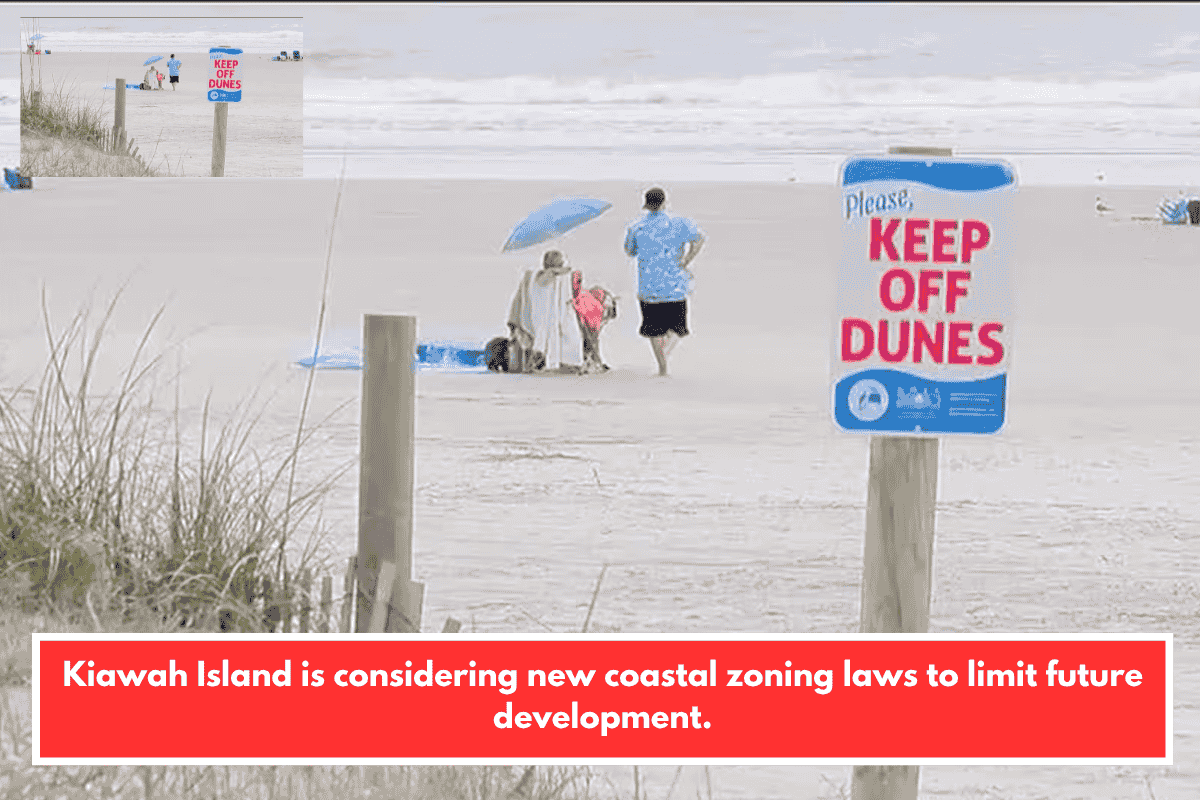
A new proposal on Kiawah Island in South Carolina could change how future homes are built along its beautiful coastline. Local leaders are planning stricter zoning rules to protect the beach, dunes, and nearby properties from storms and erosion.
New Zoning Proposal for Kiawah Island
Leaders in Kiawah Island are reviewing a plan called a beachfront overlay zoning district. This proposal would apply to properties along the island’s 10-mile shoreline.
The main aim is to create safer and more environmentally friendly development rules along the beachfront. Officials want to make sure construction does not harm the natural landscape or increase risks during storms.
How the Buffer Zones Will Work
Under the proposed plan, the beachfront area will be divided into two separate buffer zones:
- Seaward buffer zone (closer to the ocean):
No new buildings or structures will be allowed in this area. - Inland buffer zone (slightly away from the ocean):
Limited construction will be allowed, but only up to 20% of the land area.
This approach is designed to create a smooth transition from developed land to the natural beach environment.
Why These Changes Are Important
According to town officials, the need for these rules comes from growing environmental concerns.
Bradley Belt explained that the island’s coastline is constantly changing due to natural forces. Strong storms and rising sea levels have already caused damage in the past.
Key reasons behind the proposal include:
- Protecting sand dunes, which act as natural barriers
- Reducing the impact of storm surges
- Preventing long-term erosion of the beach
- Preserving wildlife habitats along the shoreline
Dunes are especially important because they help absorb the force of waves and storms, reducing damage to homes and infrastructure.
Balancing Growth and Nature
The proposal does not affect existing homes or properties. However, it will change how future construction is planned along the beachfront.
Officials understand that property owners may want to develop their land, but they also stress the importance of protecting the island as a whole.
The goal is to find a balance where development can continue, but in a controlled and sustainable way.
What Happens Next
The plan is still under review, and no final decision has been made yet. Local authorities are collecting feedback from residents and stakeholders.
More public meetings are expected before the proposal is approved or modified. This allows the community to share their opinions and concerns.