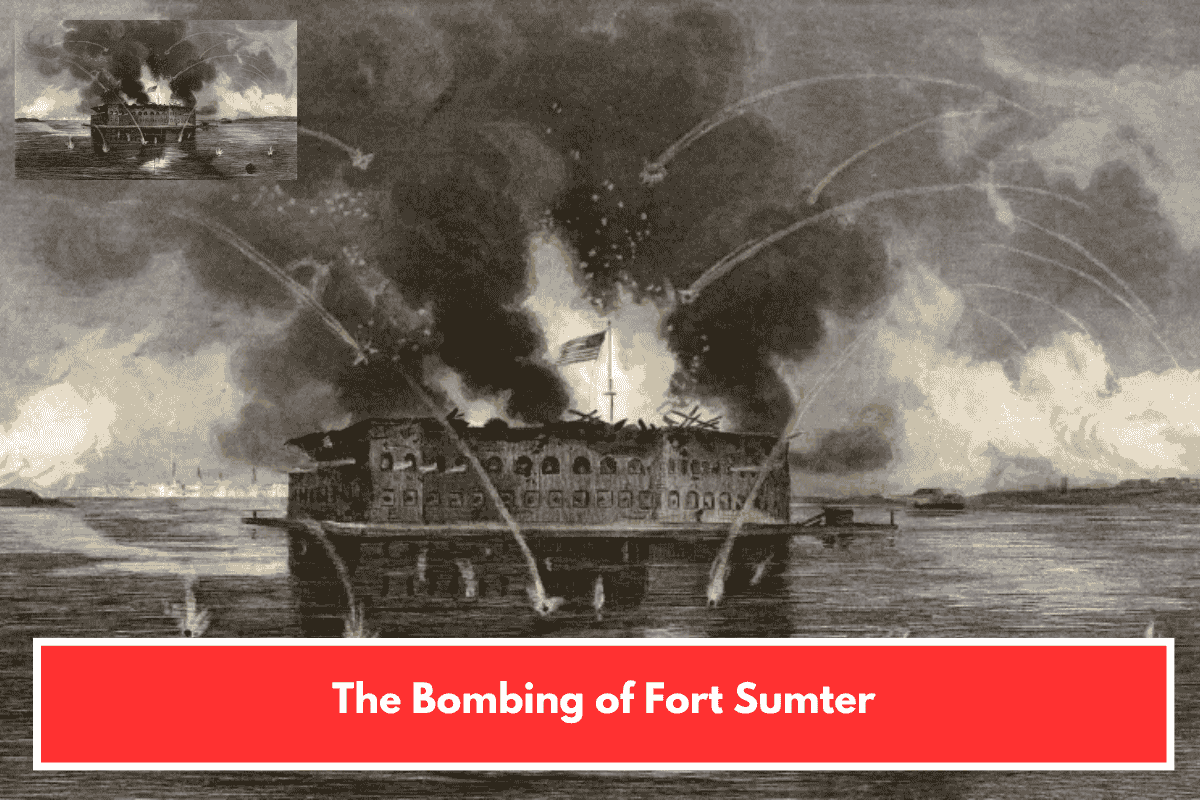
The events at Fort Sumter marked a turning point in American history, as tensions between the Union and the Confederacy finally exploded into open war. What began as negotiations quickly turned into the first shots of the American Civil War.
The Final Attempt at Peace
In the early hours of April 12, Confederate representatives arrived at Fort Sumter to deliver a message from P. G. T. Beauregard to Union commander Robert Anderson.
Beauregard offered to avoid attacking the fort if Anderson agreed to evacuate it. After discussing with his officers, Anderson replied that he would leave by April 15—but only if he did not receive new orders or supplies from his government.
He also promised not to fire unless attacked first.
Rising Tension and Failed Relief
At the same time, a small Union relief fleet was trying to reach the fort. However, the ships were scattered and weak in number, far from the strong show of force that President Abraham Lincoln had intended.
Seeing this, Confederate leaders believed Anderson’s delay was meaningless. They decided not to wait any longer.
The Decision to Attack
Shortly after 3 a.m., Confederate messengers informed Anderson that they would begin firing within an hour.
Anderson calmly escorted them out and reportedly said that if they did not meet again in this world, he hoped they would meet in a better one—showing the seriousness of what was about to happen.
The First Shots of War
At 4:30 a.m., the first shot was fired, officially starting the conflict.
- Henry S. Farley fired the opening shell
- The signal came from Fort Johnson
- Cannons around the harbor began firing rapidly
Soon, the sky over Charleston was filled with smoke and fire. The bombardment had begun.
The Strength of Both Sides
The Confederates had a major advantage:
- Around 4,000 soldiers
- At least 70 cannons
In contrast, Anderson’s forces had:
- About 85 soldiers and some civilians
- 48 cannons, but only 15 were usable
The fort itself was designed to defend against sea attacks, not land-based artillery, putting the Union at a disadvantage.
The Union Response
The Union forces waited until daylight to respond. Around 7 a.m., Abner Doubleday fired the first return shot.
However, the response was limited:
- Only a few guns were used
- There was a shortage of ammunition
- Makeshift supplies had to be created using cloth and even socks
Their fire caused little damage to Confederate positions.
Witnessing the Battle
People in Charleston watched the battle from rooftops, describing it as a massive explosion of fire and sound.
Meanwhile, Union ships arrived offshore but could not help. The rough sea and confusion among commanders meant that no effective support reached the fort.
Nightfall and Continued Bombardment
By evening, Union forces reduced their firing to save ammunition. However, Confederate guns continued firing throughout the night at regular intervals.
Rain and strong winds added to the harsh conditions, making the situation even more difficult for the defenders inside the fort.
The bombardment of Fort Sumter marked the official beginning of the American Civil War. What started as a political conflict turned into a full-scale war that would last for years and change the nation forever. The events show how failed negotiations, miscommunication, and rising tensions can quickly lead to violence. Fort Sumter remains a powerful symbol of that moment when words ended and war began, shaping the future of the United States.