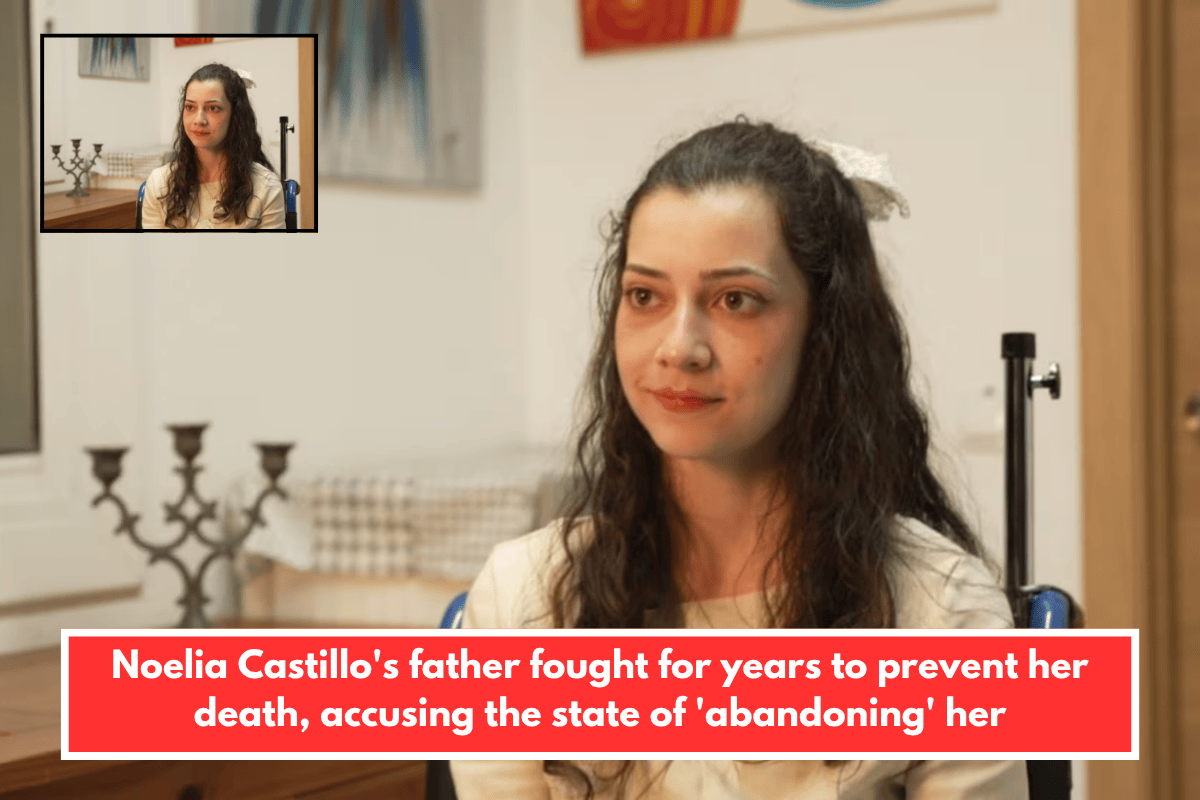
A deeply emotional and complex case in Spain has come to an end after years of legal battles, raising serious questions about euthanasia, mental health, and individual rights.
Legal Battle Over Euthanasia Ends
A 25-year-old woman, Noelia Castillo, has died through euthanasia after a long legal fight with her father, Geronimo Castillo. The case went through multiple courts before the final decision allowed the procedure.
Spain’s top courts, including the Spanish Supreme Court and later the Constitutional Court of Spain, ruled in favour of Noelia’s right to choose euthanasia. A final appeal was also rejected by the European Court of Human Rights.
Father’s Opposition and Concerns
Geronimo Castillo strongly opposed his daughter’s decision. Supported by a legal group, he argued that her mental health condition affected her ability to make such a serious choice.
He also criticised the system, saying that more mental health treatment should have been provided instead of allowing euthanasia.
Noelia’s Perspective and Struggles
Noelia Castillo had spoken openly about the pain she had experienced over the years. She suffered from both physical and emotional trauma, including a past assault and a suicide attempt that left her paralysed.
She stated that her suffering was constant and unbearable, and she believed she met the legal conditions required for euthanasia under Spanish law.
In her final interview, she acknowledged the pain her decision would cause her family but maintained that her own suffering could not be ignored.
Court Decisions and Final Outcome
The case moved through several stages:
- Initial approval by a medical board
- Temporary suspension after a legal challenge
- Final approval by higher courts
Ultimately, all legal challenges were rejected, confirming her right to proceed. The final decision allowed the procedure to take place, which occurred on Thursday evening.
Debate Around Mental Health and Choice
This case has sparked a wider discussion about euthanasia laws, especially when mental health conditions are involved. Some believe individuals should have full control over their own decisions, while others argue that such choices should be more strictly evaluated when mental illness is present.