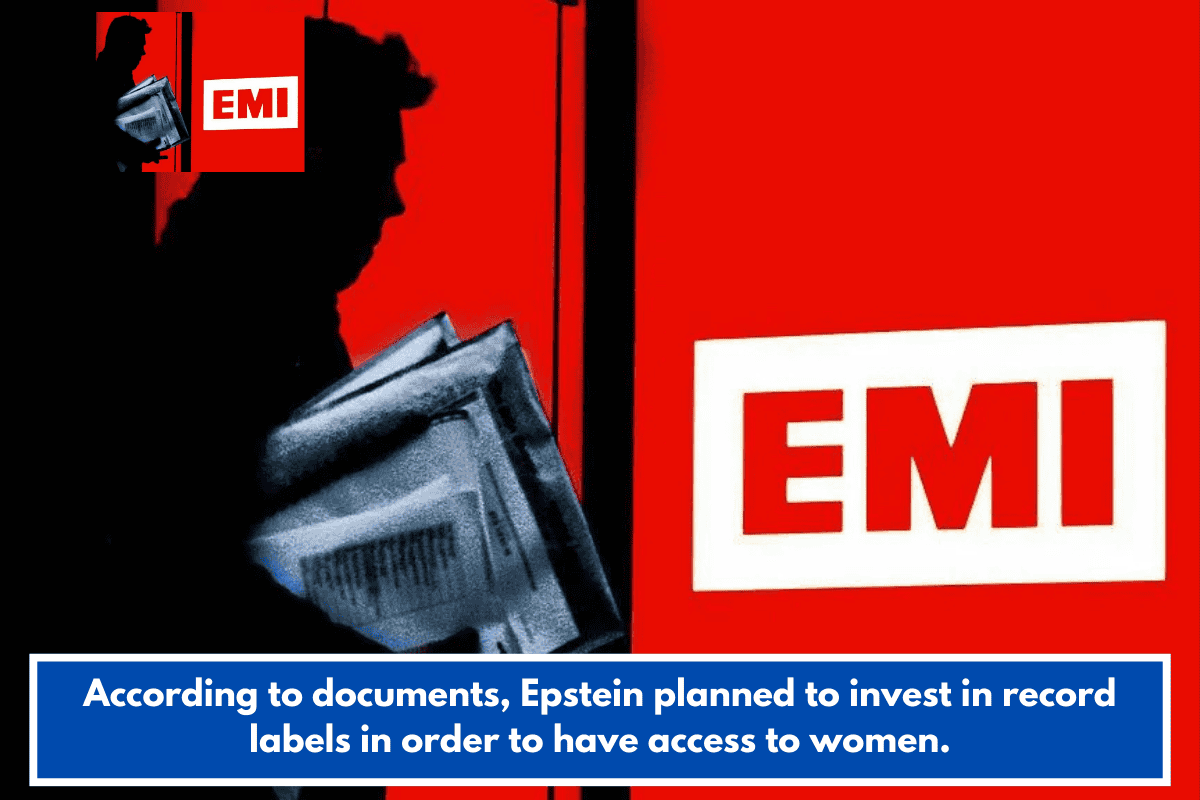
The article you’ve shared reports on newly released emails from the US Department of Justice (DOJ) showing that Jeffrey Epstein and associates discussed a potential investment in the music company EMI around 2010–2011.
Here’s a clear breakdown of what it says:
Key Figures Mentioned
- Jeffrey Epstein – Financier and convicted sex offender.
- David Stern – London-based German businessman, reportedly close to Prince Andrew.
- Lord Mandelson – UK politician and former Business Secretary.
- Tommy Mottola – Former CEO of Sony Music.
- Kevin Law – US businessman from Connecticut.
- KKR – Major private equity firm.
- Citigroup – EMI’s main lender at the time.
EMI (Electric and Musical Industries) was one of the major global music companies, home to artists like The Beatles and Pink Floyd.
- By 2010, EMI was financially struggling.
- In 2011, Citigroup took control.
- In 2012, EMI was broken up and sold to Universal Music Group and a Sony-led consortium.
What the Emails Suggest
According to the DOJ release:
- David Stern forwarded Epstein an article about EMI’s financial problems.
- Stern described the music industry as “related to P,” which the DOJ files suggest was Epstein’s shorthand for women.
- Stern frequently used this coded language (“P factor”) when discussing locations or events.
- Epstein showed interest in pursuing a deal and asked whether “mandelson” needed to be involved.
- Lord Mandelson appears to have exchanged emails about EMI contact details.
- Epstein suggested bringing in Tommy Mottola to run EMI if a deal happened.
- Later discussions referenced possibly including “Andrew from the UK,” though it’s unclear whether that meant Prince Andrew.
Importantly:
- The deal never went ahead.
- Appearing in the files does not imply wrongdoing.
- Several people named have denied involvement in bidding or wrongdoing.
Broader Context
The emails reflect:
- Epstein’s ongoing attempts to enter high-profile industries (music, fashion, modeling).
- His use of intermediaries to explore deals.
- Repeated discussions about industries that may have provided social access, according to the language used in emails.
The article also references past suspicions in France regarding Epstein associate Jean-Luc Brunel and the modeling industry.
What This Means
- There is no evidence in the article that EMI or those mentioned engaged in criminal activity related to Epstein.
- The emails primarily show exploratory business discussions and disturbing language.
- EMI ultimately went through a conventional financial restructuring and sale process.
If you’d like, I can also:
- Explain who Lord Mandelson is in more detail
- Summarize EMI’s collapse and sale timeline
- Clarify Prince Andrew’s connection to Epstein
- Or break down the DOJ document release itself
Let me know what angle you want to explore.