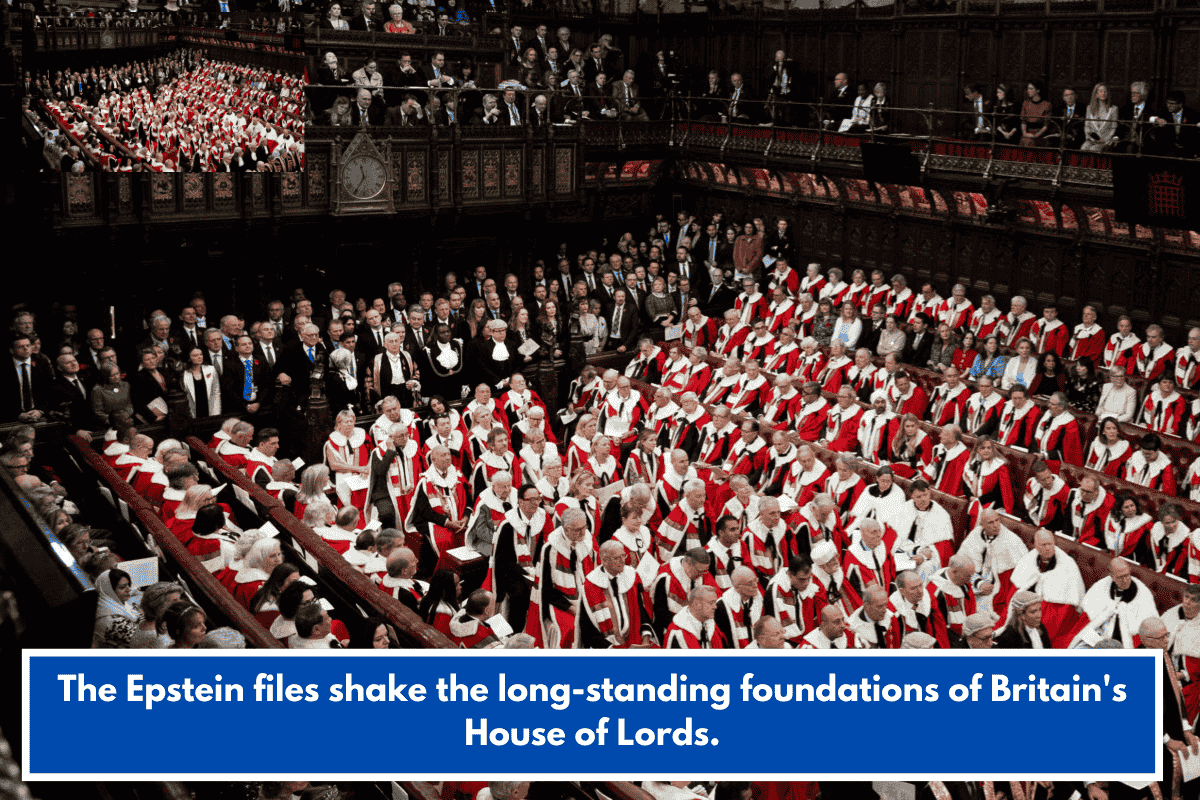
The Jeffrey Epstein scandal has triggered a resignation in Britain’s House of Lords, spotlighting the chamber’s archaic structure, slow reforms, and challenges in ousting problematic members. Peter Mandelson, a former UK ambassador and life peer, quit after his Epstein ties surfaced—including a message offering “a Lord on the board”—and now faces a police probe for misconduct.
House of Lords Basics
- Composition: Over 850 unelected members-for-life (lords/ladies), including 92 remaining hereditary peers, life peers (appointed notables), and bishops.
- Role: Reviews and amends bills from the elected House of Commons but ultimately yields to it.
- History: Evolved from 700-year-old noblemen; 1999 reforms evicted most hereditaries, but 92 stayed temporarily.
Epstein Fallout and Scandals
- Mandelson Case: Resigned but keeps his title; highlights weak expulsion rules.
- Others: Lord Doyle (Starmer aide) under fire for ties to a child image convict. Past examples like Jeffrey Archer (jailed for perjury) and Conrad Black (fraud) stayed until rules changed in 2014—still, no expulsions for behavior.
- Limits: Peers can be removed for jail time or non-attendance, but titles persist without rare new laws.
Reform Debates
Critics call it “semi-feudal” and undemocratic; supporters value its scrutiny. Keir Starmer’s Labour plans to end hereditary seats (compromised to allow some “recycling”) and eventually replace it with a representative body. Recent ideas: 80-year retirement age, better vetting. Green Party pushes abolition for an elected “Senate.”
This echoes broader UK tensions over elite accountability, with Epstein files amplifying calls for rigorous peer selection beyond prime ministerial picks. Progress remains “glacial,” per experts like Meg Russell.