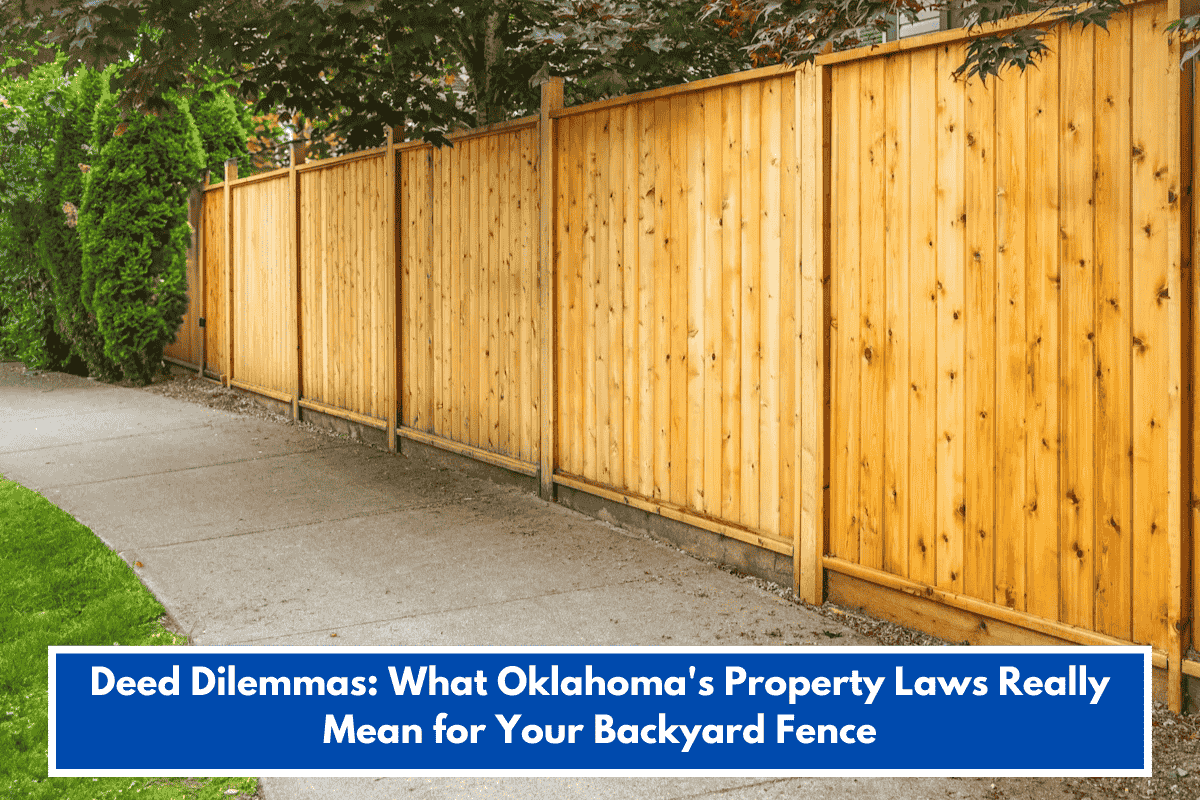
Oklahoma property deeds define legal boundaries, but backyard fence issues often hinge on state fence laws, surveys, and risks like adverse possession rather than deed details alone. Disputes arise from misplaced fences encroaching on deeds, requiring notice and potential court action. Understanding these rules helps avoid costly fixes or land loss.
Fence on Property Lines
Oklahoma allows fences on the property line (boundary fences) with shared responsibility for construction and maintenance between adjoining owners. Under Title 4, §4-150.1, if a survey shows the line crossing an existing fence, notify the neighbor in writing with the survey, proposed changes, and warning of potential fees before altering it. Without agreement in 30 days, file in district court; the prevailing party gets attorney fees and costs.
Common Deed Dilemmas
Deeds reflect recorded boundaries, but old fences may not match due to surveys or errors, leading to encroachment claims. Building inside your line avoids disputes but risks ceding land via adverse possession if left long-term. Always get a professional survey first, comply with local zoning (e.g., height limits), HOAs, and permits.
Adverse Possession Risks
A neighbor can claim your land (per deed) through adverse possession after 15 years of open, continuous, exclusive, hostile, and actual use—like mowing or fencing it off. Paying taxes defeats claims under recent proposals, but hostility (no permission) is key. Courts examine possession elements; permission or interruption resets the clock.