Oregon is actively advancing regulations for self-driving cars through proposed legislation while relying heavily on federal FAA rules for drones, with some state-specific restrictions emerging. These efforts balance innovation, safety, and local control.
Self-Driving Cars
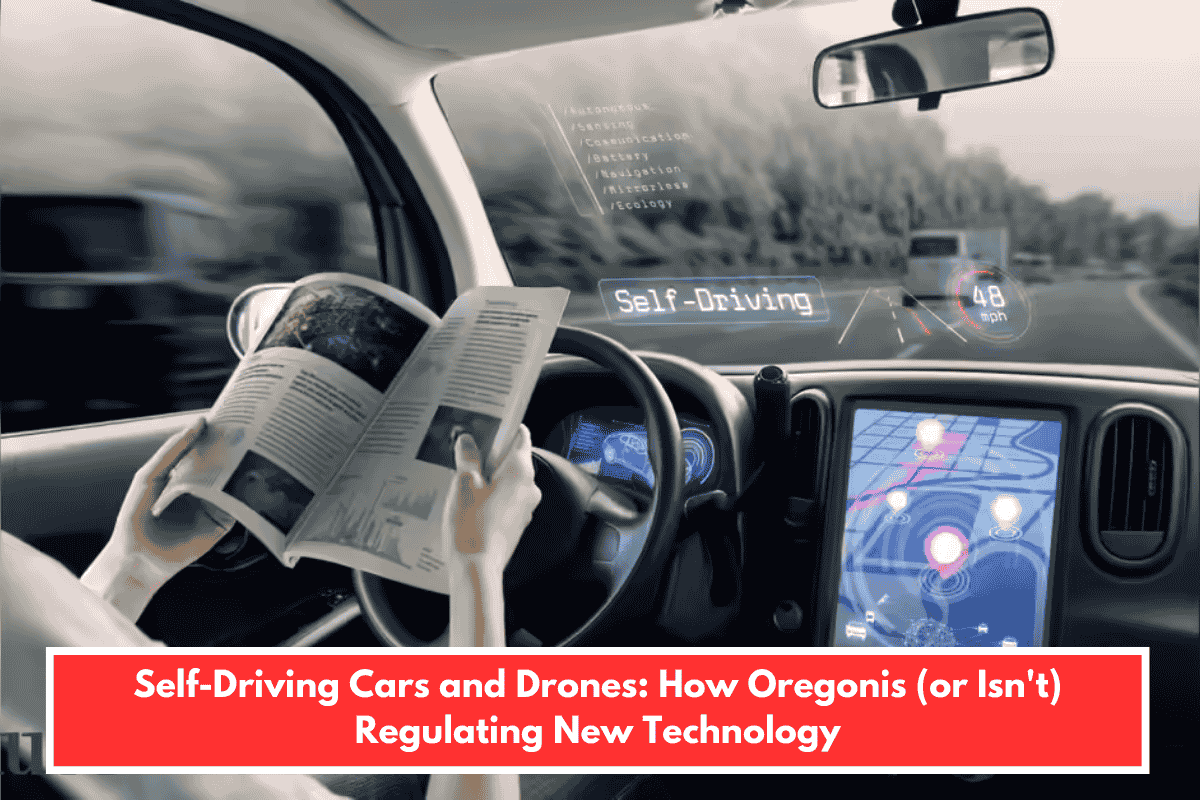
House Bill 4085, introduced in the 2026 Oregon legislative session, would permit fully autonomous vehicles—like those from Waymo—to operate without a human driver for rides or deliveries, provided they meet safety standards and have emergency support available. The bill assigns oversight to the Oregon Department of Transportation (ODOT), which would handle authorizations, insurance, and compliance with state vehicle laws, while prohibiting local governments from banning or uniquely taxing them. As of February 2026, HB 4085 remains in the House Transportation Committee awaiting a public hearing on February 9.
Drone Regulations
Oregon drones follow FAA rules, including registration for devices over 0.55 lbs, Remote ID requirements, and the Recreational UAS Safety Test for hobbyists. State laws prohibit weaponized drones (Class C felony), restrict flights over private property below 400 feet without permission, and allow law enforcement use with warrants while requiring public agency registration with the Department of Aviation. Ongoing updates include proposed Oregon State Parks rules for 2026, classifying areas as prohibited (e.g., campgrounds, sensitive habitats), conditional, or open for takeoff/landing, with public comments shaping final adoption.
Key Gaps
Oregon lacks comprehensive statewide drone operation mandates beyond FAA compliance and targeted bans, unlike the proactive HB 4085 push for autonomous vehicles. ODOT serves as the lead agency for AV coordination since 2018, but full implementation awaits bill passage.