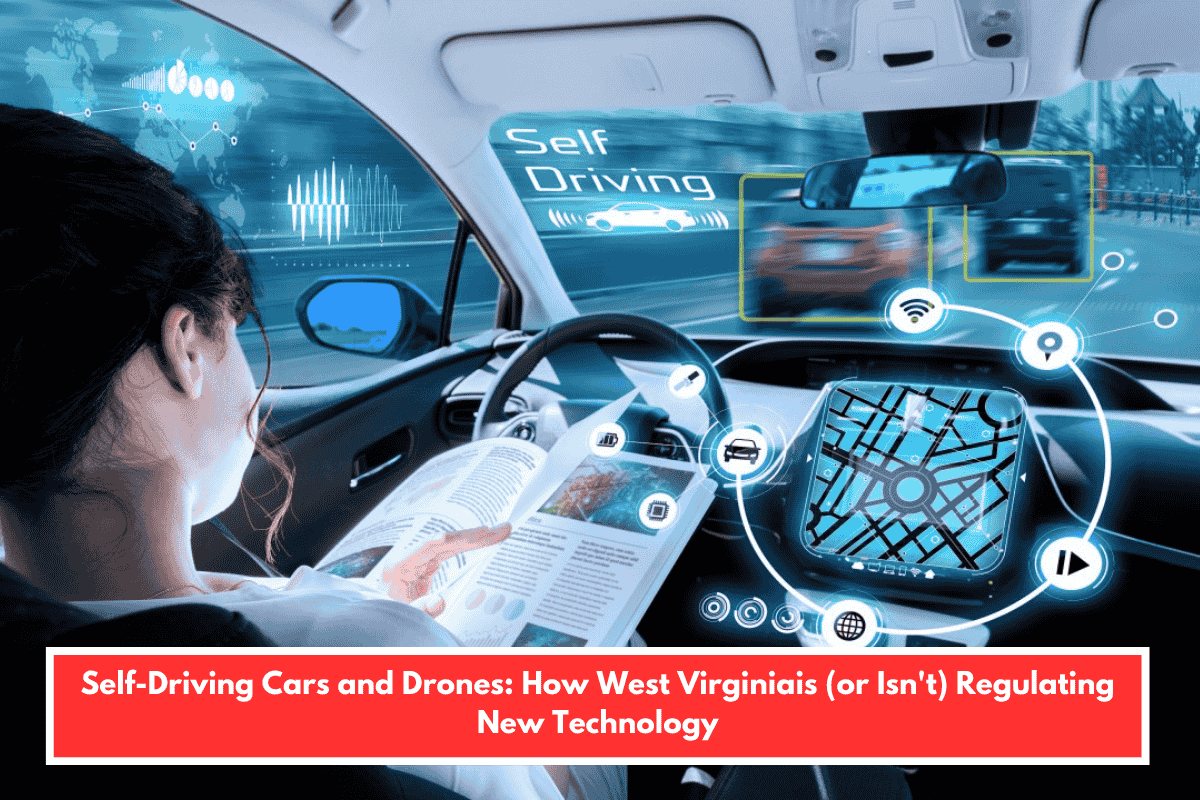
West Virginia permits operation of fully autonomous (self-driving) vehicles on public roads without a human driver, provided strict safety and compliance requirements are met. Drone regulation falls under federal FAA primacy, with limited state-level additions focused on privacy and reckless operation.
Self-Driving Vehicle Rules
State code §17H-1-5 allows fully autonomous vehicles if the automated driving system (ADS) is engaged, achieves minimal risk in failures, complies with traffic laws (or has exemptions), and carries FMVSS certification.
Operators must submit a law enforcement interaction plan covering fleet support contacts, safe removal/towing procedures, mode identification, and safety risks before deployment.
Insurance proof is required via the DMV; vehicles must report crashes at the scene, and platoons (up to three) are limited to highways unless approved otherwise—no major 2026 updates noted.
Drone Regulations
Drones follow FAA rules (Part 107 for commercial, recreational guidelines), with West Virginia prohibiting weaponized UAS and imposing fines for surveillance over critical infrastructure or voyeurism without consent.
No statewide registration beyond FAA; local ordinances may restrict flights in parks or events, but enforcement emphasizes federal compliance over new mandates.
Privacy lawsuits have arisen from unauthorized filming, but no comprehensive state cybersecurity framework for drones exists as of 2026.
Comparison of Oversight
| Technology | Regulation Level | Key Agency |
|---|---|---|
| Self-Driving Cars | Moderate (state AV code) | WV DMV/DOT |
| Drones | Light (federal lead) | FAA (state privacy add-ons) |
WV’s approach enables innovation cautiously, prioritizing federal alignment without aggressive new restrictions.