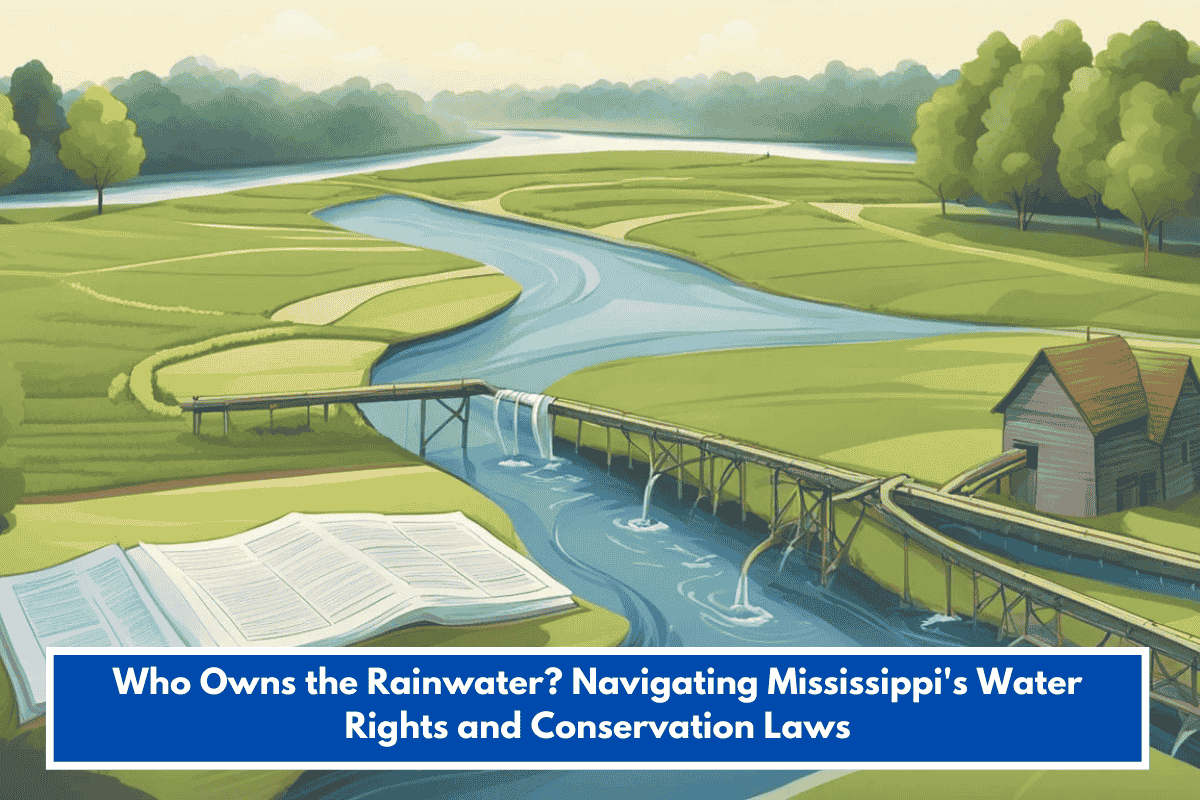
In Mississippi, landowners generally own the rainwater falling on their property under the riparian rights doctrine common east of the Mississippi River, allowing reasonable collection and use without state ownership claims. No specific statutes prohibit rainwater harvesting; it’s legal and encouraged for non-potable uses like irrigation, with no permits needed for small systems under 360 gallons.
Rainwater Harvesting Rules
Rain barrels and cisterns are unregulated statewide for residential stormwater management, per the Mississippi Department of Environmental Quality guidelines.
Riparian owners (those with stream-adjacent land) share surface water access but can’t exhaust supplies or harm neighbors.
Local codes may apply for larger commercial setups, focusing on runoff control rather than ownership.
Broader Water Rights
Mississippi follows riparianism over prior appropriation, prioritizing domestic and reasonable uses without broad permitting for rainwater.
Groundwater pulls from aquifers with no quantitative caps unless local shortages trigger conservation orders.
Conservation pushes voluntary harvesting to ease drought strain, with no “who owns the rain” disputes like in Western states.
Conservation Measures
State programs promote rain gardens and barrels via MSU Extension for landscape savings, tying into stormwater handbooks.
No fines for basic collection, but erosion control laws apply to diverted runoff on developed lots.
Public education emphasizes harvesting to cut municipal demands amid growing populations.