Black ice is a dangerous, nearly invisible layer of ice on roads or surfaces. It forms when moisture like rain or drizzle freezes rapidly on cold pavement, appearing transparent so the dark asphalt underneath shows through, making it hard to detect.
Formation Process
Black ice typically develops at or just below freezing temperatures (around 32°F or 0°C), often from light precipitation hitting colder-than-air road surfaces like bridges or shaded areas.
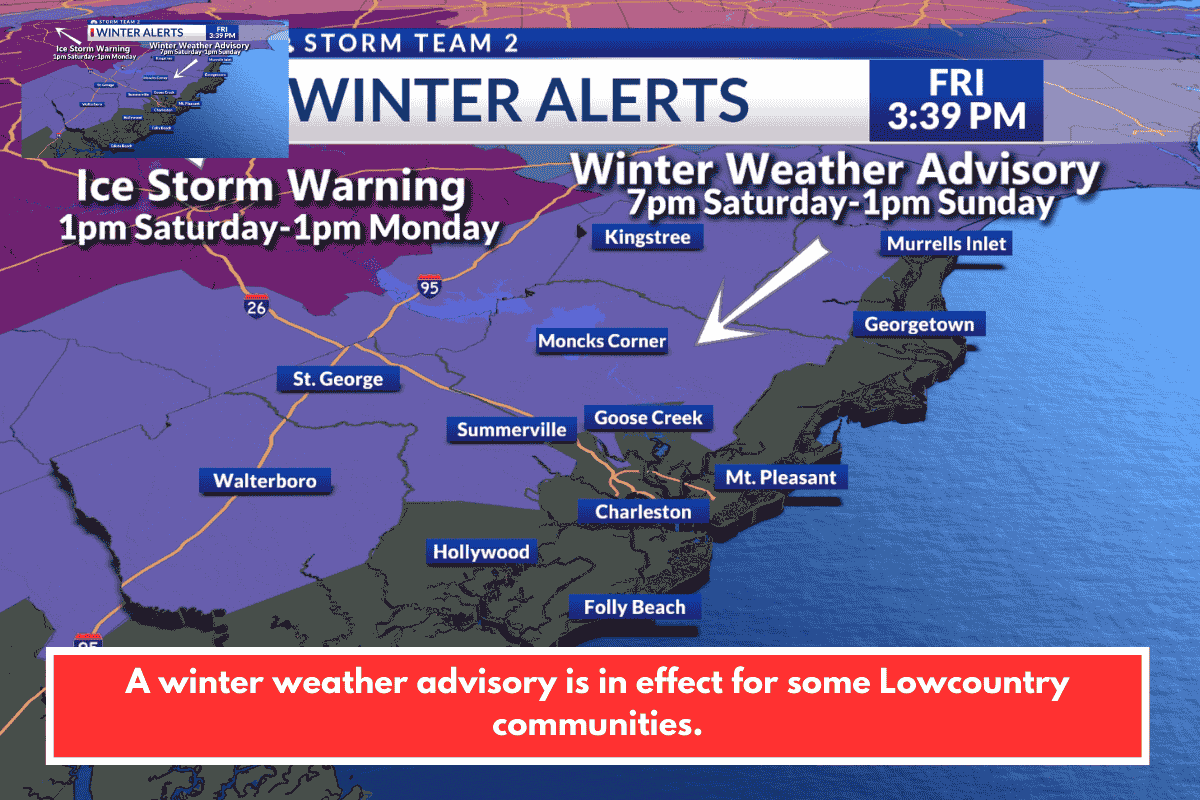
It can persist even after sunrise in spots that stay cool, worsening hazards during the Lowcountry’s current advisory for freezing rain and drizzle.
Spotting Black Ice
Look for glossy or reflective sheen on the road, especially where it appears wetter than surrounding areas, or subtle “dull spots” amid dry pavement.
Test by gently braking from low speed—if tires lose grip suddenly—or watch for shimmering mirages on cooler blacktop; bridges, overpasses, and shaded curves are prime spots in inland Berkeley, Dorchester, and Colleton counties this weekend.
Safety Tips
Slow down, increase following distance, and avoid sudden maneuvers on potentially slick roads during the advisory (7 p.m. Sat to 1 p.m. Sun).
Clear snowmelt early to prevent refreezing, and use headlights to spot glare from ice ahead.