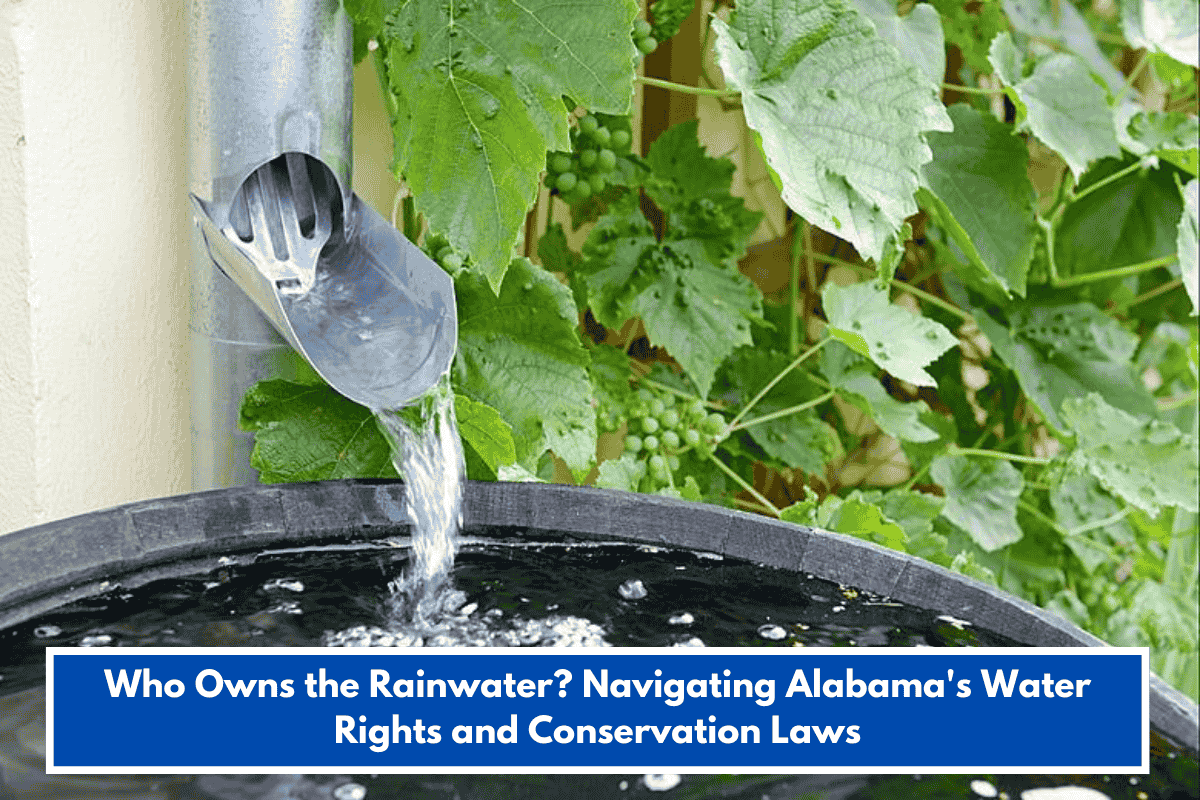
Alabama treats rainwater as a private property right for homeowners, allowing unrestricted collection on your land without state permits. Unlike prior appropriation states like Colorado, Alabama follows riparian doctrine, where water use ties to adjacent land ownership rather than “first in time” claims.
Harvesting Rules
Rainwater harvesting via barrels, cisterns, or roofs is encouraged statewide for irrigation, gardening, or non-potable uses—no volume caps or filings needed for residences. Commercial or agricultural setups may require local plumbing inspections or engineer designs if tied to county codes, but no statewide bans exist. Universities like Auburn promote DIY systems with filters and overflows to stormwater drains.
Conservation Laws
Alabama’s Water Resources Act (Act 2018-445) prioritizes sustainability via management plans, but rainwater diversion doesn’t trigger rights disputes since it doesn’t affect streams or neighbors downstream. HOAs or municipal ordinances might limit visible tanks aesthetically—check yours. Potable use needs treatment to meet health standards, though not prohibited. Incentives like tax credits aren’t widespread, unlike Georgia’s rebates.