Maryland property deeds define exact boundaries, but backyard fences often spark disputes over lines, setbacks, and maintenance under local zoning and common law rules. Deeds recorded with county clerks establish legal ownership, yet fences must comply with county-specific codes to avoid violations or adverse possession claims after 20 years of unchallenged use.
Boundary Determination
Property lines come from the deed’s metes and bounds description or a recorded plat, verifiable via county land records or a survey. Fences cannot encroach without permission; if on the line, they may be considered “division fences,” but Maryland follows a “fence-in” rule for livestock owners only—no shared duty for non-livestock properties. Disputes require a professional survey to confirm lines before building.
Fence Regulations
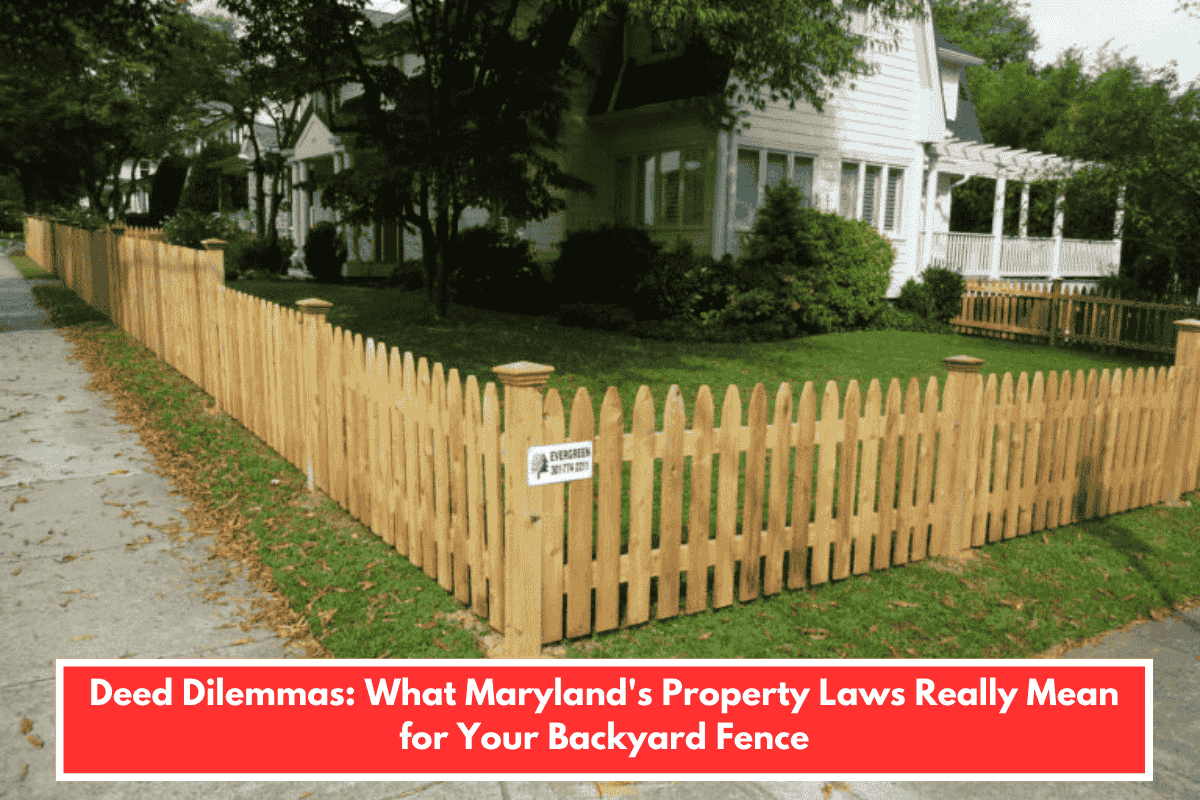
Local codes vary: many require setbacks (e.g., 5 feet from streets in Wicomico County), height limits (often 4-6 feet rear, 42 inches near front yards in Baltimore County), and permits for over 4 feet or in special areas like floodplains. Corner lots restrict heights in sight triangles to 3 feet for safety; historic zones need extra approvals. Check your county (e.g., Prince George’s mandates permits regardless of height).
Adverse Possession Risks
A misplaced fence risks “adverse possession” if used openly, continuously, and hostilely for 20 years, potentially transferring ownership via quiet title action. Defensive claims under Md. Code, Cts. & Jud. Proc. § 5-103 bar lawsuits after this period if standards are met. Written agreements recorded on deeds can clarify shared fences and costs.
Resolution Steps
Review your deed and neighbor’s at the county clerk; hire a surveyor for disputes. Negotiate agreements in writing, recorded against titles; mediate via community associations before court. Violations may lead to county enforcement or lawsuits for removal.