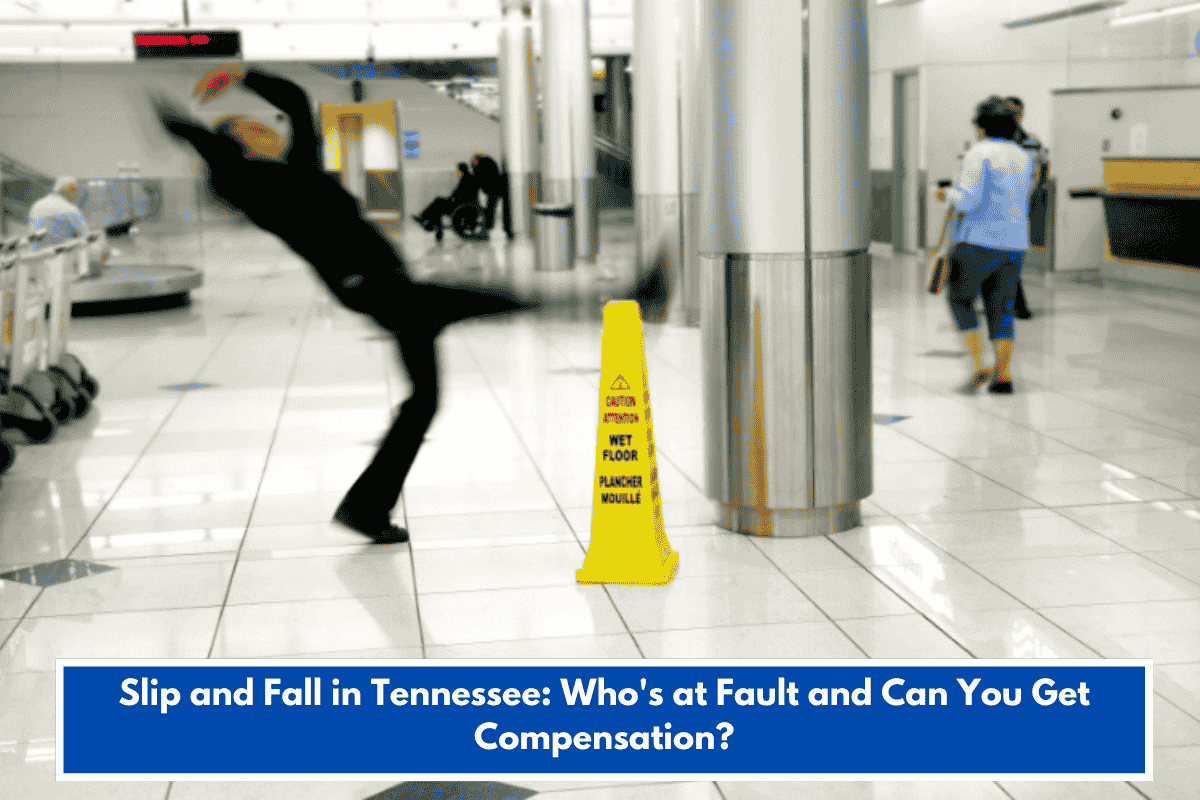
In Tennessee, slip and fall cases fall under premises liability law, where property owners can be held at fault if they fail to maintain safe conditions or warn of known hazards. Compensation is possible if negligence is proven, but recovery depends on comparative fault rules and timely filing.
Determining Fault
Property owners owe a duty of reasonable care to visitors, which includes fixing hazards or providing warnings once they have actual notice (knew about it) or constructive notice (should have known due to duration). Victims must prove four elements: duty existed, it was breached, the breach caused the injury, and damages resulted. Common hazards include wet floors, uneven surfaces, poor lighting, or clutter.
Comparative Negligence Rule
Tennessee applies a modified comparative fault system with a 50% bar: if the victim is less than 50% at fault, compensation reduces proportionally (e.g., 25% fault cuts award by 25%). If 50% or more at fault, no recovery is allowed. Defenses often claim “open and obvious” dangers or adequate warnings like signs.
Types of Compensation
Victims can seek economic damages (medical bills, lost wages, therapy) and noneconomic damages (pain, suffering, emotional distress), with noneconomic caps at $750,000 generally or higher for severe cases. Settlements vary: minor injuries $10,000–$25,000; moderate $25,000–$75,000; severe $75,000+. Examples include $525,000 jury award for a Walmart slip and $153,500 Kroger settlement post-surgery.
Key Deadlines and Tips
Claims must be filed within one year of the incident under Tenn. Code Ann. § 28-3-104. Document everything—photos, witnesses, medical records—to prove notice and overcome defenses.