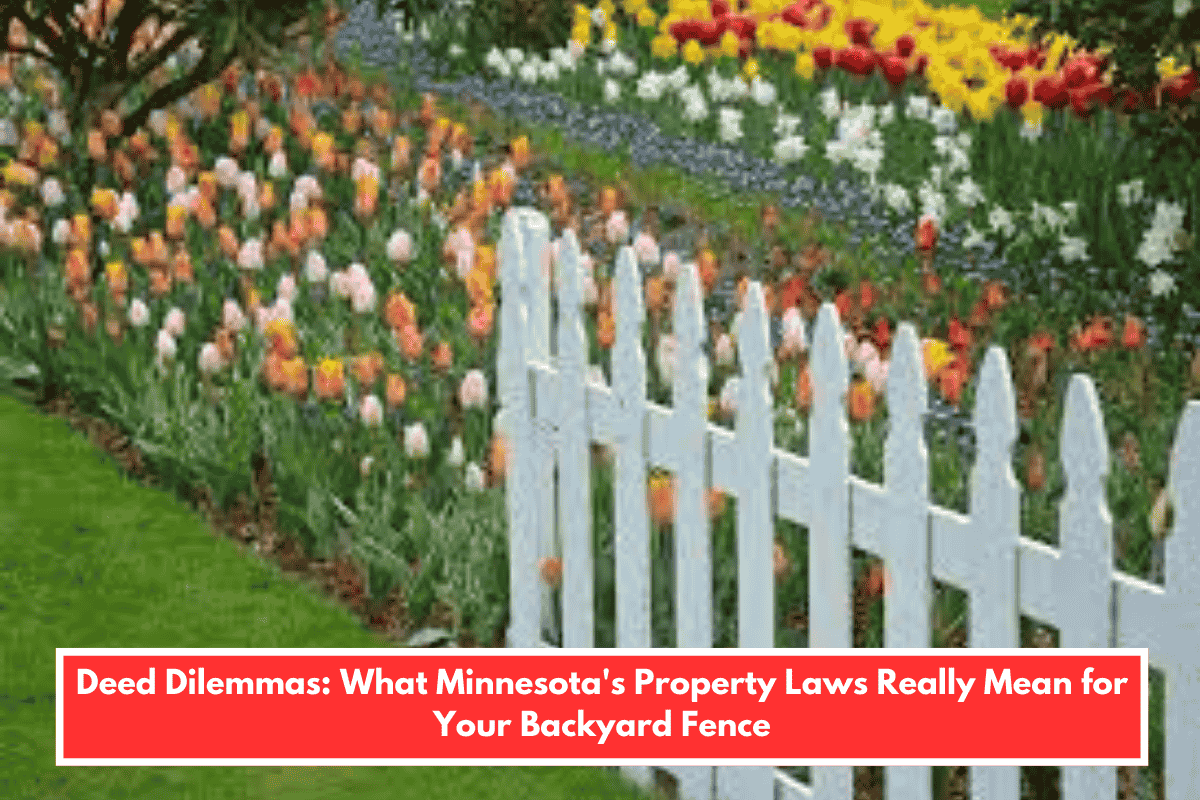
Minnesota’s property laws, particularly partition fence statutes under Minn. Stat. Chapter 344, require neighboring landowners of improved and used land to share costs equally for a “legal and sufficient” boundary fence when one party requests it. Deeds define ownership boundaries, but fence placement often hinges on surveys, neighbor agreements, or local zoning rather than deed language alone, resolving common backyard disputes.
Partition Fence Rules
A legal fence includes options like 32-inch woven wire with two barbed wires or four barbed wires up to 48 inches high, with posts no more than one rod (16.5 feet) apart. Owners must contribute equally if both lands are improved; otherwise, the fencing party covers full costs unless fence viewers assign shares after a dispute. Voluntary agreements supersede statutory shares.
Ownership and Boundaries
You own and maintain the fence side facing your property, but boundary fences serve both parties without sole ownership. Fences cannot encroach without consent or survey; setbacks apply locally, such as 2 feet from lines or up to property lines with approval, and heights cap at 6 feet in many residential zones. Adverse possession claims rarely arise from fences alone without 15 years’ exclusive use.
Dispute Resolution
Contact township fence viewers for binding assignments on shares, timelines, and sufficiency; appeal lies in district court. Surveys clarify deed lines before building to avoid trespass claims, and HOAs or city codes may impose extra rules like permits for fences over certain heights.