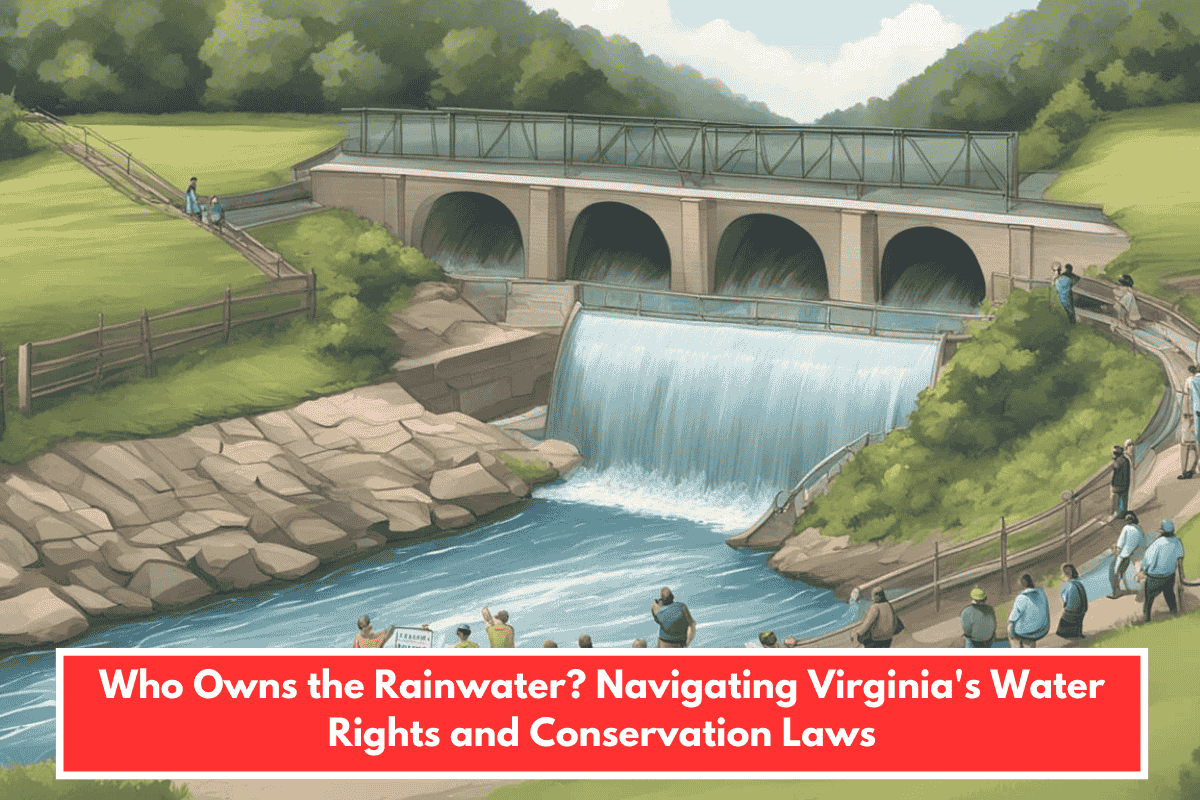
In Virginia, rainwater is treated as an independent source of fresh water that property owners can harvest and own for personal or commercial use, distinct from riparian rights governing surface streams and lakes. State law promotes rainwater collection to conserve resources and reduce strain on public water systems, with regulations focusing on safe usage rather than prohibiting capture. Unlike prior water rights doctrines that limit diversions from shared water bodies, rainwater falling on private property is not subject to state ownership claims.
Ownership Principles
Rainwater is recognized under Virginia Code § 32.1-248.2 as available for residents’ use without riparian restrictions, as it does not originate from public streams or groundwater. Property owners hold rights to collect it from roofs or surfaces on their land, supported by state promotion through the Department of Health (VDH) and Department of Environmental Quality. No permits are needed for basic collection, affirming private ownership for non-potable purposes.
Harvesting Regulations
Virginia’s Rainwater Harvesting System Regulations (12VAC5-635), effective November 2024, classify uses into tiers: non-potable (Tiers 1-3, like irrigation or toilet flushing) requires no permit but registration for larger systems, while potable (Tier 4) needs VDH construction and operation permits. Systems must meet design standards for filtration, disinfection, and backflow prevention to ensure safety. Localities cannot mandate municipal water connections for compliant Tier 4 systems.
Conservation Incentives
The state offers income tax credits for installing systems and reimburses up to $20,000 via programs like Virginia Conservation Assistance Program (VCAP) at $4 per gallon of treated volume. These measures encourage harvesting to ease demands on public supplies and promote sustainability. Owners must maintain operation manuals, conduct inspections, and report to VDH as needed.