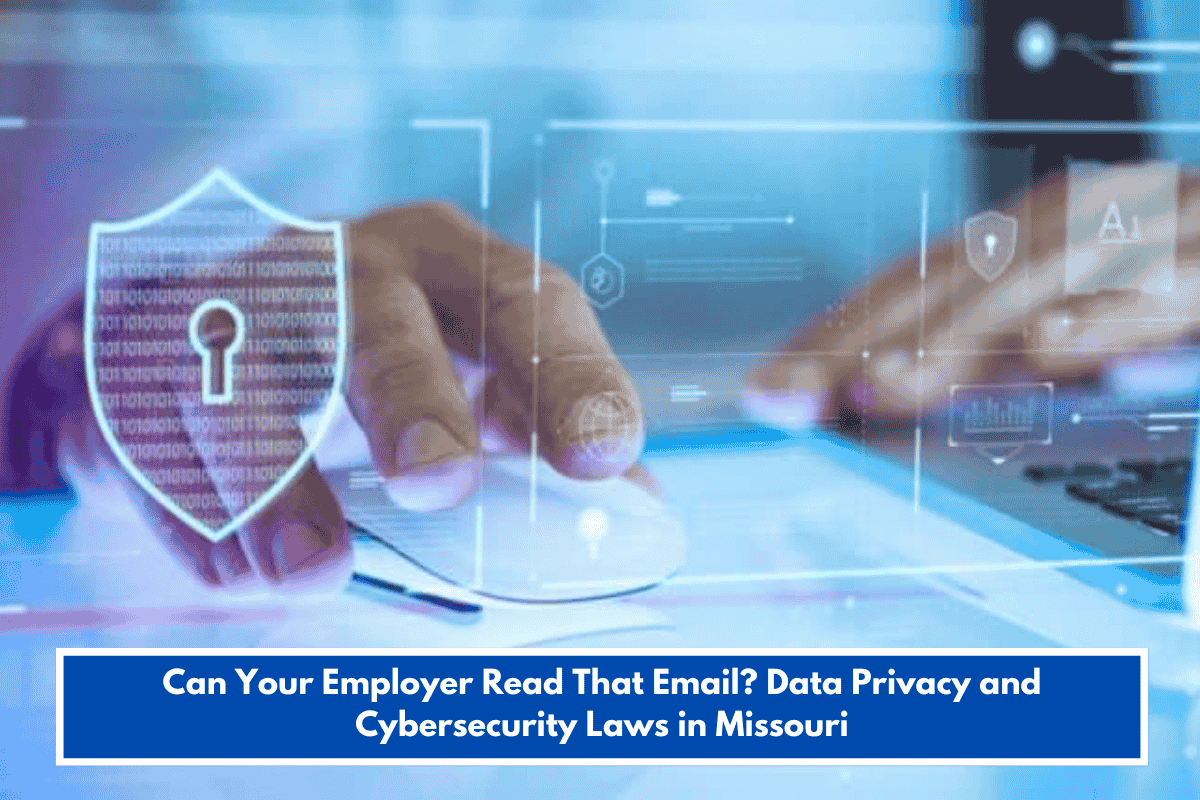
Missouri lacks specific state statutes restricting employer monitoring of work emails, falling back on federal laws like the Electronic Communications Privacy Act (ECPA) of 1986, which permits employers to access communications on company-owned systems for legitimate business purposes. Employers can generally read work emails sent or received via corporate accounts or networks without employee consent, as courts view these as business property with no reasonable expectation of privacy. Personal devices face stricter limits if used for non-work access, requiring consent or narrow business justification to avoid ECPA violations.
Monitoring Permissions
Company-provided email accounts and networks allow full employer access, including real-time surveillance or post-review, upheld in Missouri cases emphasizing productivity and data security. No state notification mandate exists, unlike stricter regimes in Connecticut or California, though best practices recommend policy disclosure to mitigate disputes. Personal emails or devices connected to work systems grant partial access rights, but off-limits personal data like private texts triggers privacy invasion claims.
Data Privacy Framework
Missouri’s data privacy law, effective from 2023 updates, focuses on consumer protections rather than workplace emails, mandating breach notifications but not employee monitoring specifics. Cybersecurity expectations under federal rules like HIPAA for health data or GLBA for finance indirectly require employer safeguards, justifying email scans for threats. Employees retain rights against unreasonable searches, with potential remedies via invasion of privacy torts if monitoring exceeds business needs.
Employee Protections
Unionized workers gain extra safeguards through collective bargaining, while non-compete and trade secret laws reinforce employer monitoring to protect proprietary info. Retaliation for refusing invasive personal monitoring violates federal anti-discrimination statutes, and recent 2026 trends emphasize transparency in tracking policies amid AI surveillance growth. Clear handbook policies balance compliance with trust.
SOURCES
[1](https://www.employmentlawworldview.com/us-state-law-roundup/)
[2](https://apploye.com/blog/employee-monitoring-laws/)
[3](https://www.justiceatwork.com/can-your-employer-legally-monitor-your-personal-devices/)
[4](https://www.seyfarth.com/employment-law-horizon-report.html)
[5](https://connecteam.com/e-employee-gps-tracking-laws-by-state/)