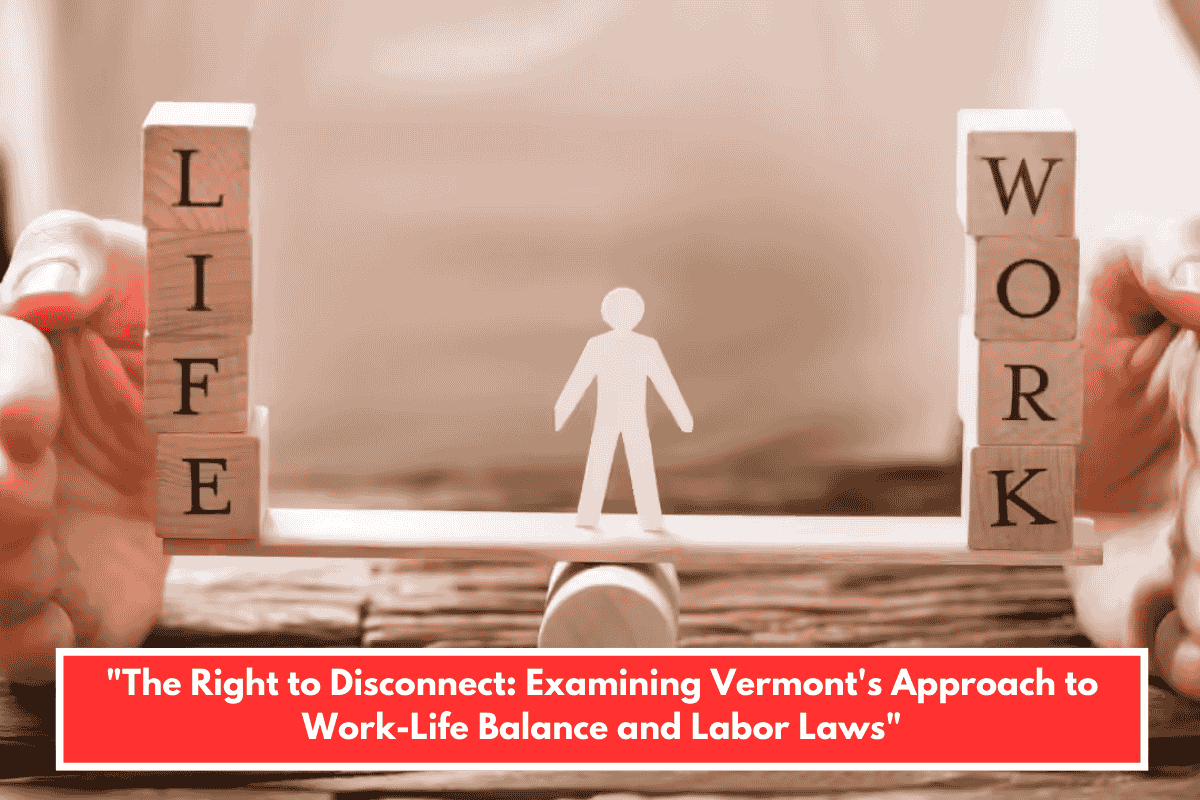
Vermont has explored a “right to disconnect” policy through bill H.263, which aimed to allow employees to ignore work communications outside normal hours, but it did not pass in the 2025 legislative session. This reflects ongoing discussions on work-life balance amid labor shortages, with related proposals like a 32-hour workweek also failing. Instead, Vermont advanced other labor protections, such as expanded unpaid leave and wage transparency.
Bill H.263 Details
Introduced by Rep. Monique Priestley, H.263 proposed granting employees the right to disregard employer contacts after hours, with narrow exceptions for emergencies threatening business, customers, operations, or causing physical/environmental damage. The bill sought to promote mental health and family time but faced opposition from business groups like NFIB over communication challenges and vague exceptions. It stalled in committee and did not advance beyond initial discussions in 2025.
Current Work-Life Laws
Vermont expanded unpaid leave via H.461 (effective July 1, 2025), allowing up to 12 weeks for parental, family, safe (domestic violence), qualifying exigency, or bereavement needs, with broader family definitions. Employers with 5+ employees must disclose wage ranges in job ads (H.704), enhancing transparency. Overtime remains after 40 hours at 1.5x pay, with no state right-to-disconnect mandate.
National Context
While Vermont’s proposal failed, states like New York enacted right-to-disconnect for public employees in 2022, and bills advanced in California and New Jersey (applying to larger employers). Australia’s federal law took effect in 2024 for most workers, excluding small businesses initially. Vermont’s approach prioritizes flexibility amid its worker shortage, where two jobs exist per unemployed person.
Business and Employee Impacts
Supporters argue such laws boost retention and well-being in competitive markets; opponents cite operational hurdles for small businesses. Related 2025 changes include hospital violence prevention and workers’ comp tweaks for non-English speakers. Monitor the 2026 session for reintroduction, as labor reforms continue evolving.
SOURCES
[1](https://www.nfib.com/news/news/2025-vermont-legislative-recap-part-ii-business-regulations/)
[2](https://legislature.vermont.gov/Documents/2026/Workgroups/House%20General/Bills/H.261/Witness%20Documents/H.261~Monique%20Priestley~Overview~3-28-2025.pdf)
[3](https://www.deputy.com/compliance-hub/states/vermont)
[4](https://www.atlantagaestateplanning.com/blog/2023/12/20/buying-vs-renting-the-ongoing-debate-in-georgia/)
[5](https://citizenportal.ai/articles/6100799/Vermont/Committee-hears-three-labor-bills-32-hour-week-limits-on-employee-monitoring-and-a-right-to-disconnect-proposal)