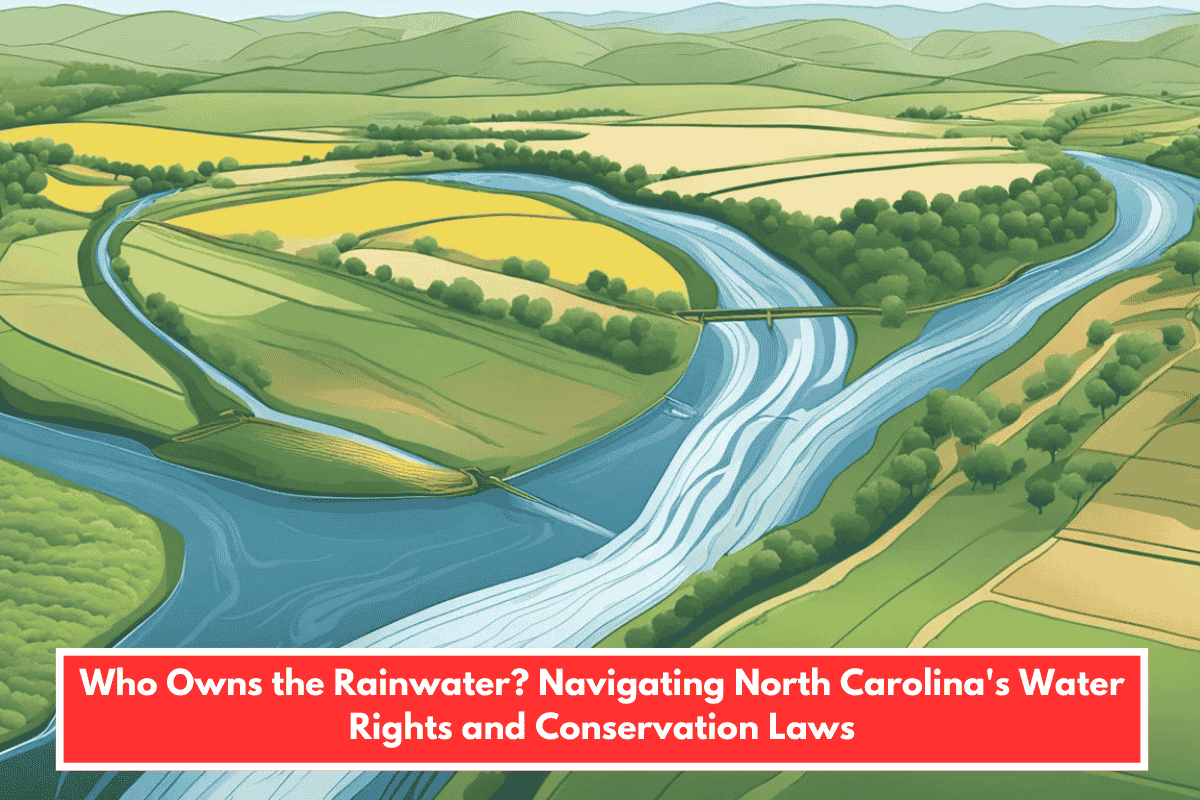
North Carolina follows the common law principle that rainwater and diffuse surface water belong to the landowner on whose property it falls, allowing private capture without state ownership claims. Unlike riparian or prior appropriation states, the state supports rainwater harvesting as a conservation tool, with no permits needed for most residential systems under 5,000 gallons used outdoors.
Ownership Basics
Rainwater is considered private property until it reaches a defined stream or body of water, where public rights may apply under navigability rules. Landowners can collect it freely for non-potable uses like irrigation or toilet flushing, as affirmed by 2009 legislation (State Law 243) that prevents local codes from banning cisterns.
Harvesting Rules
Systems must use roofs or approved surfaces, avoiding contaminated areas like parking lots unless solely for landscaping. No statewide potable use without treatment; local health codes govern indoor applications. Cisterns up to 5,000 gallons for non-spray outdoor use skip permits.
Drainage Disputes
The “Reasonable Use Rule” governs surface water flow between properties—higher landowners must not unreasonably alter, concentrate, or pollute runoff harming lower estates. Violations allow suits for damages or injunctions, balancing development with neighbor rights.
SOURCES
[1](https://www.ntotank.com/blog/rainwater-harvesting-laws-regulations-and-rights-by-us-state)
[2](https://www.ncleg.gov/EnactedLegislation/SessionLaws/HTML/2023-2024/SL2023-137.html)
[3](https://www.hendersoncountync.gov/waterresources/page/how-address-water-drainage-adjoining-parcels)
[4](https://www.epa.gov/waterreuse/summary-north-carolinas-water-reuse-guideline-or-regulation-landscaping-and-onsite-non)
[5](https://www.deq.nc.gov/about/divisions/water-resources/water-planning/water-supply-planning/water-conservation/save-water-6)