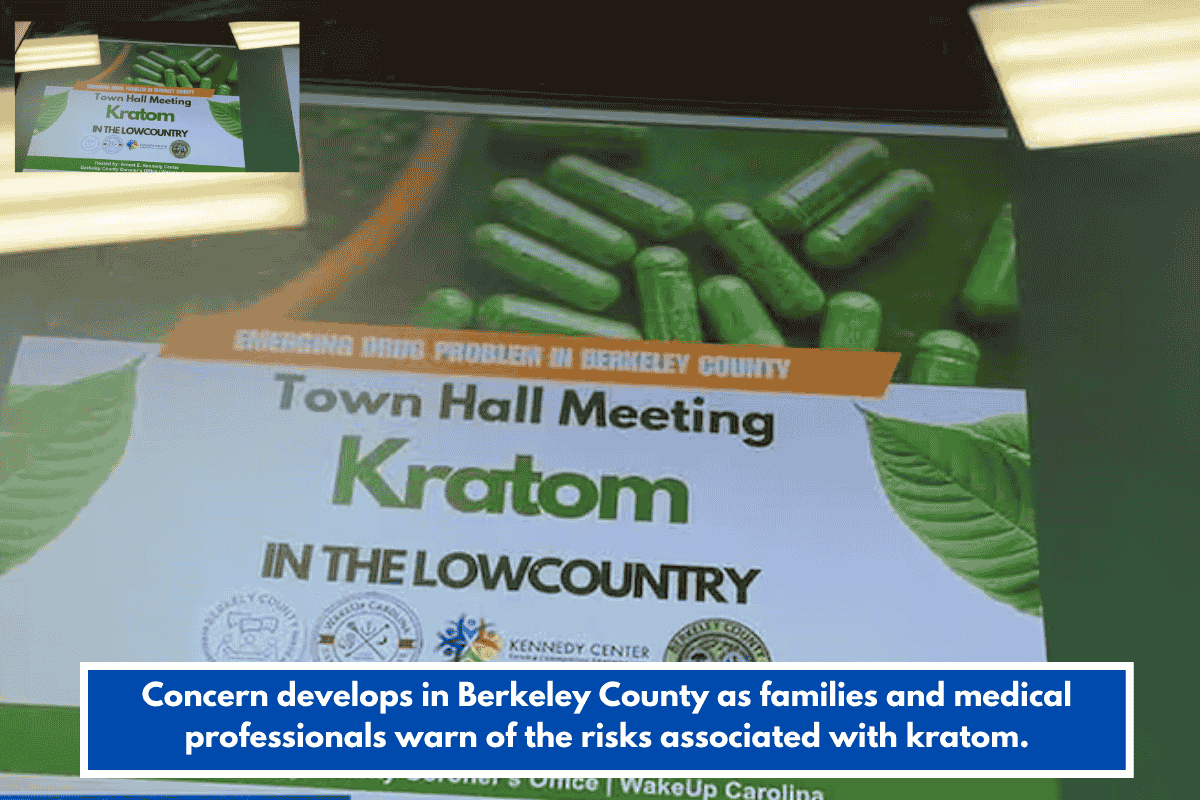
Kratom (Mitragyna speciosa) is a tropical tree native to Southeast Asia, where its leaves have been used traditionally for their stimulant and pain-relieving properties. In the U.S., it’s unregulated by the FDA and sold as powders, capsules, drinks, or extracts at gas stations, smoke shops, and online—often marketed as a natural alternative for pain, anxiety, or opioid withdrawal. Small doses act like caffeine (boosting energy and focus), while higher doses mimic opioids (causing sedation and euphoria). Over 20 strains exist, varying in potency based on leaf vein color (e.g., red for relaxation, green for balance).
Key Concerns from Berkeley County Hearing
This Tuesday’s public hearing at the Berkeley County Administration Building highlighted personal tragedies and data-driven warnings:
- Rising Local Use: Kratom ranks in the top five substances detected in local urine drug screens, per county officials.
- Addiction Stories: Residents like Matthew Hunter shared relapses into addiction, with families noting its easy access creates a “false sense of security” compared to illegal drugs like fentanyl or meth.
- Youth Accessibility: Parents of teens emphasized gas station sales make it too easy for kids to buy, urging family conversations.
The event drew over 120 attendees, turning individual testimonies into community calls for awareness.
Health Risks and Side Effects
Medical experts, including Dr. Kelly Young from Roper’s emergency department, outlined common issues:
- Mild: Nausea, itching, sweating, dry mouth, constipation, frequent urination, vomiting, drowsiness, appetite loss.
- Severe: Weight loss, insomnia, liver toxicity, seizures (per FDA warnings).
- Overdose Potential: High doses can lead to respiratory depression, coma, or death, especially when mixed with other substances.
The FDA has flagged kratom for contamination risks (e.g., salmonella, heavy metals) and over 40 deaths linked to it since 2011, though many involved polydrug use.
Legal Status in South Carolina and Beyond
- SC Lowcountry: Fully legal and unregulated at state/county levels—no sales bans yet, despite Berkeley County’s scrutiny.
- Nationwide: Legal in most states, but banned in Alabama, Arkansas, Indiana, Rhode Island, Vermont, Wisconsin, and parts of others. The DEA lists it as a “drug of concern” but hasn’t scheduled it federally.
- Berkeley Response: Leaders are monitoring bans elsewhere but focused on education, not immediate restrictions.
| Aspect | Proponents’ View | Critics’ View |
|---|---|---|
| Effects | Natural energy/pain aid | Addictive opioid-like high |
| Regulation | Overreach stifles herbal options | Needed for safety/testing |
| SC Status | Widely sold | Hearing sparks awareness push |
Local Context and Next Steps
In the Charleston area (including Berkeley County), kratom’s gas station presence mirrors national trends, with sales booming post-opioid crisis. Families hope stories prevent youth experimentation. For South Carolina updates, check Berkeley County government sites or SC DHEC for health alerts. If you’re in Nārnaund, Haryana, note kratom is banned in India under the Narcotic Drugs Act—similar global concerns drive restrictions.
Stay informed via FDA’s kratom page or local news like Live5News for follow-ups on potential ordinances.