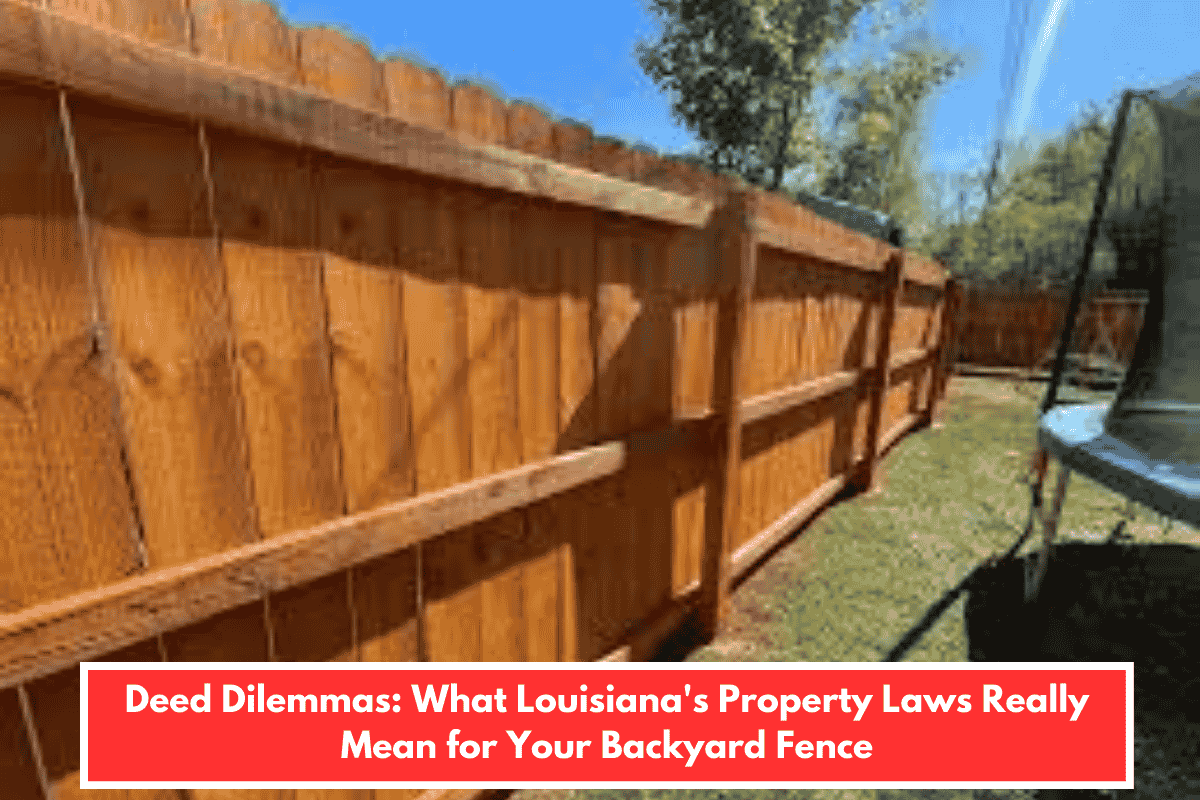
Louisiana property laws treat backyard fences as potential sources of disputes due to boundary presumptions and local variations. Key rules stem from the Civil Code and parish ordinances, affecting shared costs, heights, and ownership claims. Understanding these prevents legal issues like adverse possession claims.
Boundary Fences
A fence on the property line is presumed common, meaning both neighbors share repair and maintenance costs if lands are enclosed. Owners can compel contributions, but proof otherwise shifts full responsibility to one party. Always survey before building to confirm lines and avoid encroachments.
Height Limits
Backyard fences typically reach 6-8 feet, while front yards cap at 3-4 feet for visibility. Local zoning dictates exact limits, so check parish rules. Taller fences may require variances.
Permits Required
Most parishes mandate permits for new, repaired, or replacement fences, needing plot plans and utility approvals. Only owners or licensed contractors apply. Submit scaled drawings showing lines and servitudes.
Neighbor Disputes
Encroachments allow demands to relocate the fence, potentially escalating to court. Communicate plans early and review deeds for easements. Multiple deeds or prior permissions complicate claims.
Adverse Possession Risks
Louisiana’s acquisitive prescription lets possessors claim land after 10 years (good faith, just title) or 30 years openly. Fences don’t define lines alone; surveys prove boundaries. Act promptly on issues to preserve deed rights.
SOURCES
[1](https://bubba-land.com/blog/louisiana-fence-laws/)
[2](https://gouner.com/good-fences-make-good-neighbors/)
[3](https://www.griffinhc.com/do-you-need-a-fence-to-define-your-louisiana-property-line/)
[4](https://www.amkofence.com/post/louisiana-s-fence-installation-regulations)
[5](https://lcco.law.lsu.edu/?uid=29&ver=en)