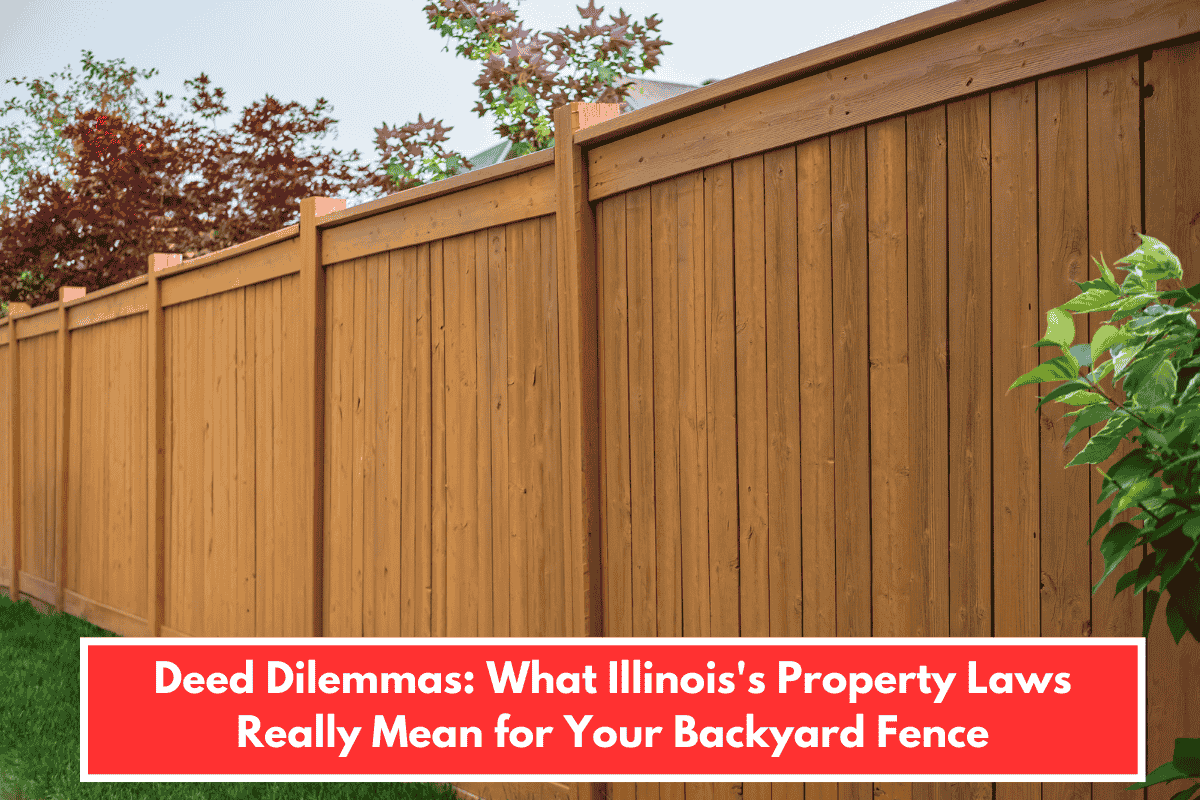
Illinois property laws, primarily the Fence Act (765 ILCS 130), govern backyard fences through shared responsibility rules and boundary requirements, meaning deeds define ownership but neighbors split division fence costs. Local ordinances often override state baselines with height limits and permits, affecting placement on your lot.
Fence Act Basics
Adjoining owners must share “just proportion” costs (typically 50/50) for division fences separating properties, with “lawful” fences needing 4.5 feet height using rails, boards, wire, or hedges in good repair. Build only on your side of the surveyed line to avoid encroachment claims; seven years of unchallenged fence use may support adverse possession under deeds.
Local Rules and Permits
Municipal codes dictate specifics: Chicago caps solid fences at 8 feet (permit over 5 feet), Naperville at 6 feet with finished side outward. Check setbacks (often 3-12 inches from lines), front yard limits (e.g., 3-4 feet), and survey deeds for easements before building.
Disputes and Enforcement
If a neighbor refuses payment, provide written notice, then involve township “fence viewers” to inspect and apportion costs, enforceable via court if needed. Deeds clarify title but not fence duties—always survey first to prevent litigation over backyard boundaries.
SOURCES
[1](https://bubba-land.com/blog/illinois-fence-laws/)
[2](https://www.naperville.il.us/services/permits–licenses/fence-permit/)
[3](https://ilga.gov/Legislation/ILCS/Articles?ActID=2165&ChapterID=62&Chapter=PROPERTY&MajorTopic=RIGHTS+AND+REMEDIES)
[4](https://www.congress.gov/bill/119th-congress/senate-bill/497)
[5](https://www.ergeon.com/blog/post/a-guide-to-fence-laws-in-chicago-il)