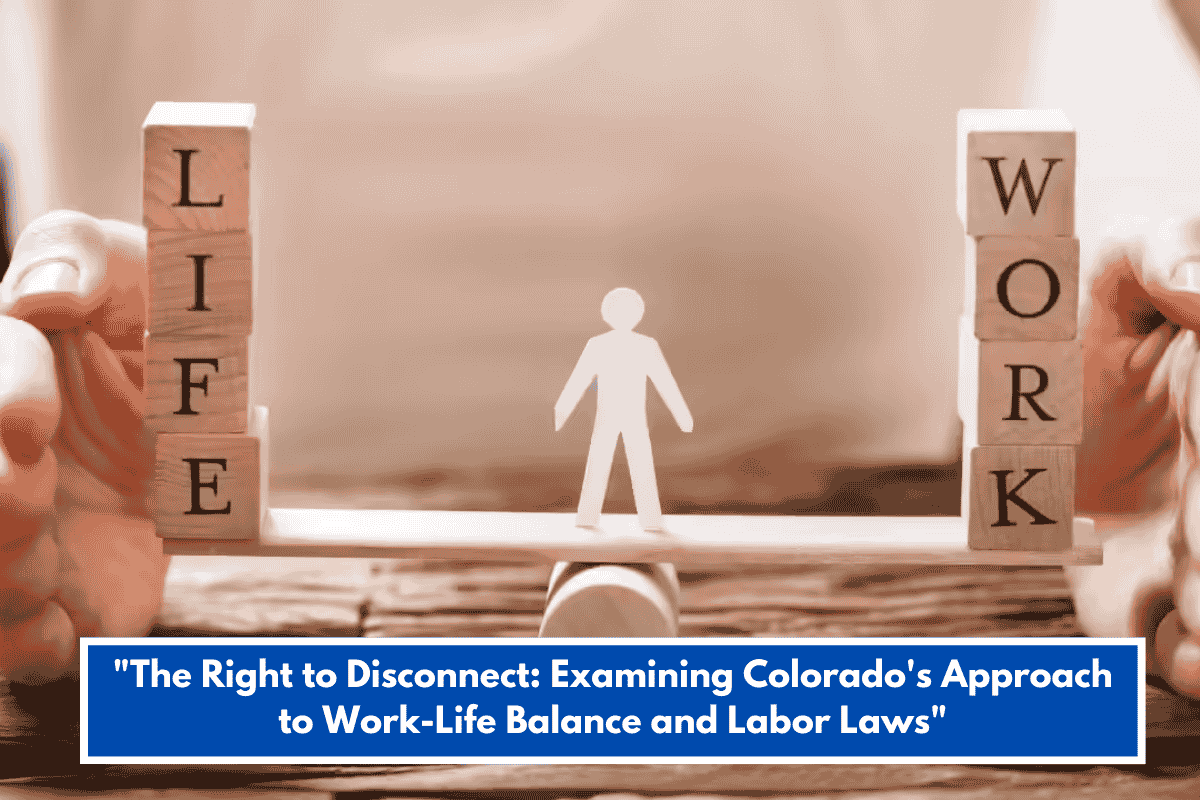
Colorado lacks a specific “right to disconnect” law as of late 2025, unlike proposals in states like California, focusing instead on broader labor protections for work-life balance through wage and hour rules. Employers must adhere to the Colorado Overtime and Minimum Pay Standards (COMPS) Order, which caps workweeks at 40 hours before overtime kicks in at 1.5 times pay, indirectly supporting rest periods.
Key Labor Provisions
Colorado’s COMPS Order mandates paid sick leave (up to 48 hours annually for most employees), allowing time off for personal health or family care without retaliation. Remote work policies fall under federal FLSA guidelines, with no state mandate for ignoring after-hours contact, though anti-retaliation laws protect employees raising work-life concerns.
Work-Life Balance Approach
The state promotes balance via initiatives like the Healthy Families and Workplaces Act, expanding family leave, and recent 2024 amendments increasing minimum wage to $14.81/hour in 2025 to reduce financial stress. Unlike international models (e.g., Portugal’s strict disconnection rules), Colorado relies on union negotiations or company policies for after-hours expectations, with ongoing legislative discussions but no enacted “right to disconnect.”
Comparison to Other Regions
SOURCES
[1](https://timesofindia.indiatimes.com/education/news/indias-right-to-disconnect-bill-2025-explained-heres-why-employees-can-now-legally-switch-off-like-france-italy-portugal-and-australia/articleshow/125863235.cms)
[2](https://www.linkedin.com/pulse/right-disconnect-unpacking-what-means-employers-fay-calderone-ugxac)
[3](https://www.legal500.com/developments/thought-leadership/right-to-disconnect-bill-2025-a-step-toward-restoring-work-life-balance-in-a-hyper-connected-world/)
[4](https://www.scconline.com/blog/post/2025/12/10/right-to-disconnect-bill-2025/)
[5](https://www.postercompliance.com/blog/right-to-disconnect/)