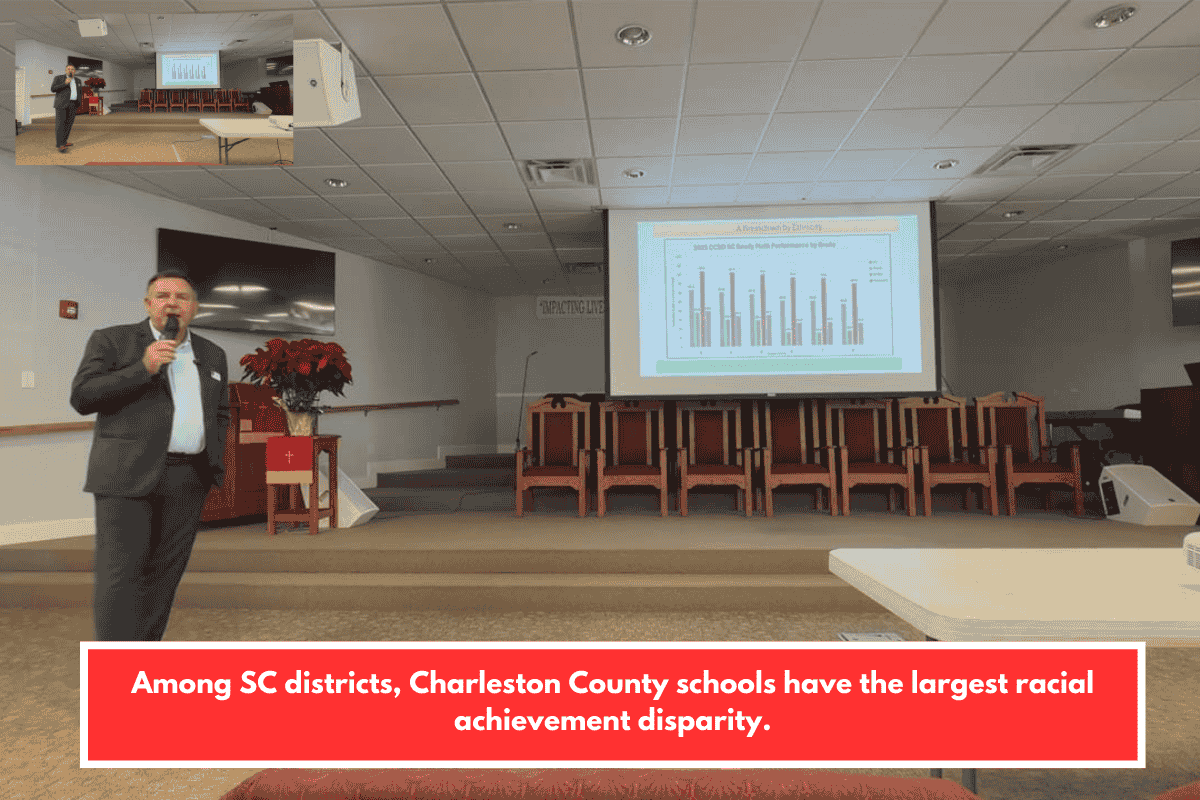
Charleston County School District faces the widest racial achievement gap among South Carolina’s 15 largest districts, with white students ranking top while Black and Hispanic students lag in the bottom tier on state assessments. The gap between white and Black students has narrowed slightly from 55 to 47 points over eight years, but critics argue this pace—about one point annually—means parity could take another 47 years. Superintendent Anita Huggins acknowledges the issue as embarrassing and not closing fast enough, emphasizing the need for community help alongside district efforts like pre-K expansion.
Key Concerns Raised
Lowcountry Conservatives Club Chairman Maurice Washington highlighted the district’s poor relative performance for minority students compared to peers, urging year-round focus beyond annual report cards. Presenter Rob Tykal linked the gap to workforce shortages, recalling struggles 25 years ago hiring high school graduates for basic manufacturing roles at Daimler and Mercedes-Benz in Ladson. The group stresses celebrating gains but contextualizing them against persistent disparities.
District Response and Progress
Huggins attended the meeting uninvited and pointed to turnaround work at schools like Sanders Clyde Elementary. Recent initiatives, such as Orton-Gillingham literacy training in pilot schools, show promise: achievement gaps shrank 38-42% between racial groups, with third-grade proficiency doubling in some cases. The district also offers South Carolina’s highest teacher pay, aiding recovery to pre-pandemic levels and national recognition.
Broader Context
Your interest in Lowcountry education, from school board elections to attendance incentives, aligns with this ongoing discussion in Charleston. Efforts like universal pre-K aim to address readiness gaps tied to poverty and absenteeism. Community panels seek sustained dialogue for faster improvement.