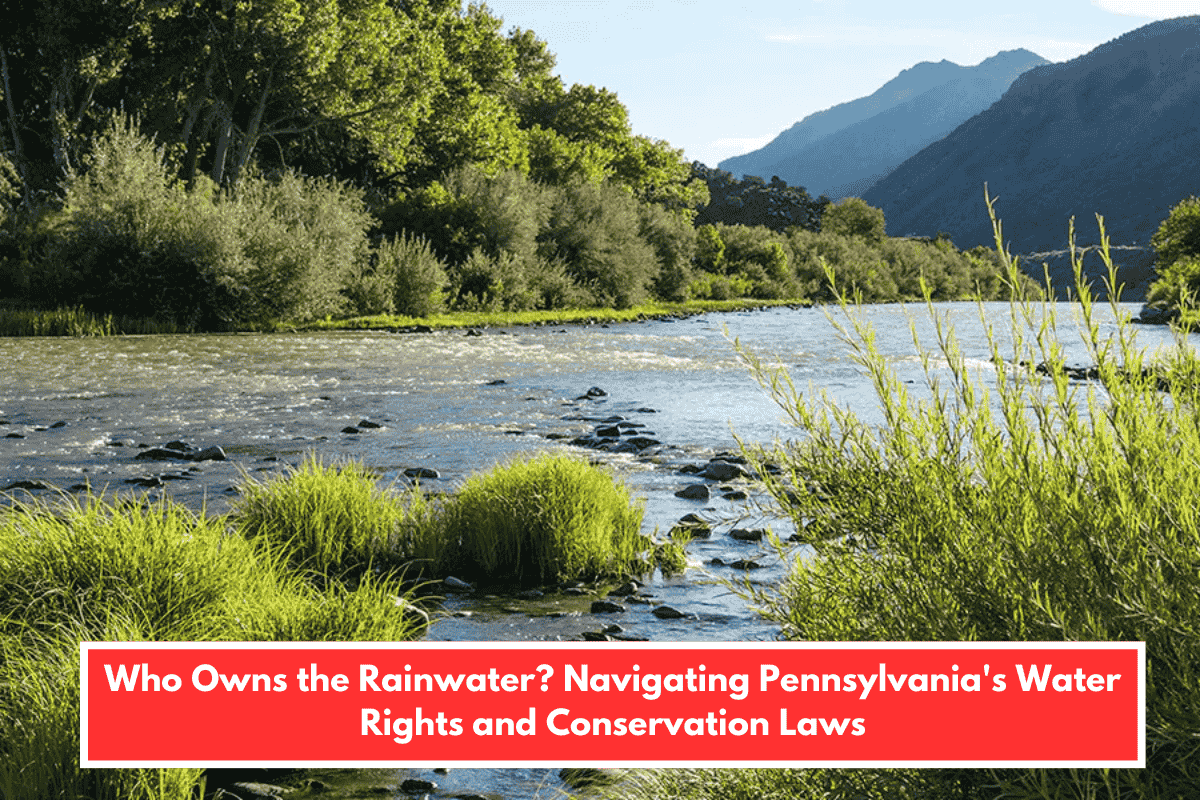
Pennsylvania follows a riparian rights system for water allocation, where landowners adjacent to natural waterways have reasonable use rights but no ownership of the water itself, which belongs to the Commonwealth for public bodies. Rainwater collection is explicitly legal and encouraged for conservation, with no state prohibitions on installing barrels or systems on private property.
Riparian Rights Basics
Property owners bordering streams, rivers, or lakes enjoy equal access for domestic uses like household needs without permits, provided they do not harm downstream users or divert water off-site unreasonably. Extraordinary uses (e.g., irrigation over 10,000 gallons daily) may require Department of Environmental Protection (DEP) approval to prevent diminishment of flow.
Rainwater and Groundwater
Homeowners freely harvest rooftop runoff, as diffuse surface water follows the “common enemy” rule allowing natural drainage or collection without liability. Groundwater extraction under the “American Rule” permits unlimited on-site use via wells, but large withdrawals in regulated basins like the Delaware River need registration.
Conservation Mandates
DEP enforces stormwater management under the Clean Streams Law, requiring permits for developments altering runoff to protect waterways from pollution. Violations can lead to fines, emphasizing infiltration practices over discharge.
SOURCES
[1](https://mpl-law.com/who-owns-the-water/)
[2](https://extension.psu.edu/access-and-allocation-of-water-in-pennsylvania)
[3](https://www.timoneyknox.com/storm-water-in-pennsylvania-giving-is-better-than-receiving/)
[4](https://legalclarity.org/is-it-illegal-to-collect-rainwater-in-pa/)
[5](https://www.stateregstoday.com/living/water-rights/state-water-rights-laws-in-pennsylvania)