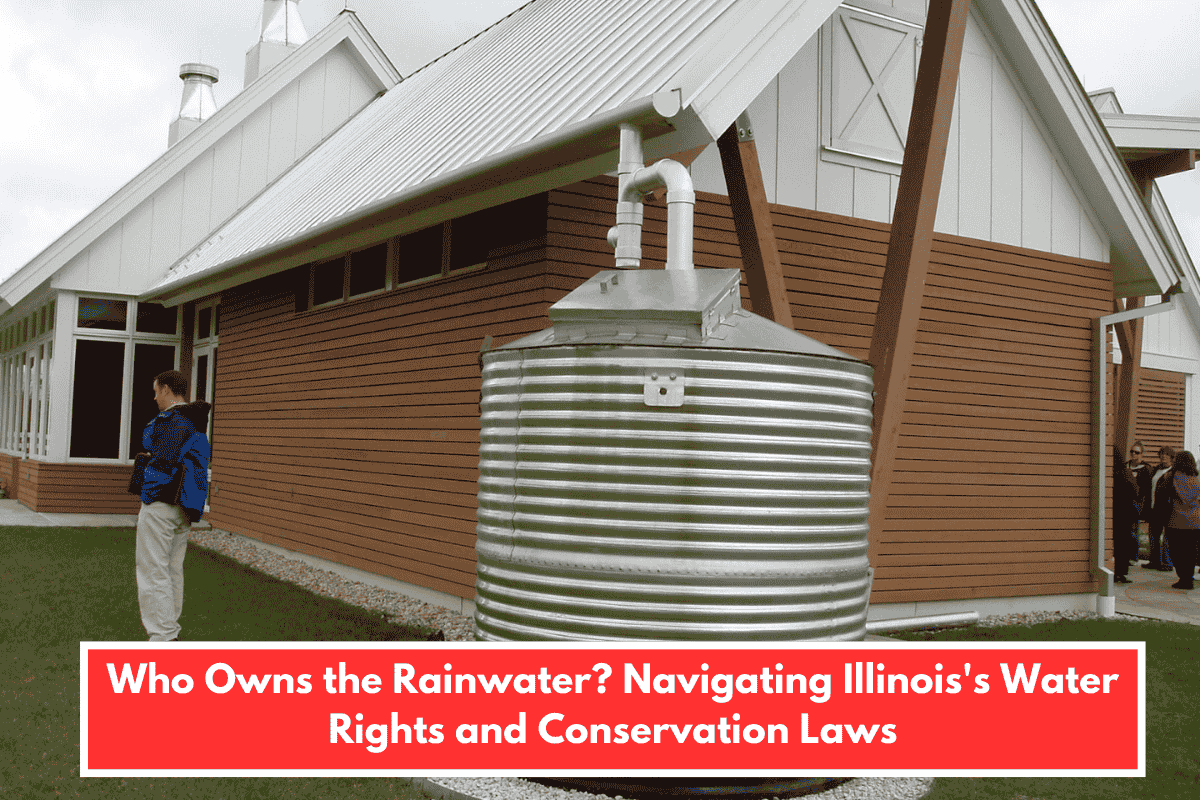
Illinois residents can legally collect rainwater for non-potable uses like irrigation under the reasonable use doctrine, which governs most surface water diversions absent conflicts with other users. Homeowners face no statewide bans on small-scale harvesting (under 5,000 gallons), but systems over that threshold require plumbing code approval and plans submission to ensure safety. The state promotes it as “green infrastructure” via Public Act 96-26, limiting indoor uses to non-drinking applications compliant with the Illinois Plumbing Code.
Ownership Principles
Rainwater follows riparian rights: landowners hold no absolute ownership but enjoy reasonable access for natural uses like household needs, prioritizing domestic over artificial without harming neighbors. Groundwater operates under the modified absolute ownership rule from Edwards v. Haeger (1899), allowing pumping from one’s property unless unreasonable.
Conservation Rules
Harvesting qualifies as water conservation, with no permit needed for cisterns up to 360 gallons used outdoors; larger or indoor systems must meet health department standards by January 2012 mandates. Homeowner associations may regulate placement, but state law overrides local prohibitions on compliant systems.
SOURCES
[1](https://nsglc.olemiss.edu/Advisory/pdfs/il-water-law.pdf)
[2](https://www.ntotank.com/blog/rainwater-harvesting-laws-regulations-and-rights-by-us-state)
[3](https://worldwaterreserve.com/is-it-illegal-to-collect-rainwater/)
[4](https://www.iheart.com/content/2023-05-15-are-illinoisans-legally-allowed-to-collect-rainwater/)
[5](https://www.epa.gov/waterreuse/summary-illinois-water-reuse-guideline-or-regulation-landscaping-and-onsite-non-potable)