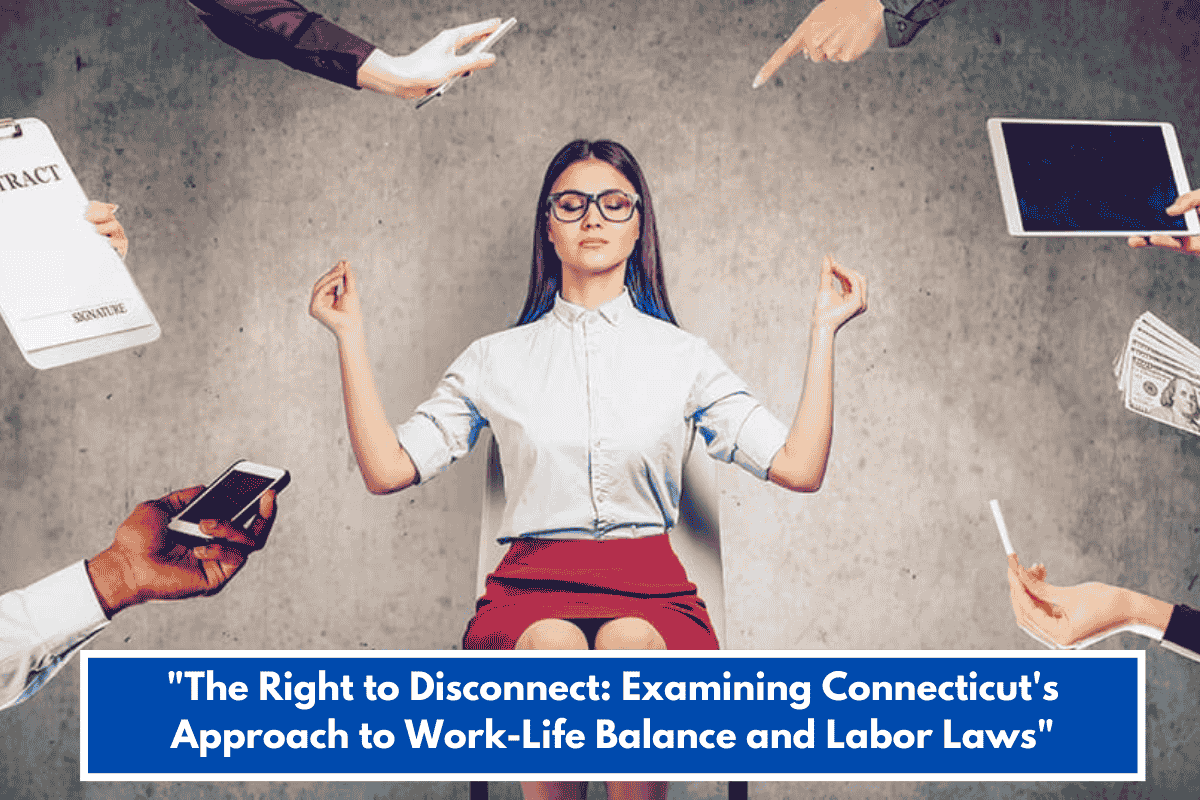
Connecticut lacks a statewide “right to disconnect” law mandating employees ignore after-hours work communications, unlike proposals in states like California or New Jersey. Labor laws instead emphasize wage protections, overtime, and rest breaks under the Connecticut Minimum Wage Law and FLSA equivalents, promoting work-life balance through scheduled shifts and anti-retaliation rules. No 2025 legislation enacts such a policy, focusing instead on paid family leave expansions and wage theft penalties.
Existing Labor Protections
Employees qualify for overtime at 1.5 times pay over 40 hours weekly, with meal breaks of 30 minutes for shifts exceeding 7.5 hours. Employers cannot mandate off-clock contact without compensation, per implied contract and NLRA rights for unionized workers.
Proposed Reforms
Bills like those mirroring Australia’s model have surfaced nationally but stalled in Connecticut, prioritizing mental health via general wellness mandates over disconnection specifics. Remote work policies remain employer-driven, subject to fair labor standards.
Work-Life Balance Tools
State initiatives include expanded FMLA for caregiving and unemployment benefits tied to job search efforts, indirectly supporting boundaries. Employers adopt voluntary “no-email after 7 PM” guidelines to curb burnout, though unenforceable without statute.
SOURCES
[1](https://www.youtube.com/watch?v=AulDhrZlAJk)
[2](https://www.scconline.com/blog/post/2025/12/10/right-to-disconnect-bill-2025/)
[3](https://www.postercompliance.com/blog/right-to-disconnect/)
[4](https://www.laborandemploymentlawcounsel.com/2021/08/the-right-to-disconnect-for-employees/)
[5](https://capclaw.com/your-legal-right-to-disconnect-from-work/)