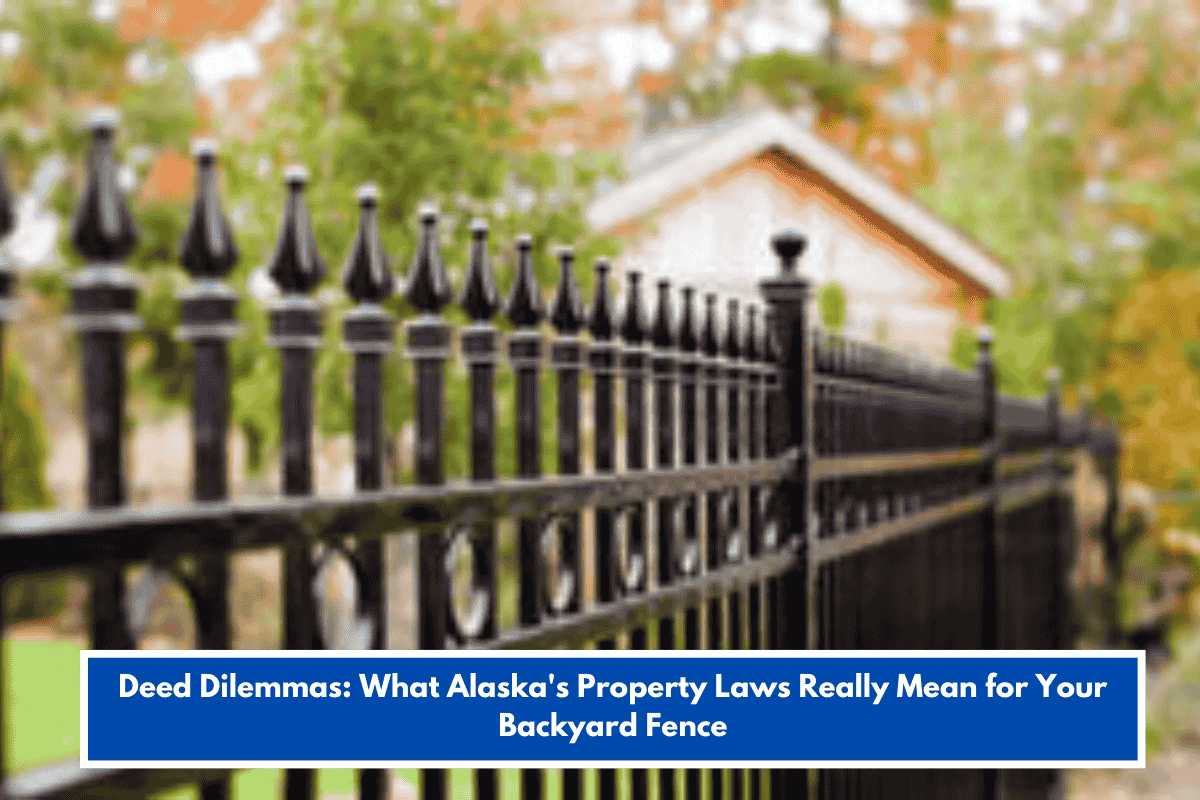
Alaska’s property laws on backyard fences emphasize local municipal codes over statewide rules, focusing on height limits, setbacks, and boundary disputes to prevent neighbor conflicts. Deeds define legal boundaries, but fences often trigger issues like encroachments or adverse possession claims. Understanding these prevents “dilemmas” from escalating to court.
Fence Height Rules
Municipal codes dictate backyard fence heights, typically allowing up to 6-8 feet in rear yards but restricting front yards to 4 feet. For example, Anchorage permits fences at the lot line up to 8 feet in some rear areas, while Palmer limits them to 6 feet overall. Always check your borough or city (e.g., Fairbanks North Star allows 8 feet in urban residential zones).
Boundary and Placement
Fences can often sit directly on property lines, but surveys are crucial to avoid disputes; setbacks of 2-8 inches are common recommendations nationwide, though Alaska locals vary. Neighbors may share costs for line fences, and building without agreement risks legal action under statutes allowing boundary determination suits. Permits are usually required—submit site plans to local building departments like Palmer’s.
Adverse Possession Risks
Placing a fence on a neighbor’s land could lead to adverse possession claims, but Alaska’s strict 2003 law requires 10 years of open, notorious use plus good faith belief it’s yours (or 7 years under color of title). Pre-2003 claims might still apply without good faith, and acquiescence (mutual acceptance of a marked line like a fence for 7+ years) can shift boundaries. A survey prevents “squatter” scenarios where good faith possessors lose out.
Dispute Resolution
For deed-related fence fights, start with a professional survey to verify boundaries, then mediate or file under AS 09.45.020 for court determination. Local codes (not HOAs, which are limited) govern most residential rules; livestock areas have separate enclosure laws. Consult city hall or an attorney early to avoid fines or removal orders.
SOURCES
[1](https://www.muni.org/Departments/OCPD/development-services/codes-handouts/Handouts/handoutag03.pdf)
[2](https://titanalaska.net/2025/06/29/fencing-options-for-privacy-in-anchorage/)
[3](https://www.palmerak.org/media/12881)
[4](https://www.fnsb.gov/DocumentCenter/View/879/Fences-and-Corner-Visibility—Information-Handout-PDF)
[5](https://dot.alaska.gov/stwddes/dcsspecs/assets/pdf/aptspecs/sections/2020/fencing.pdf)