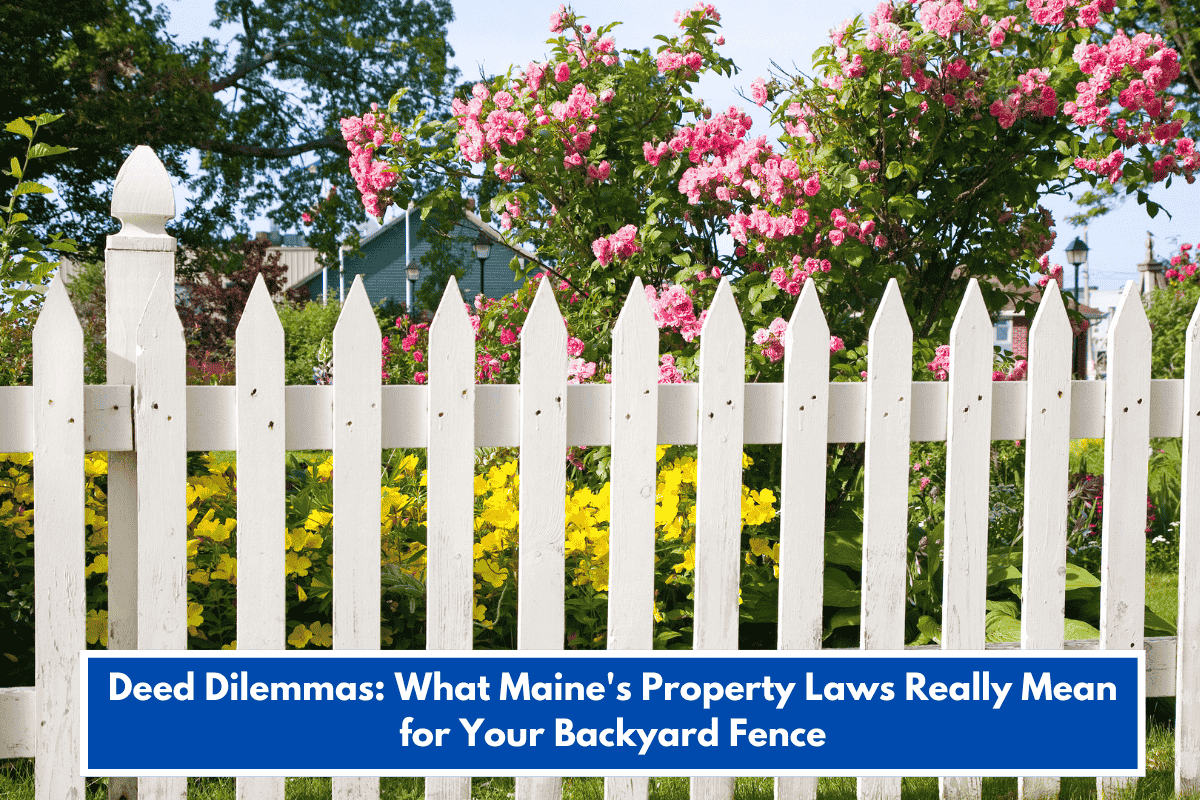
Maine property laws govern backyard fences through deed descriptions, boundary lines, and adverse possession rules, requiring adherence to legal surveys and local zoning for placement. Deeds define exact property lines via metes and bounds or recorded plats, so fences must stay within your boundaries to avoid encroachment disputes. Violations can lead to removal orders or shared costs if on the line.
Boundary Determination
Property owners must reference recorded deeds and surveys at the Registry of Deeds to confirm lines before building; neighbors share boundary fences under common law unless deeds specify otherwise. Disputes resolve via quiet title actions or boundary line agreements recorded publicly. Maine’s 2025 deed fraud law adds protections like affidavits for suspicious transfers.
Fence Regulations
Local ordinances dictate height (often 6 feet max), materials, and setbacks; state law allows self-help recovery of stray livestock but not fence damage. Adverse possession claims arise after 20 years of open use, potentially shifting lines if unchallenged. Consult a surveyor or attorney for deeds involving easements or transfer taxes updated November 2025.
SOURCES
[1](https://www.bernsteinshur.com/insights-events/significant-maine-real-estate-transfer-tax-increase-takes-effect-november-1-2025/)
[2](https://deeds.uslegal.com/state-deed-laws/maine-deeds-law/)
[3](https://legislature.maine.gov/statutes/33/title33.pdf)
[4](https://www.maineregistryofdeeds.com/fees)
[5](https://www.mainelegislature.org/legis/statutes/36/title36sec4641-B.html)