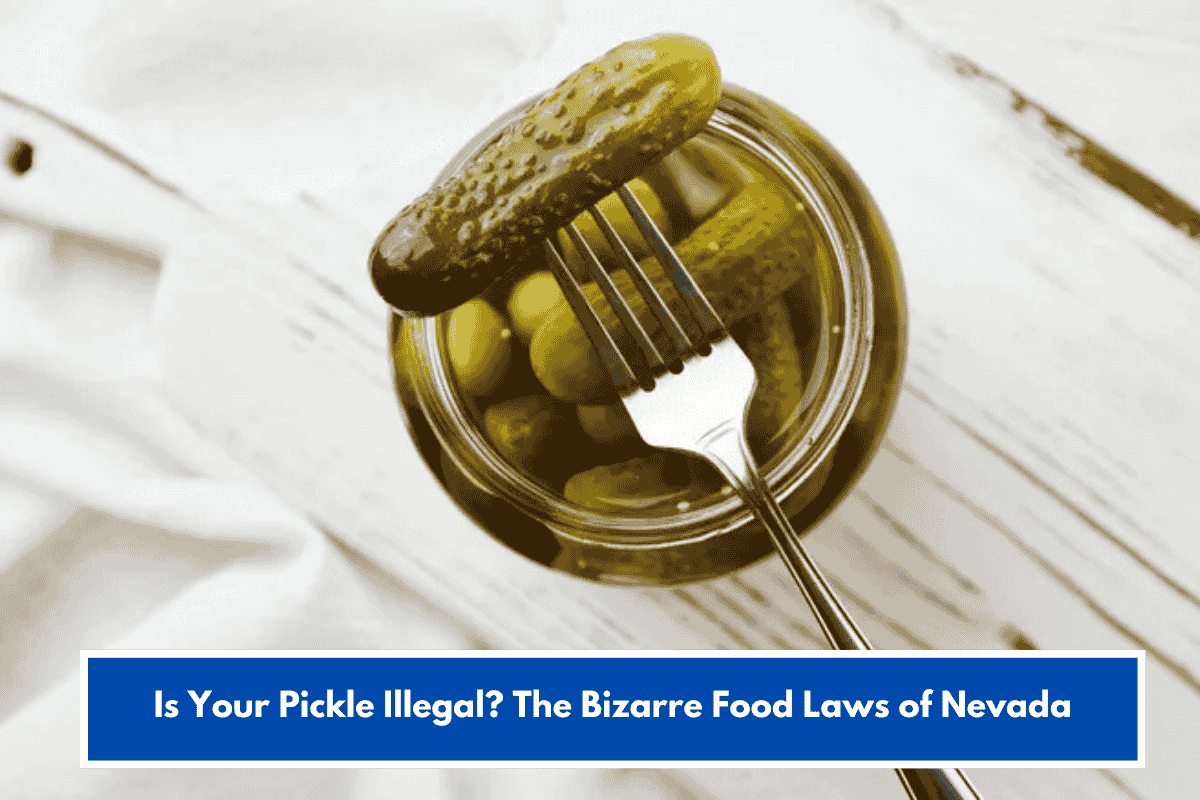
No, your personal pickle is not illegal in Nevada; the so-called “bizarre food law” refers to the 2015 “Pickle Bill” (SB 441), which legalized home production and direct sale of acidified foods like pickles under regulated craft food operations.
The Pickle Bill Explained
Nevada’s SB 441 allows craft food operations to prepare acidified foods (pickles, salsas) in private homes or approved kitchens for direct consumer sales, capped at $35,000-$100,000 annually depending on updates. Operators must register with the Department of Agriculture, complete approved canning courses, test pH levels below 4.6 per batch, maintain 5-year records, and use approved recipes. Prior to 2015, such home-canned goods faced strict bans due to food safety risks like botulism.
Requirements and Limits
Sales occur at farmers’ markets, roadside stands, or online with proper labeling (ingredients, allergens, “made in a home kitchen not inspected” notice). Commercial-scale or wholesale distribution requires licensed facilities under FDA rules like 21 CFR Part 114. Violations risk permit revocation, fines, or health orders, but personal home pickling for family use remains unregulated.
Myth vs. Reality
Urban legend lists exaggerate the law as banning pickles outright, but it actually expanded opportunities for small producers while enforcing safety. Similar cottage food laws exist nationwide, balancing innovation with public health. Check local health districts for updates, as gross sales limits and fees apply.
SOURCES
[1](https://agri.nv.gov/craftfoods/)
[2](https://www.ncrfsma.org/files/page/files/ncr_pickled_vegetables_1.pdf)
[3](https://forrager.com/law/nevada-craft-food/)
[4](https://agri.nv.gov/Food/Craft_Foods/Approved_Craft_Foods_Recipes/)
[5](https://www.leg.state.nv.us/Register/2015Register/R088-15P.pdf)