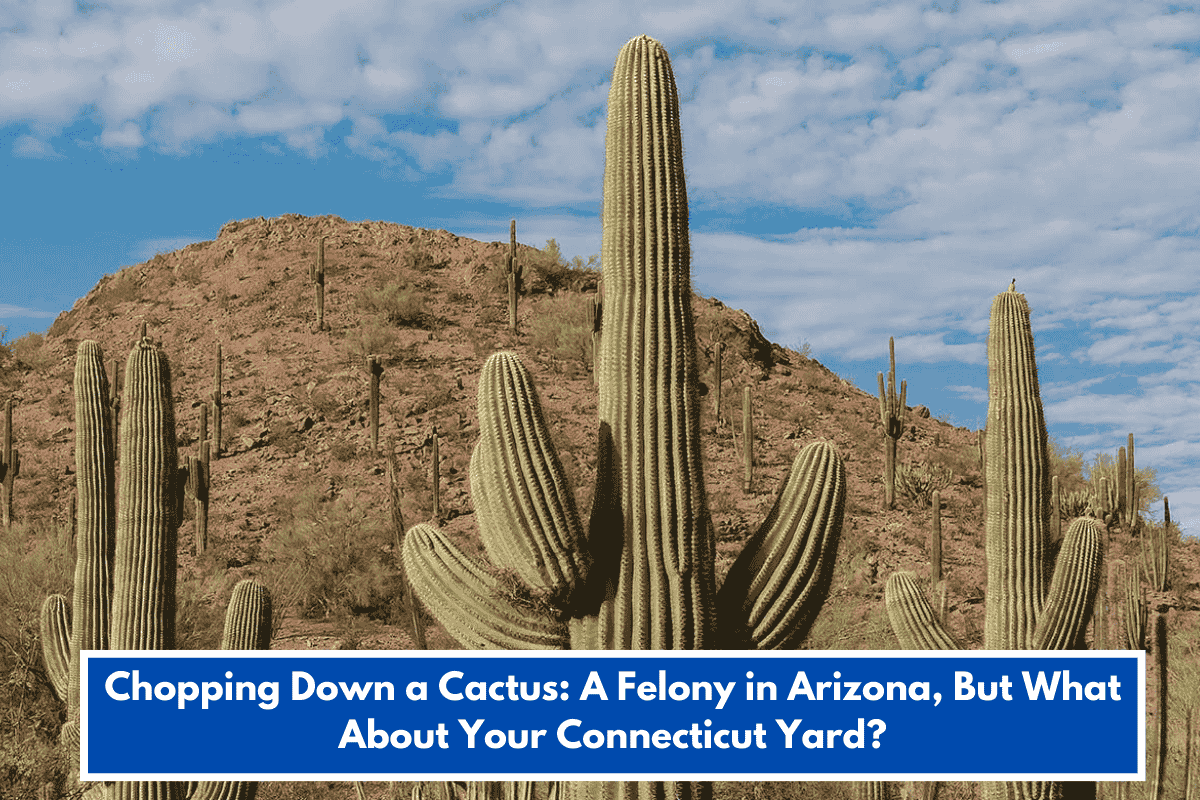
No, chopping down a cactus in your Connecticut yard is not illegal if it’s on your private property, unlike Arizona where native saguaro cacti are protected as a felony under state law. Connecticut regulates trees, shrubs, and invasive plants but has no specific statutes protecting cacti, which are not native or protected species in the state; property owners can generally remove plants on their land absent local ordinances or HOA rules. Cutting plants on a neighbor’s property without permission triggers liability up to five times the plant’s value under Connecticut statutes.
Property Owner Rights
Owners may trim or remove trees, shrubs, or other vegetation on their property without a license if not offering commercial services, provided it does not endanger neighbors. Encroaching roots or branches from neighbors can be cut back to the property line, but intentional damage to another’s plants incurs triple damages. No broad protections exist for non-commercial cacti on private yards.
Protected Plants
Connecticut prohibits actions on invasive species like running bamboo (nuisance if within 40 feet of boundaries, $100/day penalty) and certain pests via DEEP regulations, but cacti are not listed. Nursery laws restrict importing or selling invasive plants, not backyard removal of non-invasive ones like ornamental cacti.
Local Considerations
Municipal tree ordinances or inland wetlands rules may require permits for significant removals near protected areas; check zoning for yard alterations. Disputes with neighbors over shared plants follow common law, emphasizing surveys to confirm boundaries before acting.
SOURCES
[1](https://northeasterntreecare.com/blogs/connecticut-tree-laws/)
[2](https://norml.org/laws/connecticut-penalties/)
[3](https://ctconservation.org/resources/select-list-of-ct-conservation-land-use-and-environmental-laws/)
[4](https://www.jud.ct.gov/lawlib/law/trees.htm)
[5](https://portal.ct.gov/DEEP/Invasive-Species/Invasive-Species)