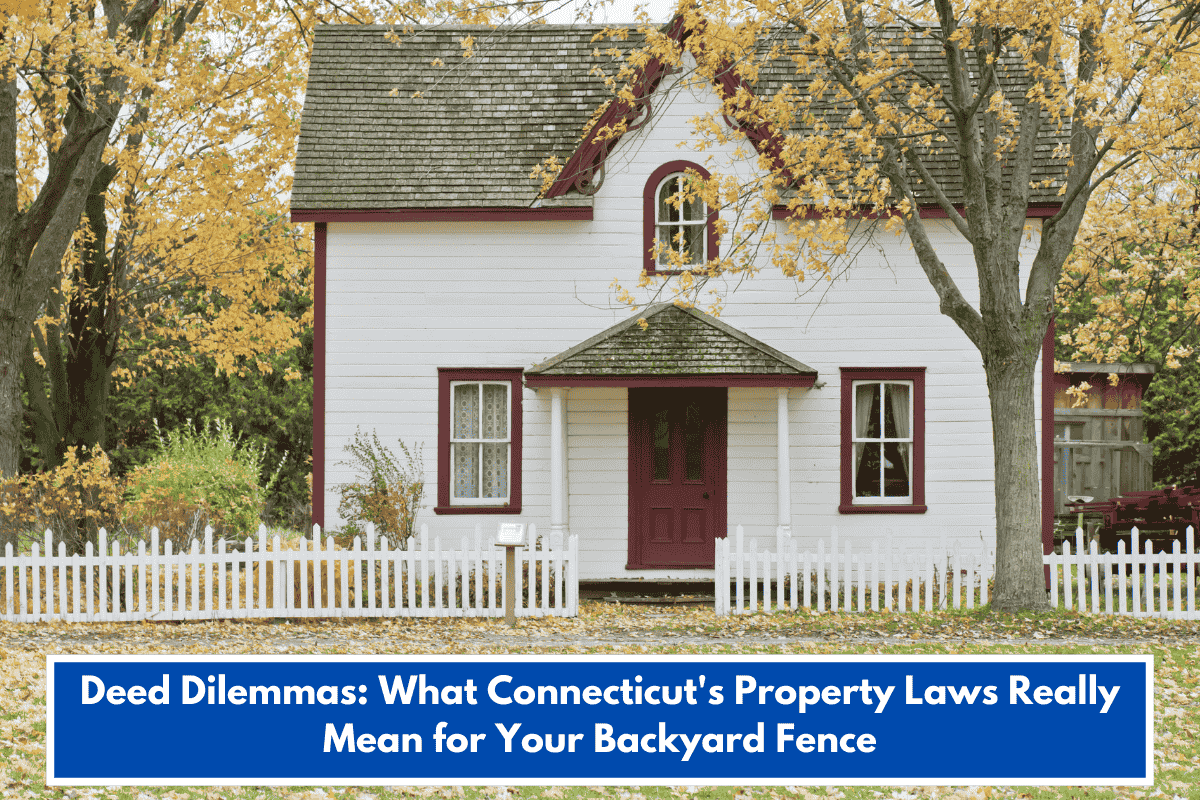
Connecticut property laws treat backyard fences on boundary lines as “divisional fences,” requiring adjoining owners to share maintenance costs equally under Chapter 823 of the state statutes.
Divisional Fence Rules
Adjoining proprietors must each build and maintain half of a division fence along the exact property line, with sufficient types including 4.5-foot board fences in cities or 4-foot rail/wire fences in rural areas. Selectmen can assign portions, mediate disputes, and impose fines up to $2 per day for neglect; one owner building the full fence can seek reimbursement from the other.
Height and Placement Limits
No statewide blanket height cap exists, but local ordinances often restrict residential fences to 6 feet without permits, prohibiting placement directly on lines without agreement to avoid disputes. “Good side” must face neighbors if within 10 feet of lines in some towns, and fences cannot block intersections or driveways.
Dispute Resolution
Deeds define boundaries via surveys; unagreed fences trigger selectmen intervention for division and cost allocation, with records binding parties. Better-than-required fences near homes allow cost recovery for the ordinary share only.
SOURCE
[1](https://www.cga.ct.gov/2025/pub/chap_823.htm)
[2](https://www.crameranderson.com/could-your-neighbor-be-responsible-for-the-maintenance-of-your-fence/)
[3](https://riversidefence.net/ct-fence-installation-rules-and-regulations/)
[4](https://lathourislaw.com/resources/blog/connecticut-property-line-and-fence-laws/)
[5](https://law.justia.com/codes/connecticut/title-47/chapter-823/)