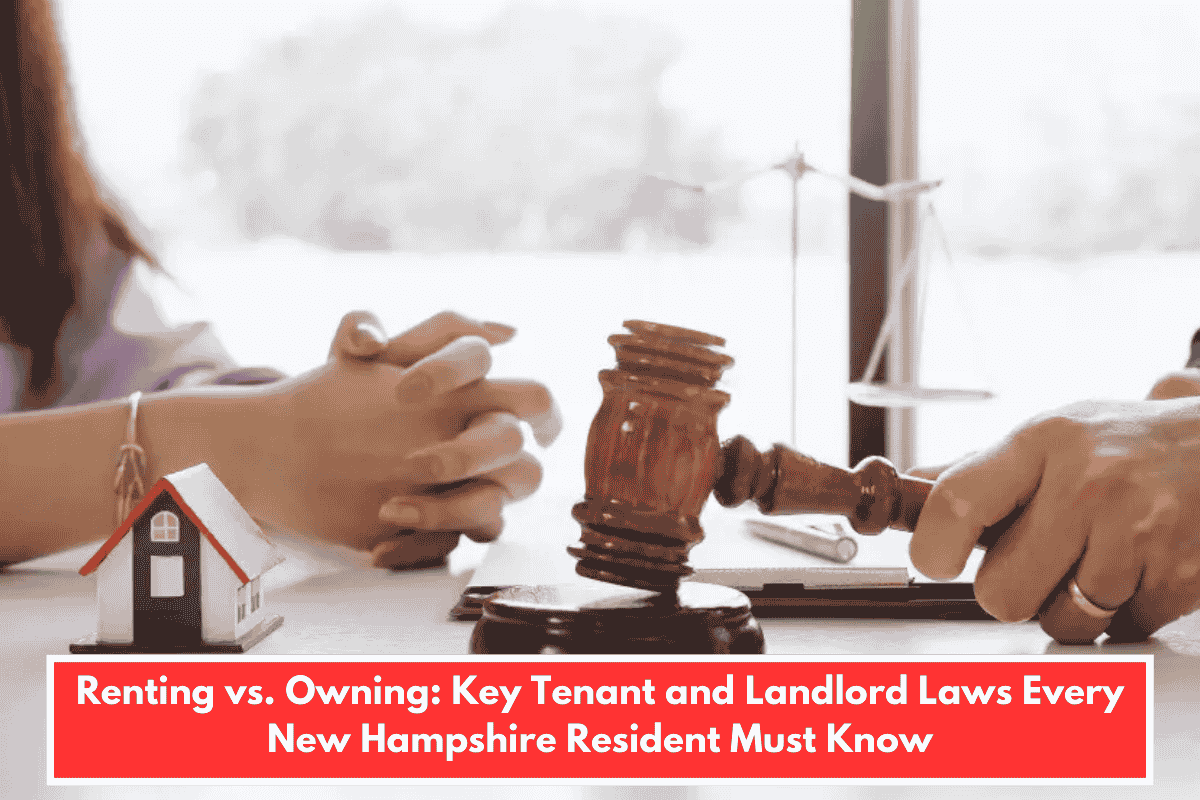
New Hampshire tenant and landlord laws balance rights under the state’s minimal regulatory framework, with no rent control but strong protections against retaliation and habitability issues.
Tenant Rights
Tenants enjoy implied warranties of habitability, requiring landlords to maintain safe, clean conditions like functional heat, plumbing, and pest control. Security deposits cap at one month’s rent, must return within 30 days of move-out with itemized deductions, and accrue no interest. Evictions demand 30-day notices for nonpayment (7 days to pay or quit) or lease violations, prohibiting self-help measures like lockouts.
Landlord Obligations
Landlords must provide 21-day notice before entry for inspections or repairs, except emergencies, and cannot raise rent mid-lease without agreement. Discrimination based on race, disability, or family status violates federal and state fair housing laws, with remedies through the NH Human Rights Commission. Late fees limited to 5% of rent or $15, whichever greater, apply after 7 days.
Renting vs. Owning Comparison
| Aspect | Renting | Owning |
|---|---|---|
| Costs | Fixed rent; no equity buildup | Mortgage, taxes, maintenance |
| Eviction Risk | High with notice requirements | None; foreclosure rare |
| Maintenance | Landlord responsibility | Owner fully liable |
| Customization | Limited alterations | Full freedom with codes |
| Duration Flexibility | Month-to-month options | Long-term commitment |
SOURCES
[1](https://indianahub.org/rainwater-harvesting-in-indiana/)
[2](https://worldwaterreserve.com/is-it-illegal-to-collect-rainwater/)
[3](https://worldpopulationreview.com/state-rankings/rainwater-collection-legal-states)
[4](https://www.ntotank.com/blog/rainwater-harvesting-laws-regulations-and-rights-by-us-state)
[5](https://www.in.gov/idem/health/greening-our-backyards/rain-barrels/)