In New Hampshire, rainwater harvesting is legal and actively encouraged by the state, with no restrictive laws limiting the collection of rainwater for non-potable domestic use. Property owners may collect rainwater from their rooftops without a water right or permit, provided the storage capacity is 20,000 gallons or less and the capture area is under one acre. This practice must not conflict with any existing water rights. The state supports rainwater collection as part of broader water conservation efforts through various programs and educational resources.
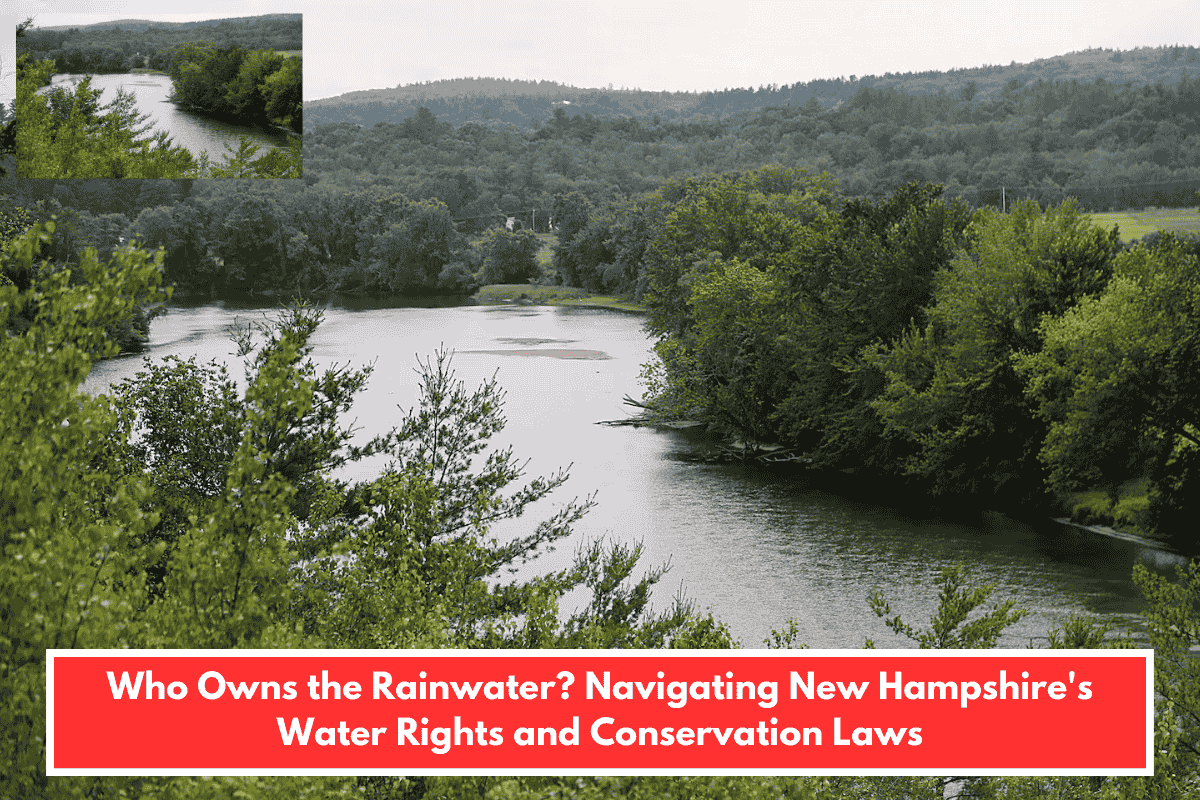
Regarding water rights, New Hampshire holds public waters—including great ponds (over 10 acres), tidal waters, and public rivers and streams—in trust for the public. The state owns the land under these waters, while private owners typically hold title to the land under freshwater rivers and streams, with the state retaining an easement for public use and protection. This framework balances individual use with conservation and public trust responsibilities.
The New Hampshire Department of Environmental Services administers water conservation programs and regulations that promote sustainable water management practices. Indoor rainwater use must comply with residential and plumbing codes related to non-potable applications, ensuring health and safety are maintained.
Summary of ownership and conservation laws:
Rainwater collected from rooftops is property of the collector, with no state restrictions on volume or use, as long as it does not interfere with other water rights.
Public waters and underlying lands are held by the state in trust for citizens.
Conservation programs encourage rainwater harvesting and provide guidelines aligned with environmental protection and water quality standards.
These laws reflect New Hampshire’s commitment to sustainable water resource management and clarify that individuals can own and utilize rainwater they capture while respecting broader water rights and environmental regulations.
SOURCES
[1](https://worldwaterreserve.com/is-it-illegal-to-collect-rainwater/)
[2](https://www.ntotank.com/blog/rainwater-harvesting-laws-regulations-and-rights-by-us-state)
[3](https://www.nheconomy.com/Office-of-Planning-and-Development/Resources/Water-Resources)
[4](https://www.nheconomy.com/office-of-planning-and-development/resources/water-resources)
[5](https://www.epa.gov/wqs-tech/water-quality-standards-regulations-new-hampshire)