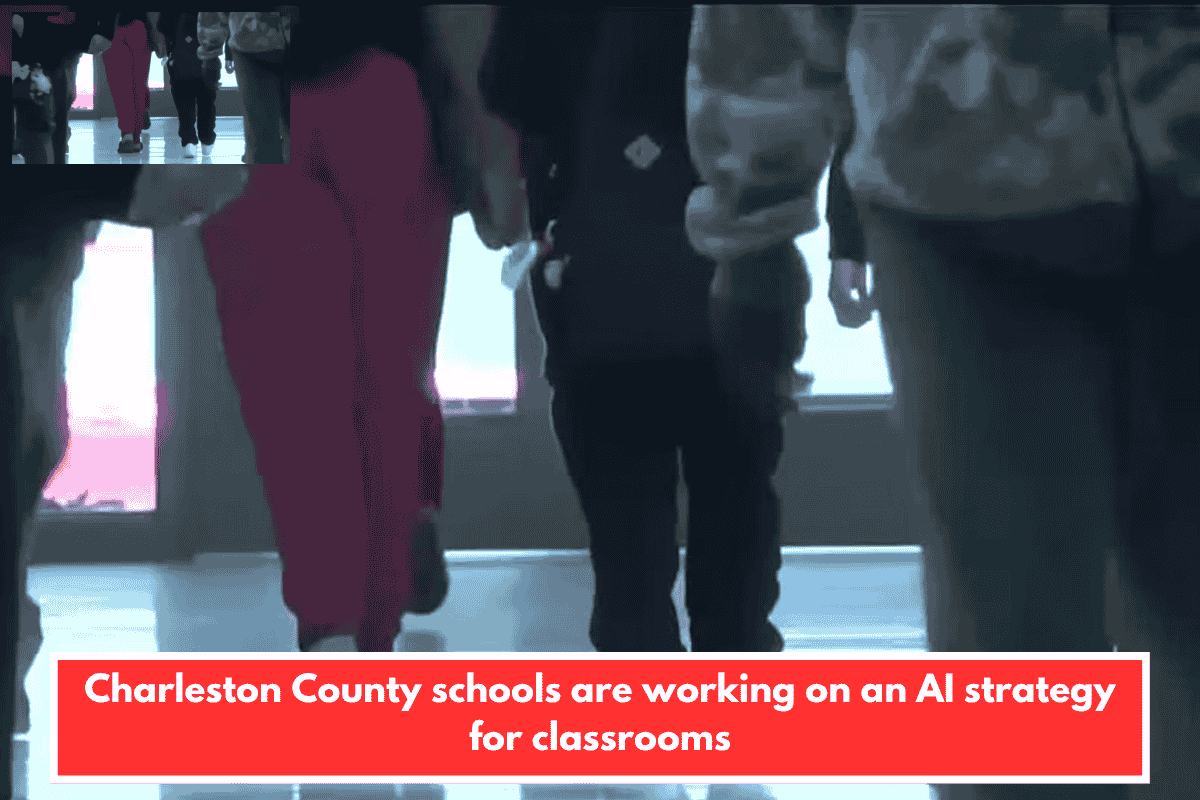
Charleston County, South Carolina – At a meeting on Monday afternoon, the Charleston County School District discussed developing an artificial intelligence strategy and policy for its students and staff.
During the meeting, the district collaborated with AI for Education to hold an hour-long session on the current state of generative AI in K-12 classrooms. The group has collaborated with over 500 institutions nationwide and is currently developing advice with the Charleston County School District. Students might utilize it to provide on-demand feedback, develop ideas, and translate in real time.
At a meeting on Monday afternoon, the Charleston County School District discussed developing an artificial intelligence strategy and policy for its students and staff.
During the meeting, the district collaborated with AI for Education to hold an hour-long session on the current state of generative AI in K-12 classrooms. The group has collaborated with over 500 institutions nationwide and is currently developing advice with the Charleston County School District. Students might utilize it to provide on-demand feedback, develop ideas, and translate in real time.
“AI will continue to evolve, so we as educators, thought partners, and leaders should begin to accept its opportunities while also developing safeguards to protect its use,” District Deputy Superintendent Luke Clamp stated. “As you heard our presenter say tonight, with integrity and especially with the ethics around the use of it as either a student or a teacher or a leader.”
Amanda Bickerstaff, the CEO of AI for Education, led the workshop. Bickerstaff stated that the organization’s fundamental idea is that AI literacy includes the information, abilities, and mindsets that allow people to utilize AI safely, ethically, and successfully.
Last month, AI for Education and the district held a guidelines creation workshop, and there was broad agreement on the importance of community-wide AI literacy and responsible tool integration. Participants in the workshop expressed a strong desire to establish clear policies and procedures.
Following the presentation, many board members expressed enthusiasm for continuing to collaborate with the organization to assist the district become a pioneer in the use of generative AI.
Some people were concerned about the abuse of generative AI and its potential negative consequences.
“We cannot replace the human factor in our lives,” Pamela McKinney, a member of the Charleston County School District board, stated at the meeting.
Bickerstaff also emphasized that many young people utilize AI for companionship and mental health help.
“That deeply disturbs me that kids use it for social and emotional companionship,” Carlotte Bailey, another Charleston County School District board member, said.
She expressed hope that the district will continue to work closely with parents in the future. AI for Education stated that it plans to build a strong parental literacy and support structure for future implementation.
“As parents, they should begin to explore some of the tools that are out there to see how those tools might be able to be used appropriately to improve something or to create some information for them,” Clamp recommended. “As parents begin to study the tools, they will become more familiar with the tools that their children will begin to explore and use. So, as their comfort level improves, so should the student’s.
Bickerstaff stated that AI’s limits in schools include recognizing age-appropriate uses, biased training data, and a tendency to produce false results.
According to district authorities, the initial round of work with AI for Education cost approximately $27,000. Officials stated that a second phase will focus on implementation and community-wide AI literacy.
Within a month, the district expects to have final AI policy proposals ready. The policy’s first reading is slated for December 8.
The district plans to soft-launch the policy next spring before fully implementing it in the 2026-27 school year.